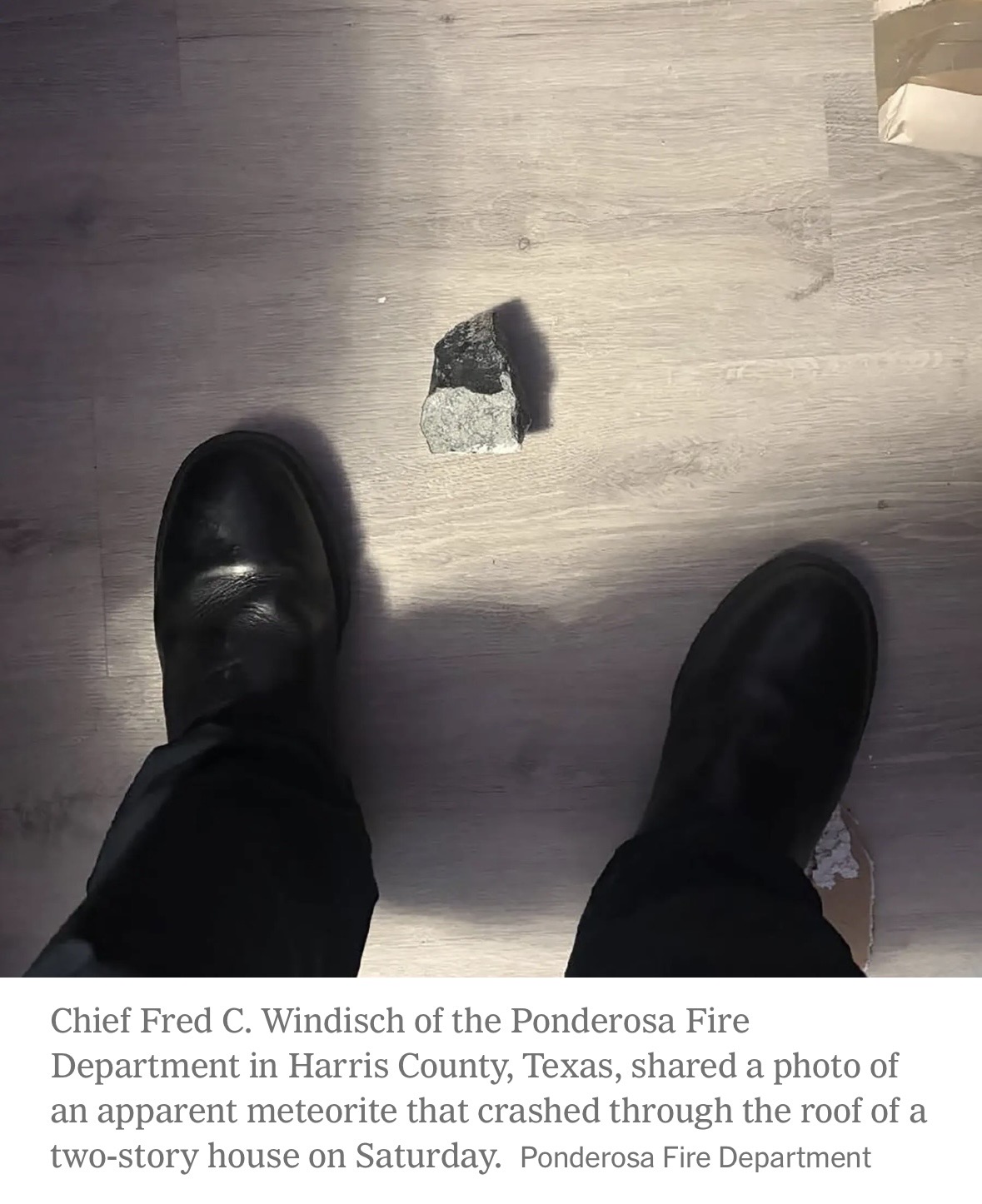
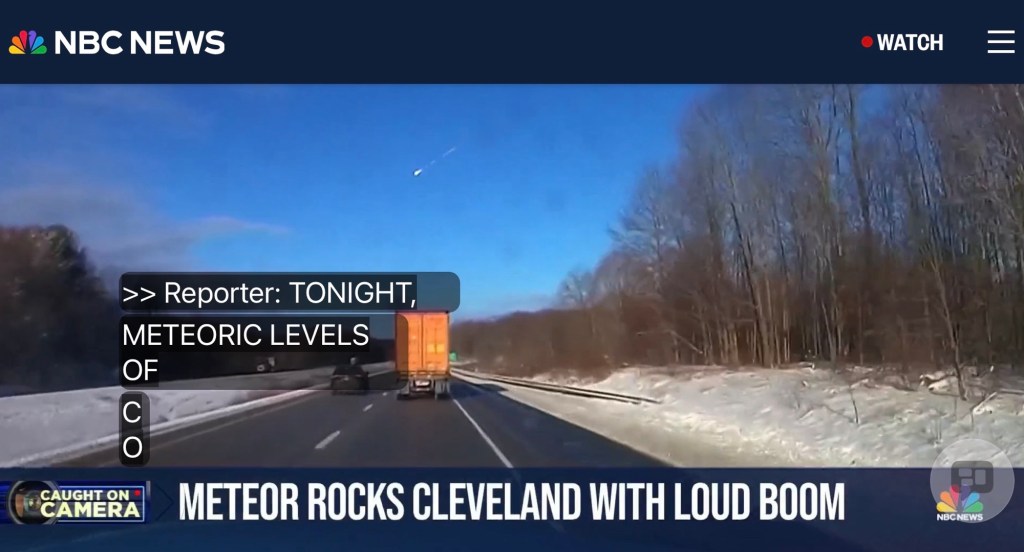
Rocky objects traveling through space are known as meteoroids, but when they enter Earth’s atmosphere and create fireballs, they are called meteors. Any fragments that fall to Earth’s surface are meteorites.
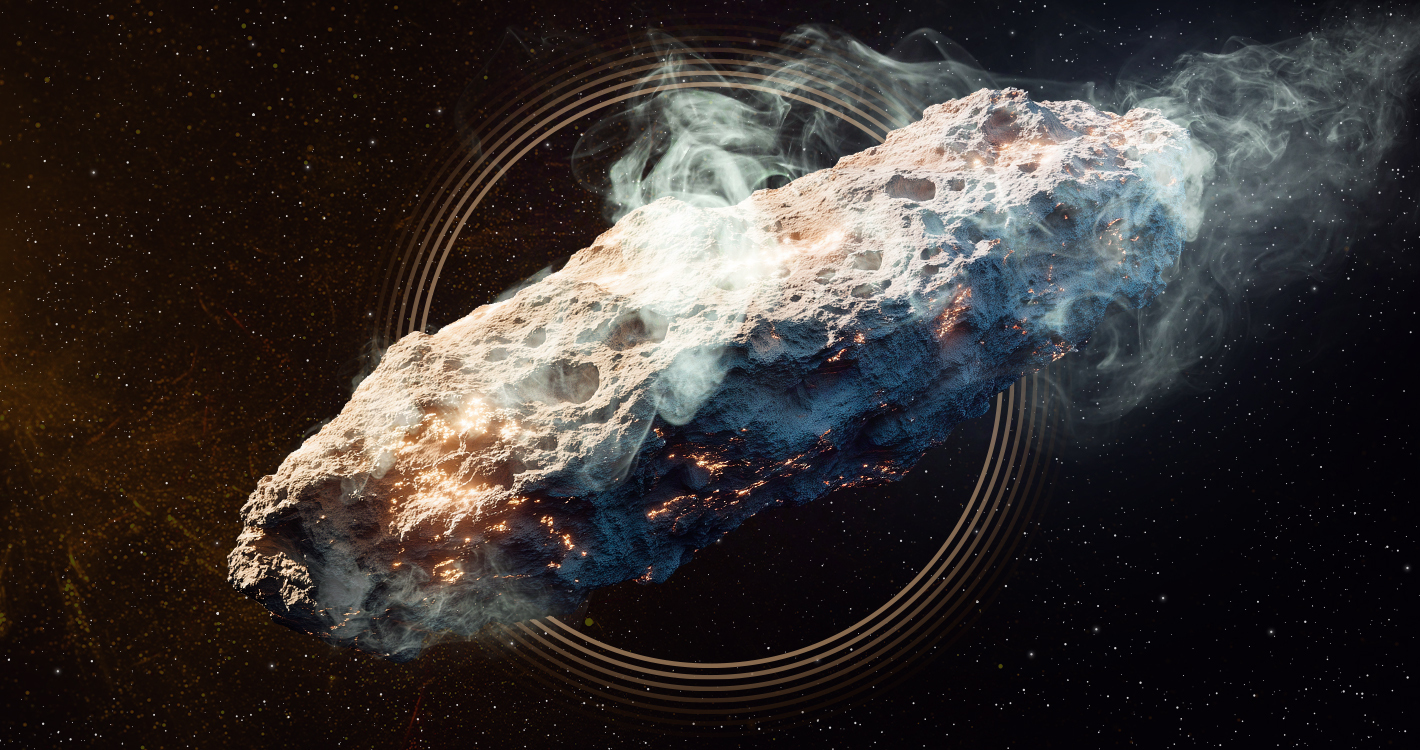
Discovered on July 1 by the NASA-funded ATLAS telescopes in Chile, 3I/ATLAS is only the third confirmed interstellar object known to have passed through our cosmic neighborhood, following 1I/‘Oumuamua in 2017 and comet 2I/Borisov in 2019. Its trajectory shows that it originated from beyond our solar system and will eventually travel back into interstellar space.
Of course, Avi Loeb has already claimed (once again) that an interstellar comet is an “alien probe.”
And naturally, other astrophysicists immediately refuted him. Again.
It’s fast. REAL fast. So fast that even as it entered the solar system it was traveling the distance from the Earth to the Sun in only a month, and then it began to pick up even more speed (from the Sun’s gravity, NOT from “jets out the back” or whatever else unscientific SF fans say online).
Of course, we can assume that the aliens’ spaceship will detach from it precisely during its approach to Mars, or during its passage through perihelion when we cannot see it. In this case, it will have to slow down by more than 20 km/s.
And even so, this will not help the aliens much, because the trajectory will remain retrograde relative to the direction of the planets’ rotation around the Sun. So, if the aliens who flew to us billions of years ago have a plan that is a little more complicated than becoming kamikaze pilots, they will have to slow down again, spending a lot of energy on it. And the aliens still need to get that energy from somewhere.
So, most likely, we should not expect any extraterrestrial visitors at the end of the year. And we will not be able to admire the interstellar comet itself. By the time it emerges from behind the Sun, its brightness will already be approximately 11 stellar magnitudes, meaning it will be inaccessible even to small amateur instruments, let alone the naked eye.
The Perseids get their name because the shooting stars appear to stream from a point in the sky where the constellation of Perseus is located…The constellation rises in the northeast, but meteors should be visible all over the sky if conditions are clear.
The best time to watch is after midnight in the northern hemisphere. The meteors are actually debris leftover from the Swift-Tuttle comet, discovered in the early 1860s.
The annual celestial event started this past Sunday and lasts for about two months, but the peak this year is around August 12th.
It’s also thought that water on Earth is largely (or entirely) the result of comets and asteroids bombarding it (it remains debatable to what degree Earth already had water, but since when it formed the Earth was first molten lava and then dry as a bone, I think it far more likely that water came here from elsewhere, and science tends to agree).
I’ve already blogged about the origins of Bringer of Light, when I (finally) finished the first draft back in early September. In a sense, I’ve been constantly blogging the science behind the story.
But I haven’t discussed the characters at all. And despite what some old-fashioned writers may think (just finished a particularly badly-written snarky “why your books don’t sell” piece of trash that claimed science fiction shouldn’t have any emotions in it…say what? sorry not sorry), if the characters of a story aren’t interesting, there isn’t much point in reading a story.
So for the next couple of weeks, I’ll write a bit about the characters — the crew of the Artemis, the crew of the Sagittarius, the UN flunkies (sorry, career politicos) on Mars and Luna and so forth. There are lots of characters, and their interaction is complicated. Or is it?
I would get into my scifi influences at this point, but long blogs are slogs. So I’ll come back to that tomorrow!
Coffee time. Also to finish up at least one unrelated project and also the hardcover manuscript (which needs to be a different paper size than the paperback for some reason).
The comet has a core of dust, gas and ice surrounded by a bright cloud of gas known as a coma. Sunlight and solar radiation can heat the comet’s core, sometimes causing violent outbursts like the ones observed in July and Oct.
Herman said the comet’s temporary horns are thought to originate from these icy eruptions. The comet’s structure may be shaping how the spewed clouds of gas and ice appear from Earth, creating the appearance of horns to ground-based telescopes.
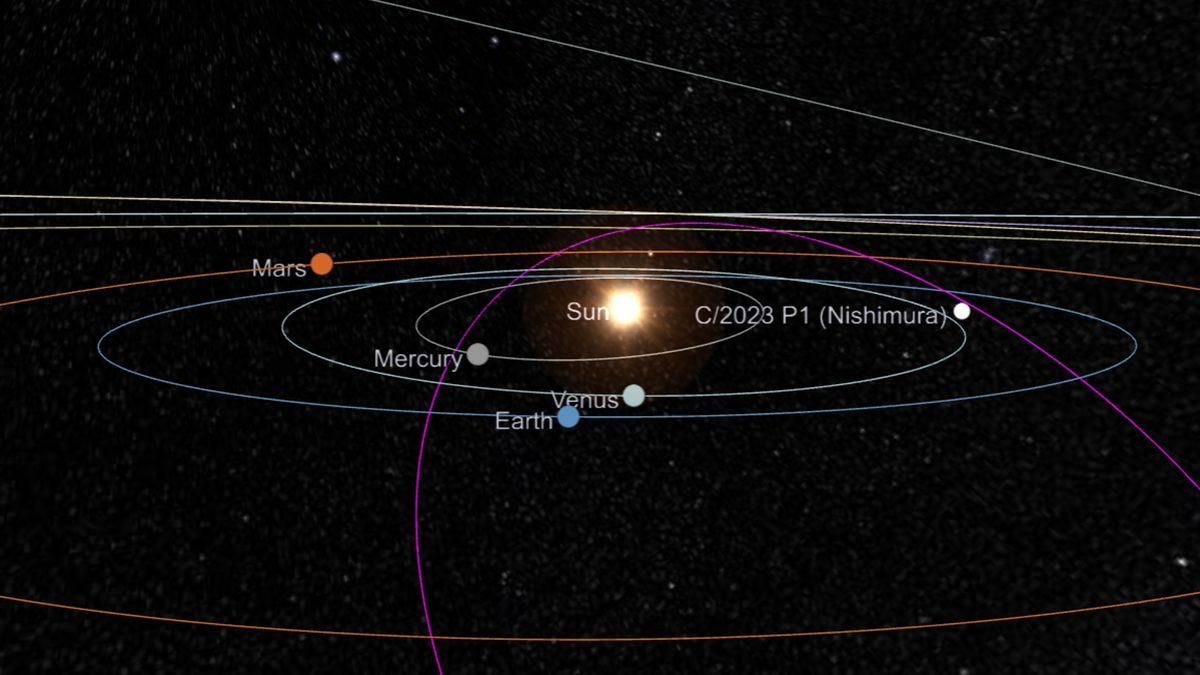
Comet Nishimura’s orbit means that this is likely its first and final trip through the inner solar system. It is possible that the comet originated outside our star system, which would make it the third known interstellar object ever detected, following ‘Oumuamua — which some astronomers speculatively suggested was an alien spacecraft — and Comet 2I/Borisov.
Discovered just two weeks ago by an amateur Japanese astronomer (after whom the comet is now named), the comet Nishimura will approach Earth at its closest on September 13th. But it will be at its brightest about five days later as it approaches the Sun.
Its fate?
Astronomers don’t know when the possible interstellar interloper will depart the solar system. However, it is also possible that the intense force of the comet’s solar slingshot will rip its solid nucleus apart, according to NASA.
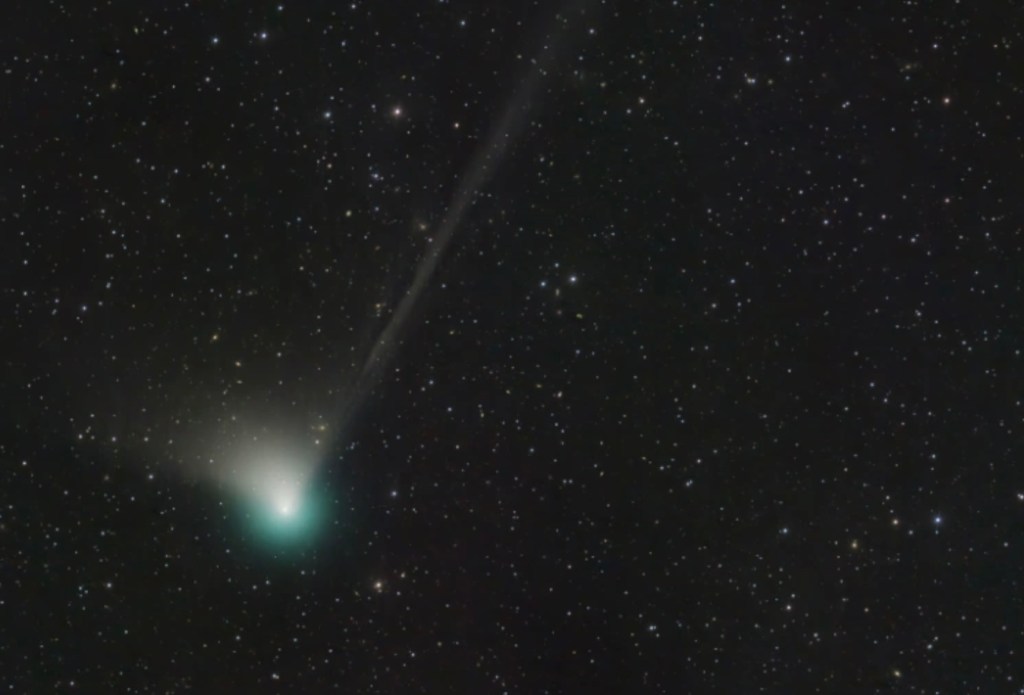
Also, its nucleus gives off a “green glow,” which is the result of sunlight breaking apart dicarbon, or diatomic carbon. So getcher geek on, chemical lab rats!
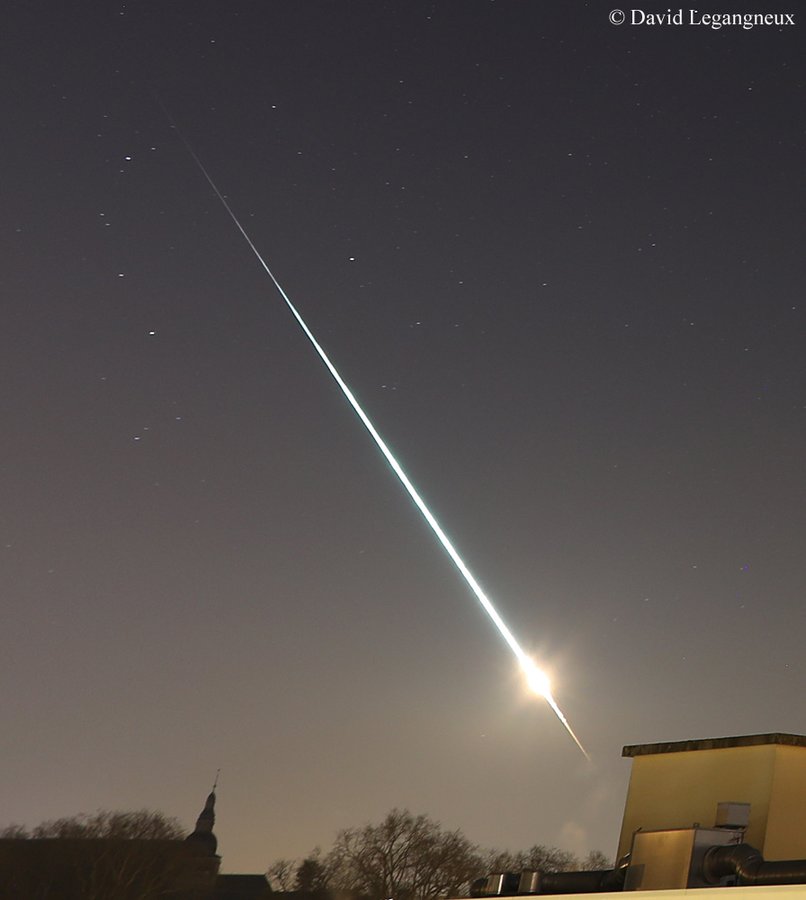
Anyway, “SAR2667” provided some cross-cultural entertainment for people living in England, France, Belgium, and the Netherlands. Lots of photos and videos online.
Interesting note from ESA: they were able to detect it and notify everyone exactly where and when it would disintegrate.
Since there are more than 30,000 of these things that orbit the Sun relatively close to Earth’s orbit, it’s a good thing we’re getting better at detecting them. Maybe we’d better up the ante on deflecting them…
A comet from the outer solar system is set to buzz Earth on Wednesday and skywatchers have a chance to glimpse the celestial object as it journeys through our cosmic neighborhood for the first time in 50,000 years.
If by “Wednesday” you mean “Wednesday in North America. There is no “on Wednesday” worldwide, thanks.
Observers in the Northern Hemisphere should look northeast just after the Moon sets and before dawn. You should be able to see it with a good pair of binoculars.
The last time Comet C/2022 E3 (ZTF) made a visit, Homo sapiens still had Neanderthal neighbors, so this is your one and only! ☄️







 M Thomas Apple Author Page