“WE will decide the fate of our Country – NOT some out-of-control, Radical Left AI company run by people who have no idea what the real World is all about,” Trump wrote.
Hmm. OK, what did this “Radical Left AI company” want?
US defense officials have pushed for unfettered access to Claude’s capabilities that they say can help protect the country, while Anthropic has resisted allowing its product to be used for mass surveillance or autonomous weapons systems that can kill people without human input.
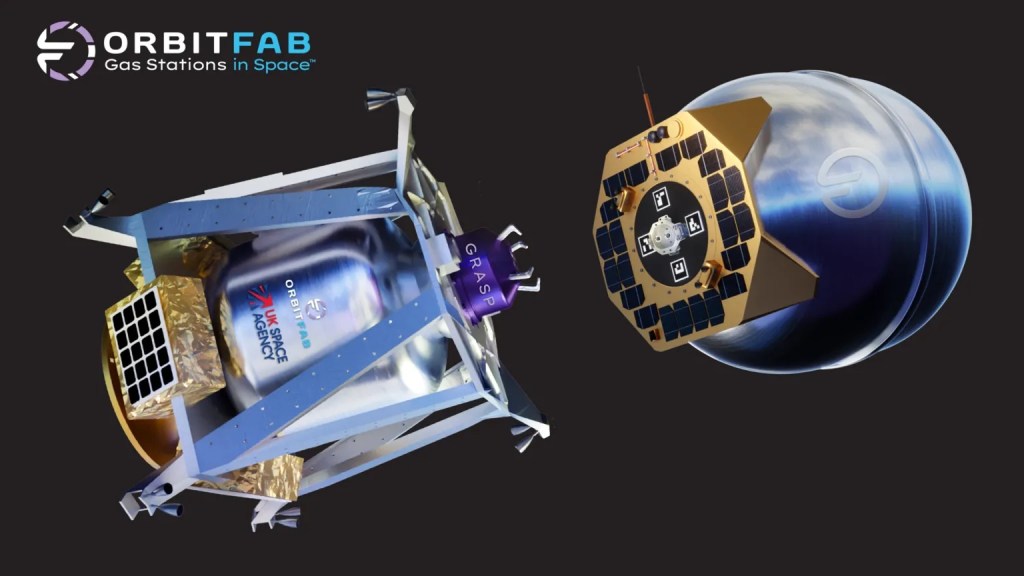
Jas Tiruvuru, business development manager for Orbit Fab in the UK and Europe, said the company was aiming to successfully demonstrate the technology in space by 2027.
“This will essentially be the first ever satellite to satellite refuelling demonstration funded here in the UK,” she said.
“Once we’ve proven that we can refuel to two spacecrafts we’ll be able to unlock a huge market potential.”
You know, maybe it’s just me, but I think 2027 may be a little optimistic. Just like the figure given in the article for how much the satellite sector will be worth in the future.
Aren’t there too many satellites already?
I’d like to see how this would help us colonize the solar system.
Actually, I’d like to see how they plan to get fuel up there in the first place.
Maybe my novel’s idea of using certain moons of Jupiter or Saturn as giant space gas pumps might help? 🪐
The researchers argue that “if” trees could be planted on Mars…
OK, just stop right there. I’m pretty sure Mars will struggle to support even grass, let alone trees.
And the argument that, due to a lack of oxygen, flammable wooden structures in space would not be in danger strikes me as a bit ludicrous…surely there would be oxygen inside the wooden structures?
And, you know, I do think I’ve seen this before some where…nah…
Post a comment on Reddit, answer coding questions on Stack Overflow, edit a Wikipedia entry or share a baby photo on your public Facebook or Instagram feed and you are also helping to trainthe next generation of artificial intelligence.
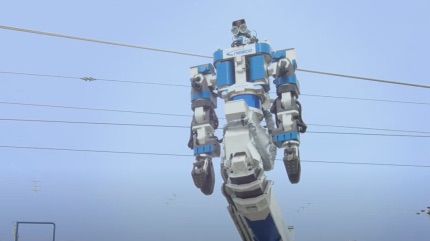
West Japan Railways (West JR), one of six companies that make up Japan Railways Group, has unveiled a giant “humanoid robot” to work on heavy machinery on its lines…
Interesting that in English the official name is West Japan Railways Company, while in Japanese it’s JR Nishi-Nihon Guruupu (JR西日本グループ), which means Japan Railways West Japan Group. It’s one of six “companies” that comprise what used to be “National Railroad” (Kokutetsu), owned by the government.
JR West is renowned to be badly run and somewhat corrupt. I wonder about this “robot” project. With the increase in “human accidents” (ie people hit by a train), I think it’d be better to hire more workers than to reduce staff and have the top level desk jockeys pocket the…
“Normal means” for whom, exactly? I can’t imagine the average worker in Tokyo will be able to afford this thing. Even if they had a physical space to store in.
And, you know, I think I’ve seen a “flying vehicle” like this somewhere already… 🚁
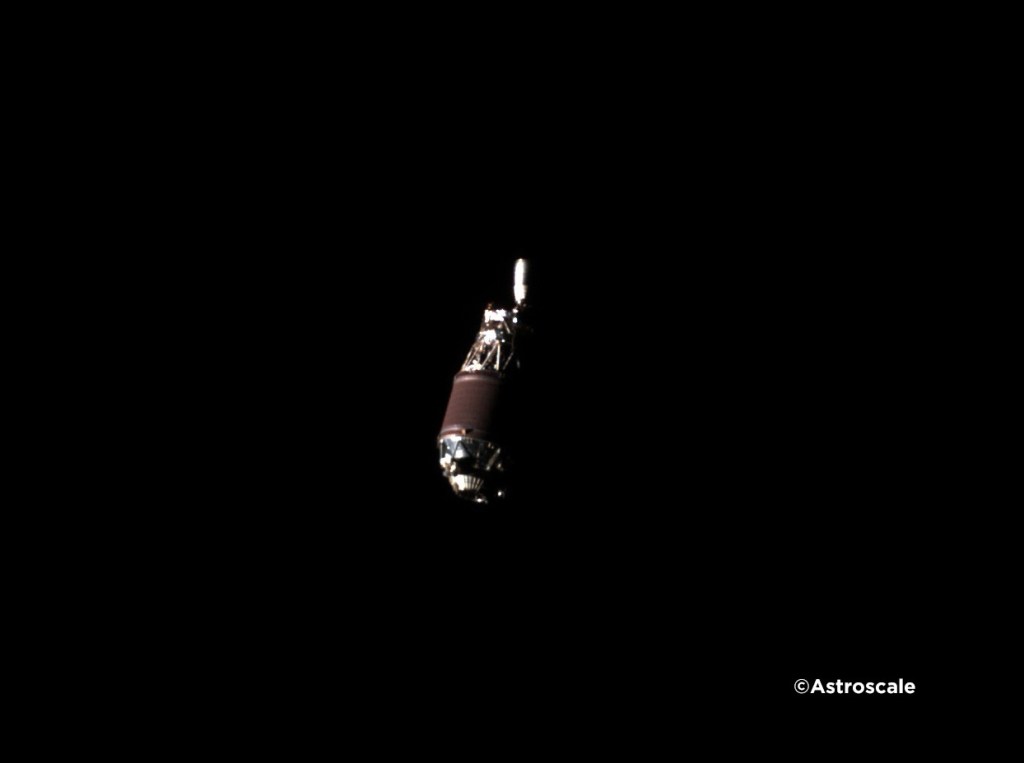
Japanese space company Astroscale Holdings Inc has unveiled what it calls the world’s first publicly released close-up image taken of space debris, hailing it as progress toward understanding the challenges posed by trash orbiting Earth.
I’m a TESOL teacher. Learning to use technology — appropriately — has always been a part of my job.
It’s the “appropriate” part that has difficult to deal with the past few years.
Yeah. Hi, Chat.
Forget about Zoom, LMS, video editing software, and all sorts of online sites that don’t need any knowledge of programming language.
I was making my own web pages in basic HTML and JavaScript back when people still though InternetExplorer was a good browser.
But tech is nothing more than a tool. And tools can be used well and badly.
And often the simple tech of a piece of paper and a pencil are all you need. No bandwagon mentality here.
So if anything I would say that, although I have always used technology to some degree for my job, I have had the luxury of experience (and a lot of mistakes!) to figure out when technology can help my job, and when it just gets in the way.
(FWIW I also teach a one-semester class about language, identity, and technology. And yes, we do analyze our selfies.)
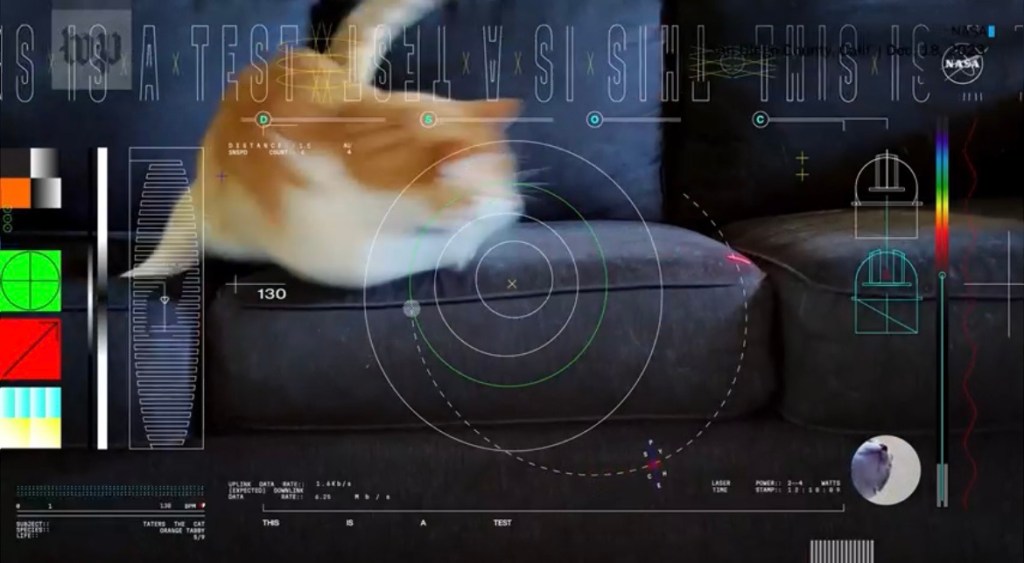
Taters the cat chases a laser pointer in a video sent to Earth from Psyche
Aiming the laser at the spacecraft so the transceiver knows where to point back is the most difficult part, Wright said. And because Earth and the spacecraft are both moving, the lasers must point to where the destination will be in a few minutes. “The beam’s so narrow, it can’t just point to Earth. It needs to know exactly where on Earth,” Wright said. “Trying to hit a dime from a mile away while you’re moving at 17,000 miles an hour — that’s the challenge.”
So NASA has been working on this idea for a while now. The invisible laser beam that carried this video file came from the Psyche probe, on its way to the asteroid belt between Mars and Jupiter.
Psyche is 19 million miles away right now. The laser beam took 108 seconds to reach Earth.
Mars and Earth are on average 140 million miles apart and can be up to 250 million miles apart depending on the timing of their respective orbits.
I don’t think lasers are the answer here. A good start, maybe, but you can do the math. Having to wait between 10 to 20 minutes, or more, for a one-way transmission (double that for an exchange of messages) would not be ideal for a human settlement in an emergency.
Star Trek style instant interstellar communication is still just scifi. Unless there’s still something out there we haven’t found yet, even quantum communication will take time…
But at least NASA has finally realized that non-science people like cat videos.





 M Thomas Apple Author Page