Manhattanhenge, a portmanteau of “Manhattan” and “Stonehenge,” is a twice-a-year solar event when the sunset lines up directly with the city’s grid, casting golden rays down city streets. Several of the stones in Stonehenge, the prehistoric monument in Wiltshire, England, experience perfect alignment with the sun during the summer and winter solstices, which is why the event takes its name from the rock formation.
I got two bone spurs, separated by two years, thanks to playing baseball in junior high school. Both were fingers on my left hand.
The first time was my left thumb first joint. The second time was my left hand ring finger second joint.
Both times, our local health clinic doctor put a metal splint on the finger, wrapped it in flexible bandage and sealed it off with a tiny metal clip.
And of course I stupidly went on playing baseball, because at age 15 guys think they are completely indestructible.
My ring finger stuck out when I batted. I’m lucky I didn’t get hit by a pitch in the hand (I did get hit on the knee, but that’s a whole ‘nother story).
Also, it inspired my baseball novel. So there was a silver lining!
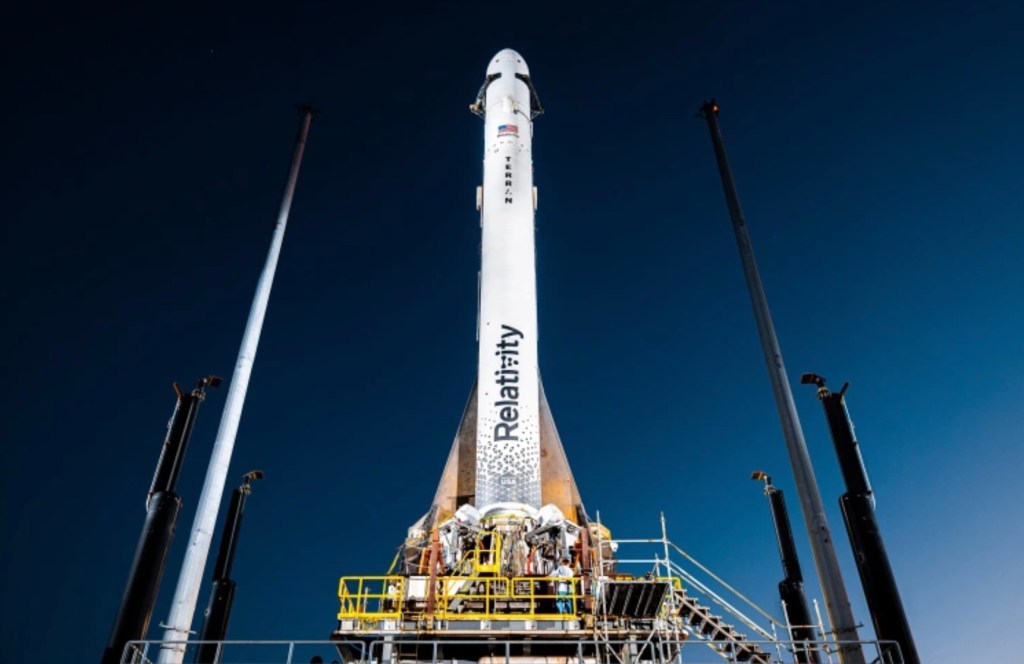
With just over a minute to go before liftoff, a California aerospace startup opted to stand down from launching the world’s first 3D-printed rocket on its inaugural test flight.
At least unlike the spectacular self-destruction of JAXA’s H3 this past Tuesday (Monday, Japan time), the team testing the California rocket wisely decided that it’s not a bright idea to stick a billion dollar satellite on an untested rocket. Repeatedly.
I’m beginning to feel that using 3D printed parts may not be the way to go with rocket engines…
“I’m less frightened by a Sydney that’s playing into my desire to cosplay a sci-fi story than a Bing that has access to reams of my personal data and is coolly trying to manipulate me on behalf of whichever advertiser has paid the parent company the most money.
“Nor is it just advertising worth worrying about. What about when these systems are deployed on behalf of the scams that have always populated the internet? How about on behalf of political campaigns? Foreign governments? “I think we wind up very fast in a world where we just don’t know what to trust anymore,” Gary Marcus, the A.I. researcher and critic, told me. “I think that’s already been a problem for society over the last, let’s say, decade. And I think it’s just going to get worse and worse.”
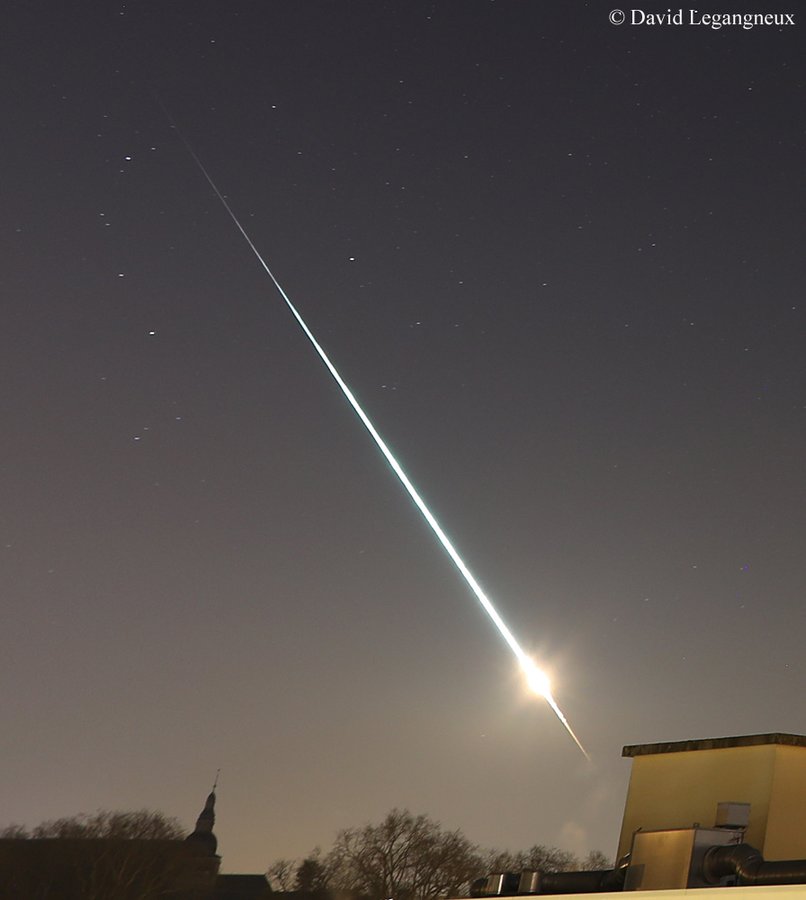
Anyway, “SAR2667” provided some cross-cultural entertainment for people living in England, France, Belgium, and the Netherlands. Lots of photos and videos online.
Interesting note from ESA: they were able to detect it and notify everyone exactly where and when it would disintegrate.
Since there are more than 30,000 of these things that orbit the Sun relatively close to Earth’s orbit, it’s a good thing we’re getting better at detecting them. Maybe we’d better up the ante on deflecting them…
Not too terribly helpful if you can’t read Japanese, but you can probably figure out which is water and which is “radical water.”
From 11 to 17 January, the Demonstration Business Promotion Team Osaka along with Sustainable Energy Inc. ran trials on a synthetic fuel produced from water and carbon dioxide present in the air. If successful, this could become the first carbon-based and truly carbon-neutral fuel of its kind.
So basically this company in Osaka did some water 💧 experiments with “radical water” (water whose molecules were subjected to a kind of electrolysis⚡️ to ionize them), then a “seed fuel” (a fossil fuel like kerosene) was added to create synthetic fuel ⛽️ which in turn will create more CO2 that can be used to create more synthetic fuel.
And no, I didn’t have to insert goofy 😜 icons, but I’m on the train right now 🚊 so why not. 😝
Anyway, this all just sounds too good to be true. Surely it’s prohibitively expensive 💴 to constantly electrify water to the point where its unbound electrons can be available to bind with synthetic fuel electrons. Tidal 🌊 generators, wind 💨 turbines, solar sun ☀️ panels, and thermal heat from volcanos 🌋 all seem more likely a source of electricity to power EVs. 🚗
At any rate, there’s been nothing in the news 📰 about this, so I doubt the experiments worked. Or if they did, someone has a vested interest in continuing Japan’s reliance on Middle Eastern, Indonesian, and Russian fossil fuels.
OK I arrived, so I can stop it with the icons 🛑 ✋ for now.
A Japanese telescope positioned on top of Mauna Kea, a dormant volcano on the Big Island of Hawaii, captured video of an eerie flying spiral in the night sky on Jan. 18.
In the video, a small bright spot appears and slowly gets brighter and starts to dissipate into a spiral before getting small again and disappearing.
In fact, it was the remains of a discarded Falcon 9 booster from the launch of a SpaceX satellite. And it isn’t the first time this has happened. Japanese TV talked about this, too (since it was a Japanese astronomy, at the Subaru Telescope, that first recorded it).
So, an Identified Flying Object!
Yay, more metallic junk.
(Thanks to Glen Hill for bringing this article to my attention.)
Since the Hayabusa2 returned with the sample from the Ryugu asteroid in December 2020, several important discoveries have been made – most notably analyzes confirming the presence of substances thought to be the building blocks of life on the asteroid, such as liquid water and organics fabrics.
Hayabusa-2 took several years to land on Ryugu (literally “Dragon Palace”), pound out just over 5 grams of asteroid material, and bring it back to Earth (landing in Australia in late 2020).
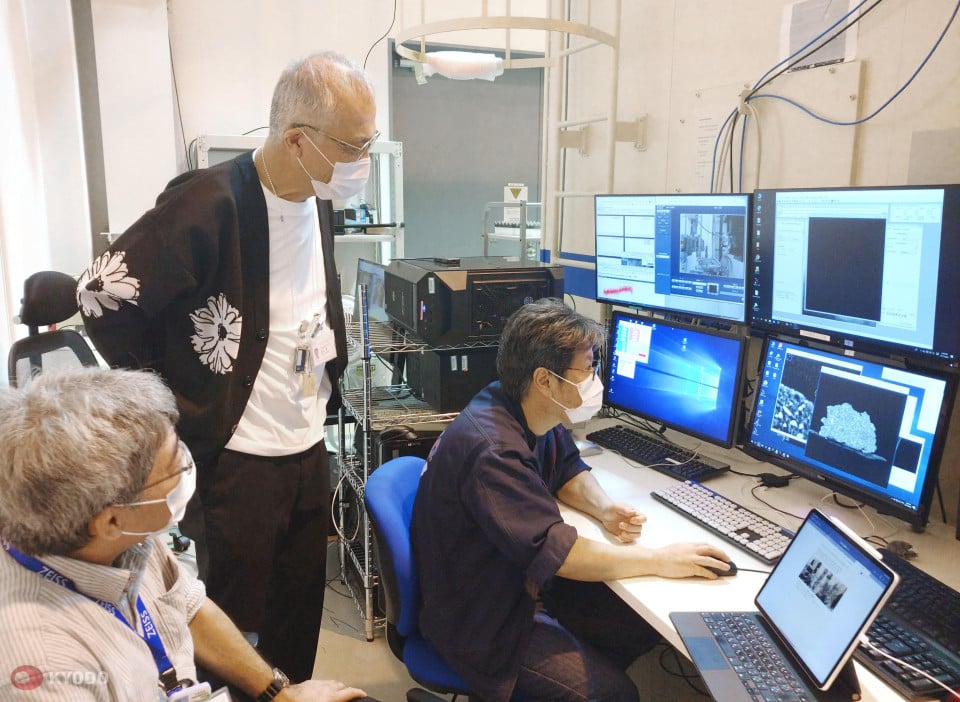
NASA scientists have confirmed not just frozen water but liquid — inside crystals called pyrrhotites. JAXA scientists (pictured above with Prof Tsuchiyama of Ritsumeikan University, my main employer!) continue to check the density of the samples.
The water is similar to the carbon dioxide-laden water of hot springs. The research teams have already discovered over 20 amino acids, the basic protein building blocks of carbon-based life.
Another theory called “panspermia” proposes that a key mineral (boron) missing on early Earth came in an asteroid from Mars. ☄️ Hmm. Did Mars produce asteroids? Or more like asteroids hit Mars and broke off lots of tiny fragments? That somehow survived the journey to Earth?
Seems a little unlikely. But there is now evidence that at least some proteins came from space rocks.
So, sorry, Ridley. This isn’t how it happened. Cool movie, though.
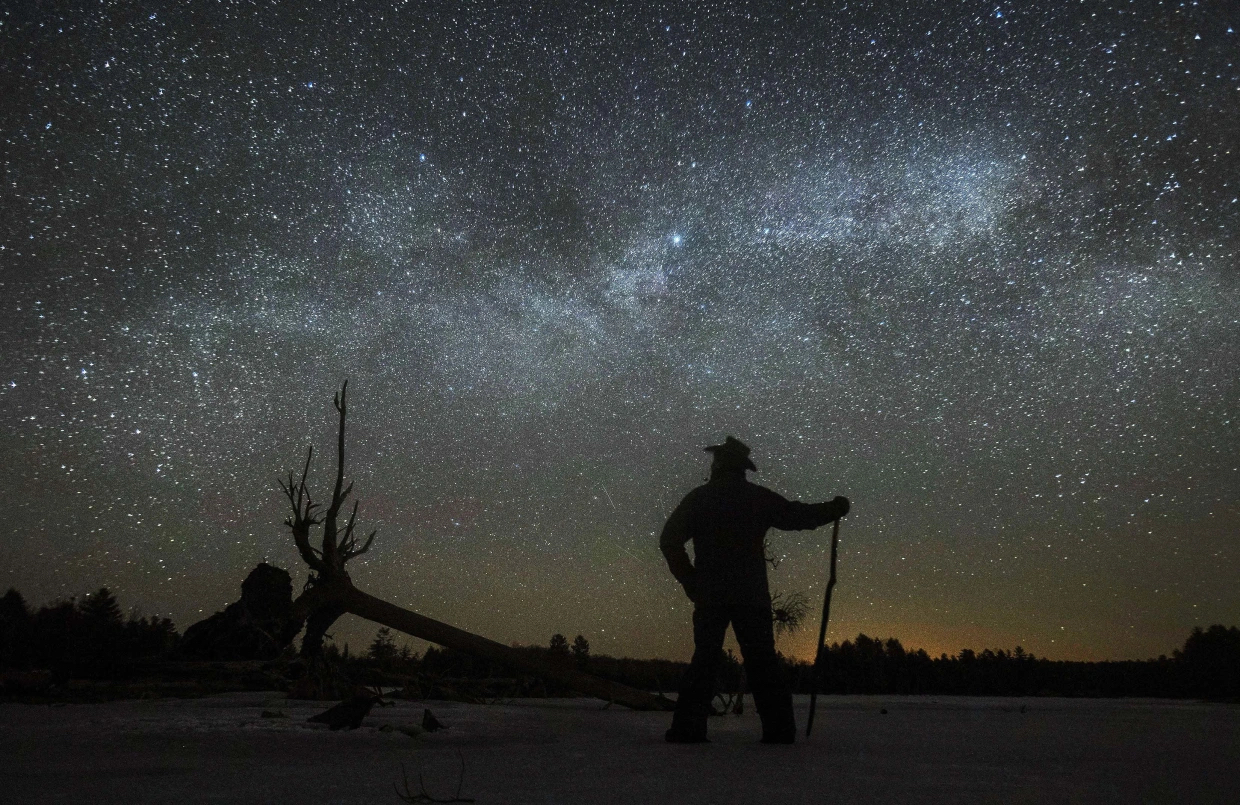
A new study that analyzes data from more than 50,000 amateur stargazers finds that artificial lighting is making the night sky about 10% brighter each year.
Each spring in my Current Events and Global Issues class, I have students read about environmental issues.
Pollution is obviously related. But they almost never guess the “seven types of pollution” (yes, I know some people country eight, or ten, or even twelve…it all depends on how you categorize them).
Maybe it’s because most of my students (to the order of 90%) come from medium and large cities. To me, having grown up in a mostly rural area (in elementary school, my town had about 400 residents and in junior and senior high I lived in a “queen village” that had — gasp — an incredible 4,000 residents) — well, being surrounded by darkness was no big deal.
We could see stars from our backyard. Lots of stars. We learned all the major constellations (of the Northern Hemisphere, anyway, since that’s what we could see).
And more importantly we could see lightning bugs (or “fireflies” or “glowworms” or “candle bugs” etc). Decreasing water quality is thought to contribute to their declining numbers, but it’s far more likely that our insistence on lighting up the skies all the time are preventing them from finding a mate (hence the reason they “flicker” at night).





 M Thomas Apple Author Page