I have arachnophobia in the first place and can’t even stand those little spiders that jump all around.
I came in the house once after working in the garden and realized a spider had gotten stuck in my hair (probably from weeding under the tomato plants).
Are there things you try to practice daily to live a more sustainable lifestyle?
Now this is an interesting prompt.
1. Organic gardening
I’ve been gardening for just over ten years now. My father had an organically-grown garden for several decades, and I’ve been able to get a lot of advice from him on how to grow vegetables without using chemically-based fertilizers and pesticides/herbicides.
To be honest, sometimes the insects and the weather do get the best of the plants. But at least I know what’s in them, and I can keep the soil healthy as well.
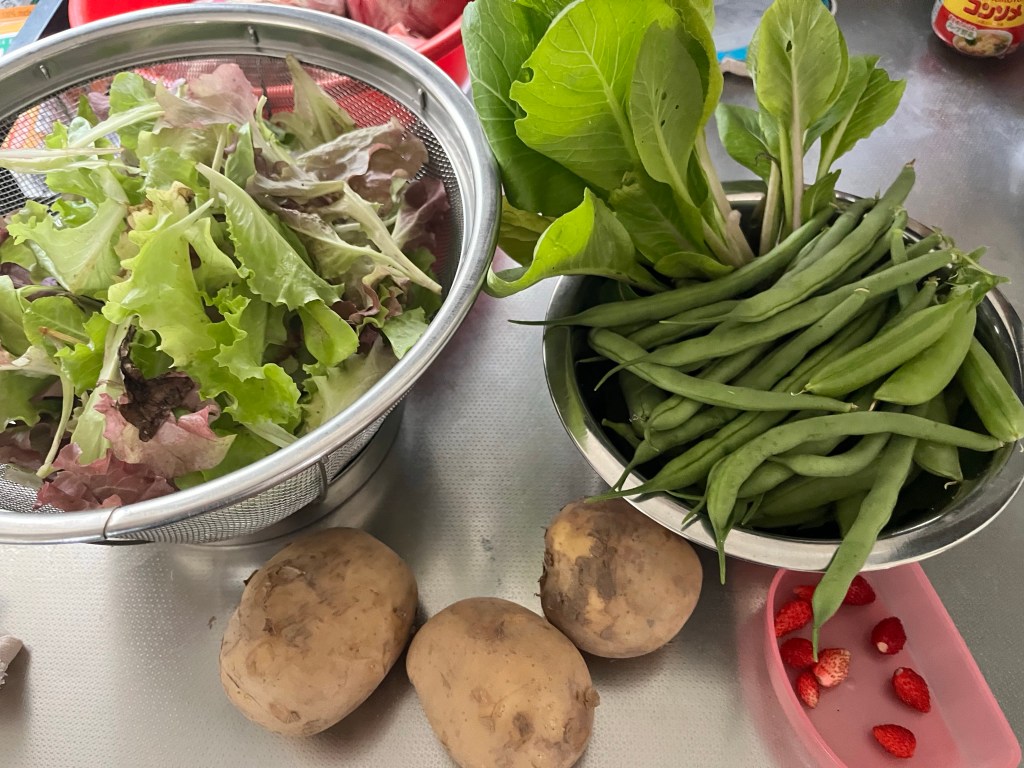
Everything in this photo was organically grown. Well, not the bowls…
2. Composting
Part of gardening is using compost, or rotten food scraps, as fertilizer. We recycle any food left uneaten as well as the bits of vegetables that are often tossed into the garbage, things like roots, insides of peppers, the ends of beans, and of course egg shells.
Egg shells can be reused to help bushes as well, due to their calcium content. Although I have found that the shells need to be rinsed before chucking them near the stem of bushes. Otherwise we get some unwelcome animal nightlife…
3. Reuse reuse reuse
Any clothing we no longer have a use for (kids got too big, Dad spilled coffee on a favorite shirt or cooking oil on a favorite pair of shorts, a towel that frayed and is too dangerous to use…) we do one of two things:
(i) recycle with our local school’s monthly clothing pick up, or
(ii) turn it into rags that can be used to clean up spills rather than use kitchen paper towels.
We also get a lot of plastic bags — and I do mean a lot — because practically everything in Japan comes wrapped in plastic. Cookies and sweets are all wrapped individually. Vegetables are wrapped in plastic. Even meat from the store winds up in separate plastic bags (just in case they leak on the way home).
So we reuse as many of the plastic bags as possible, typically to collect household trash (especially during allergy season!). And, of course, to collect plastic, plastic bottles, cans and bottles for recycling.
4. Bath water
Like most homes in Japan, we have a pump attached to our clothes washer. Japanese are accustomed to taking evening baths (I don’t; at least, not in summer, since the water makes me sweat and then I have to take a shower all over again). The next morning, we reuse the bath water to wash clothes.
5. No AC or dryers
Strictly speaking, we do use the AC on occasion. But we designed our home to have lots of sliding doors between rooms and wide windows and balcony doors. That way, we can just open up everything and have a nice breeze come down the mountain behind us. The house stays relatively cool even during the hot sticky summer months and we can avoid using air conditioning (except when it rains and we have to close windows).
We also hang out clothing to dry to avoid using the dryer. It’s better for clothing, anyway, and in addition to not wasting electricity, lowers our utility bills.
These are just a few examples. It’s not much, but a little bit here and there adds up to a lot over time.
Now if you’ll excuse me, I need to go throw some used egg shells under the tomato plants. 🍅 🥚
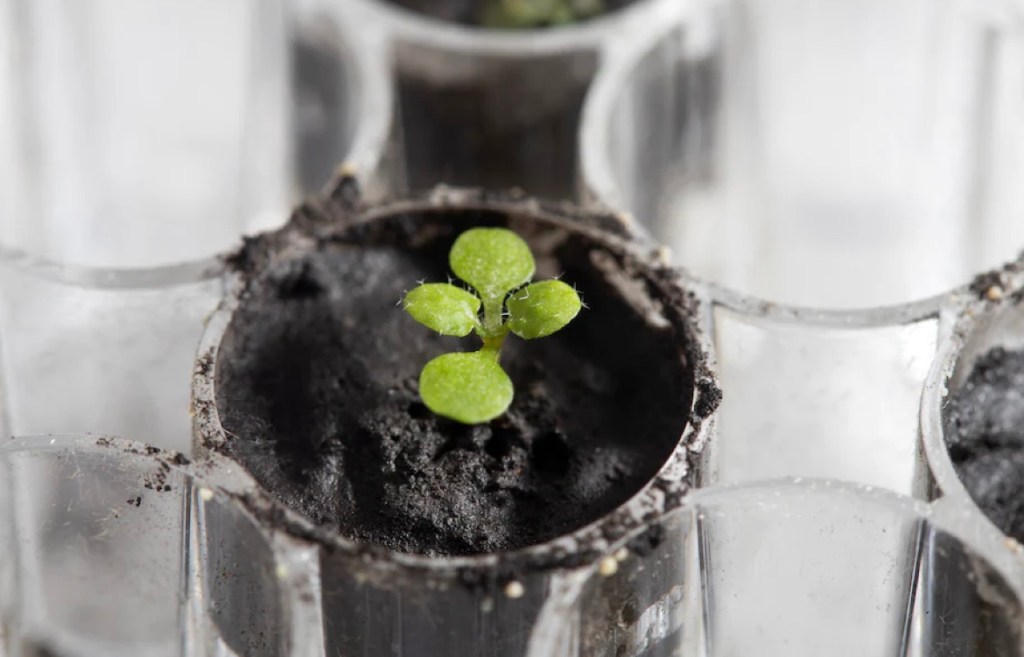
The samples were extremely hydrophobic, and repelled water as if it were the most disgusting thing ever invented. Researchers labored to get the lunar soil to gradually soak up water. They also added a nutrient solution.
This past Monday, city workers came to cut down a cherry tree near our house. It had been there for years.
We found out later that a neighbor had complained that leaves falling in her backyard were a nuisance to clean. The fact that local children (and adults alike) treasured the cherry blossoms each spring seemed to escape her.
And cherry blossom viewing season is just around the corner. What a shame. A waste.
More’s the shame, I only have two pictures of the tree in full bloom.
Fleeting moments, lost in time and memory.
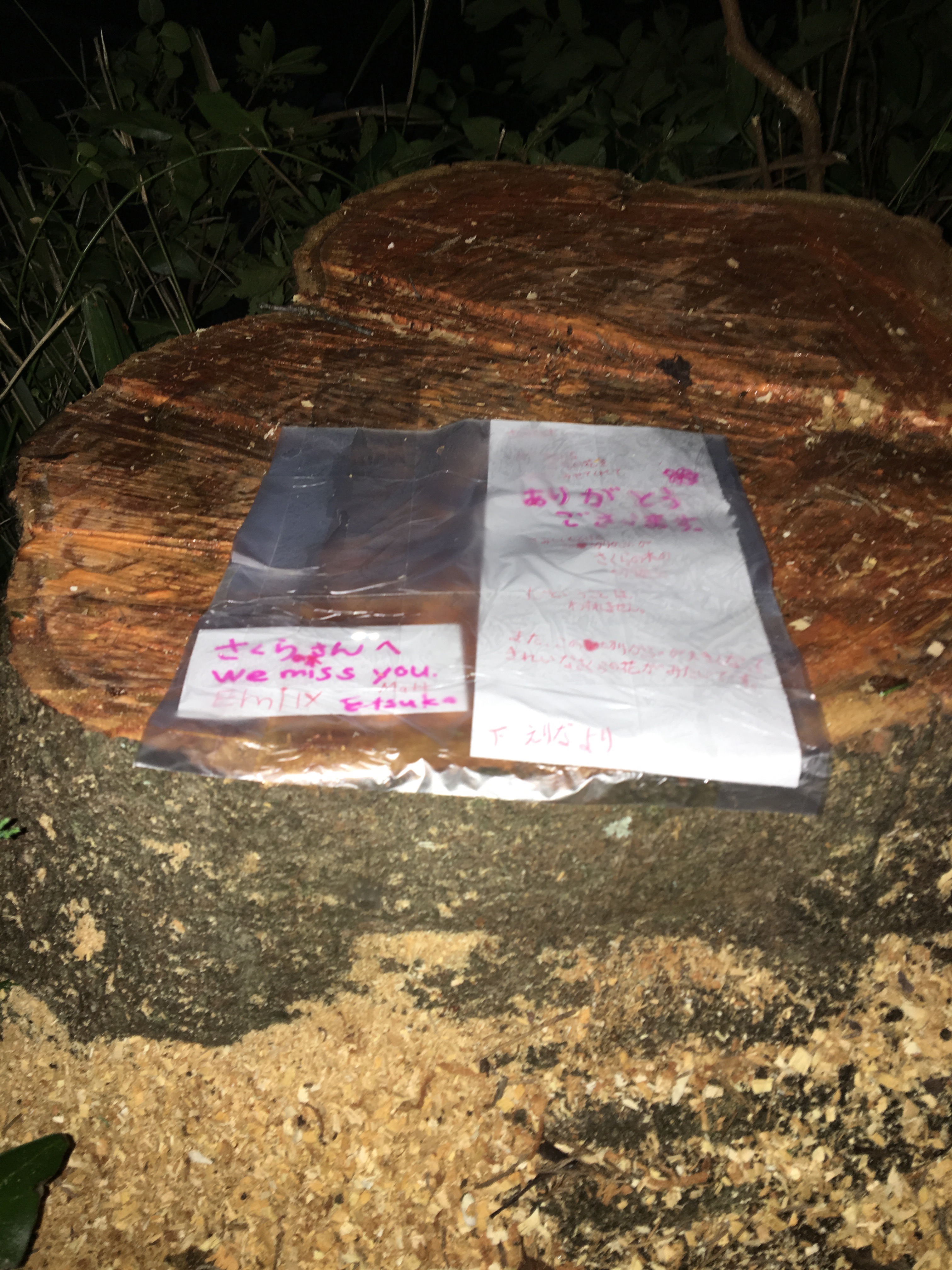
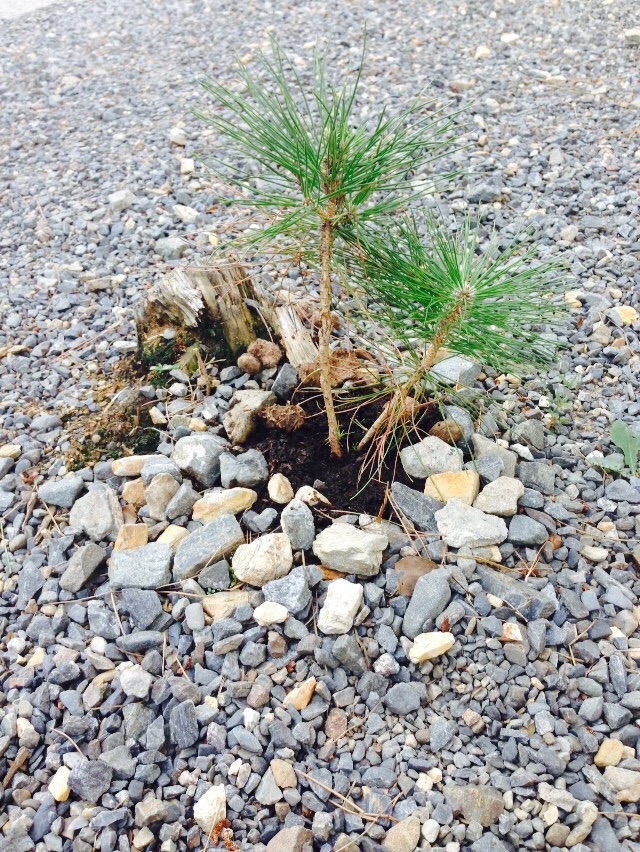
My children wrote a heartfelt letter to the tree, and I taped it as best I could to the stump:
“To the Cherry Tree,
For always showing your cherry blossoms to us until now, thank you.
We miss you, but we’ll never forget that this stump is the stump of a cherry tree.
If this stump ever grows, we want to see cherry blossoms again.”
Kyoto, where I work, is chock full of temples and shrines. Every day I walk to campus, I walk through a Rinzai Zen temple along the way. While the temple itself is not as famous or as old as others nearby, it is popular among tourists for its gardens, open public lectures, and guest houses. There’s a nursery school within the temple grounds, and TV crews occasionally can be seen filming for various end-of-year specials. Because it’s located in a residential neighborhood near several high schools, students and office workers alike travel through it daily. After a long, crowded train ride during the morning rush hour, walking through a zen temple is an incredibly relaxing experience. I’ve walked through the temple grounds every day for three years now; I have to remind myself how lucky I am.
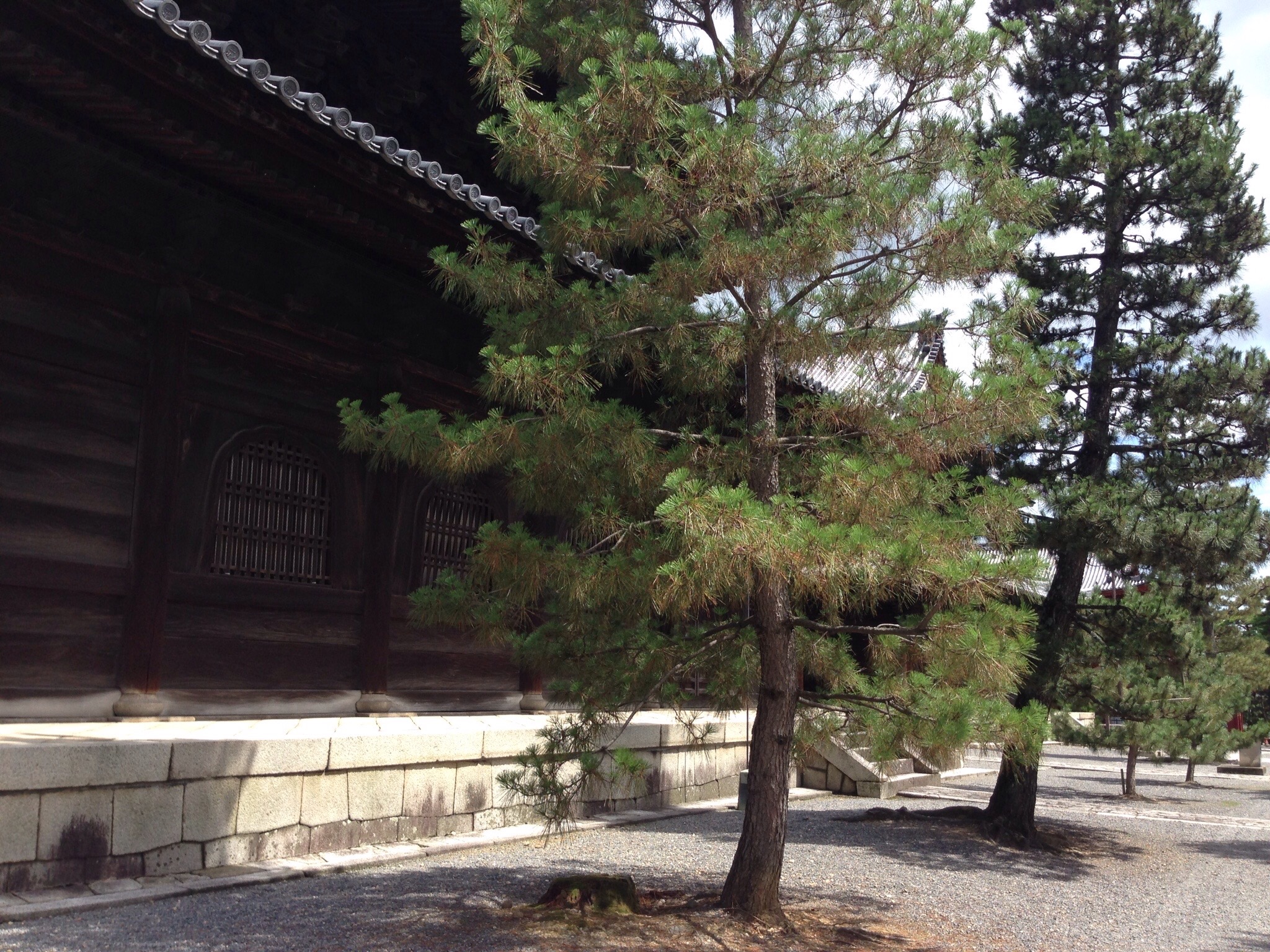
Last week, after a typhoon crossed over Japan just south of us, I was heading home through the temple when I saw an older man squatting down in front of a small pine tree. He had taken off his hat, with a small white towel draped over his shoulders to prevent sunburn, and was silently contemplating the tree. I watched as he took a drink from a water bottle, then poured the rest of the bottle around the base of the tree.
I don’t know what he was thinking, of course, but I like to imagine: how long would it take for the sapling to equal the other pine trees in the temple precinct in size? He might no longer be alive then. How long ago had the older trees been planted, as saplings? Perhaps he had not even been born yet.
Pine trees (matsu) have long been associated with zen Buddhism and zen temples. Zazen (sitting meditation) is practiced by Rinzai Zen monks, and visitors to this temple are encouraged to join the morning zazen when they stay at the guest house. But really all you need is a tree, and your imagination, to understand how short life is. How mysterious. How tenacious. How precious.



 M Thomas Apple Author Page