The comet has a core of dust, gas and ice surrounded by a bright cloud of gas known as a coma. Sunlight and solar radiation can heat the comet’s core, sometimes causing violent outbursts like the ones observed in July and Oct.
Herman said the comet’s temporary horns are thought to originate from these icy eruptions. The comet’s structure may be shaping how the spewed clouds of gas and ice appear from Earth, creating the appearance of horns to ground-based telescopes.
Carbon accounted for almost five percent of the sample’s total weight, and was present in both organic and mineral form, while the water was locked inside the crystal structure of clay minerals, he said.
Scientists believe the reason Earth has oceans, lakes and rivers is because it was hit with water-carrying asteroids 4 to 4.5 billion years ago, making it a habitable planet.
We have ample evidence now that all water on Earth was brought during the “Late Heavy Bombardment” period (4~4.5 billion years ago). Imagine how many rocks it took to get enough water (estimates anywhere between 20 and 200 million years of asteroid after asteroid slamming into the Earth).
And the only reason life exists on Earth is that there is enough iron and nickel in the Earth’s core to generate a magnetic field to prevent solar radiation from ripping off the atmosphere. Which is likely what happened to Mars.
(Alright, alright, technically electrical currents running through the liquid iron outer core as well as in the crust and ionosphere also contribute to the magnetic field. Go check out this horribly complicated explanation if you like.)
Note that this is the third time to get asteroid dust to examine. JAXA has managed to do this twice now. But Hayabusa-2 only got about 5 grams. The OSIRIS-REx project got about 250 grams (1/2 lb). Lots more = lots more to save for future researchers who will have developed even more sophisticated analysis methods.
Now lets get some PEOPLE on those things and start mining and living in space, already!
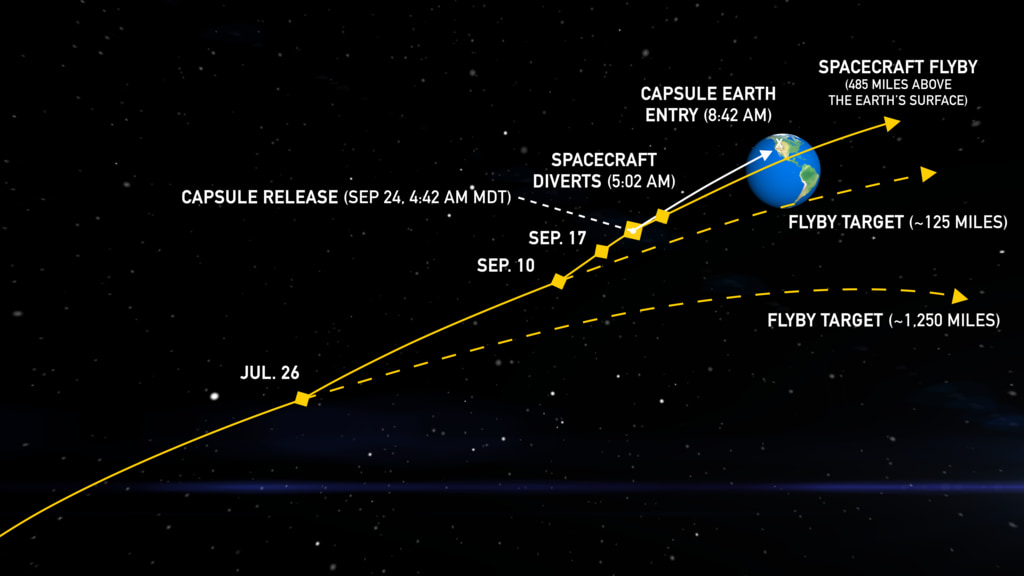
Currently, OSIRIS-REx is located at a distance of 7 million km from our planet. On September 24, OSIRIS-REx will drop a capsule with samples of asteroid matter, after which it will enter the earth’s atmosphere and land on the territory of the Utah Test and Training Range.
The tiny spacecraft launched back in 2016 and reached the asteroid Bennu in 2021.
One main reason for this mission is to find out what Bennu is made of. After the asteroid spewed out tiny “micromoons,” OSIRIS-REx successfully collected a tiny soil sample. By “tiny,” I mean less than 50 to 60 grams. And it couldn’t actually land, since the asteroid is too small to have enough gravity to support the spacecraft.
Now we have less than two weeks to find out what’s in the soil — assuming the capsule is retrieved without incident. And then OSIRIS-REx will head back out to visit yet another asteroid (Apophis) in 2029.
Yes, that famous “planet-killer” the media screamed about a few years ago as “the most dangerous asteroid in the world.” (uh. “in the world”?) It will “only” approach within 38,000 km in April 2029, but could possibly collide in 2036.
Way back in 2015, my good friend Rami Z Cohen came to me with an idea for a story. He had written two or three scenes about a group of asteroid hunters who stumbled upon something bizarre. The idea of mining asteroids was news at the time (and still is, although probably too expensive right now and not a worthwhile investment until we actually get some people in space who need metals without relying on NASA/ESA/JAXA/ISRO/etc).
So Rami and I began to email ideas back and forth for a few weeks, then we started to flesh out his characters and plot. I wrote a synopsis and outline and we hashed out the background.
One main reason for landing at the Moon’s South Pole is that the presence of water would help us build permanent settlements…
This region on the moon is an attractive place for humans to build a lasting presence due to the fact that water ice is located underfoot. Future moon-dwellers can potentially tap into that water for consumption, or even to create rocket propellant, instead of depending on water shipped from Earth.
Another reason has now been found…iron, manganese, aluminum, titanium…and “surprisingly” sulfur. Why should they be surprised? It’s already been established that the Moon has ice, and sulfur forms every time hydrocarbon and sulfates combine. Plus sulfur obviously results from volcanic activity, and it’s likely the Moon was volcanic when it first formed. And sulfur is also produced through nuclear fusion – i.e., the Sun.
So what can we do with this knowledge?
Having a more complete chemical composition of the lunar south pole area means future travelers to — and possible inhabitants of — the region can also plan for what else they don’t need to bring from Earth. In particular, some scientists have suggested moon-dwellers could use sulfur in bits of infrastructure such as building materials, solar cells and batteries.
Hmmm…I think more studies are needed first…define “bits,” for example.
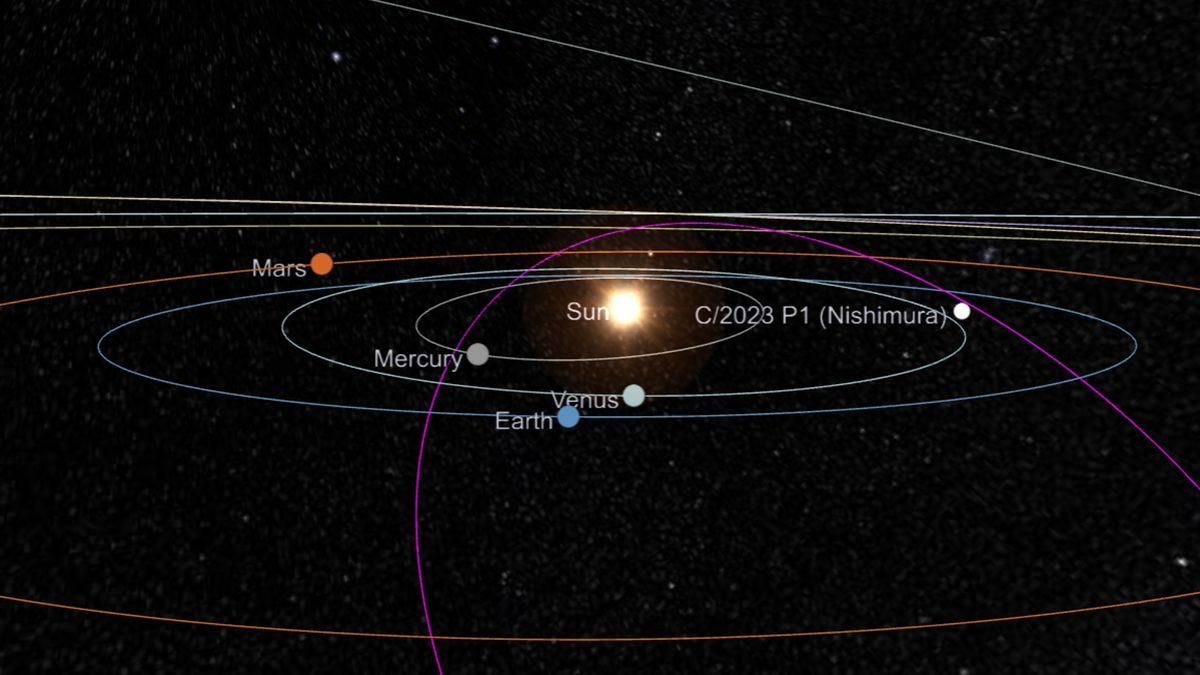
Comet Nishimura’s orbit means that this is likely its first and final trip through the inner solar system. It is possible that the comet originated outside our star system, which would make it the third known interstellar object ever detected, following ‘Oumuamua — which some astronomers speculatively suggested was an alien spacecraft — and Comet 2I/Borisov.
Discovered just two weeks ago by an amateur Japanese astronomer (after whom the comet is now named), the comet Nishimura will approach Earth at its closest on September 13th. But it will be at its brightest about five days later as it approaches the Sun.
Its fate?
Astronomers don’t know when the possible interstellar interloper will depart the solar system. However, it is also possible that the intense force of the comet’s solar slingshot will rip its solid nucleus apart, according to NASA.
Also, its nucleus gives off a “green glow,” which is the result of sunlight breaking apart dicarbon, or diatomic carbon. So getcher geek on, chemical lab rats!
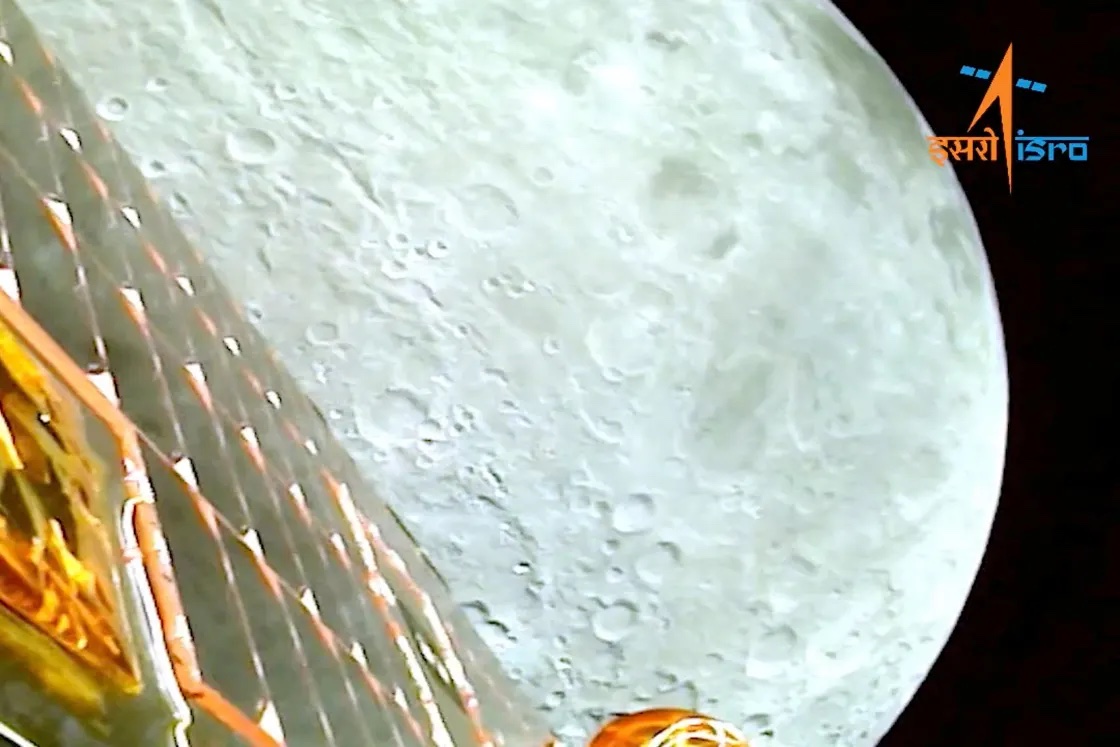
Taken just prior to landing…the “image” shown of it actually landing was not real but a simulation.
India and Russia had been locked in a race to the lunar south pole. The Luna-25 spacecraft that crashed was the first moon-landing spacecraft launched by Russia’s space agency in almost five decades. Roscosmos officials said Sunday they lost contact with the lander after it fired its engines in preparation for a descent to the surface.
It wasn’t much of a “race,” tbh. India had been planning this for years, while Russia randomly launched a craft that had virtually no chance of succeeding.
Congratulations, ISRO! You should have some company over the next couple of years. Here’s hoping that international cooperation and not competition will lead humanity to permanent settlements on the Moon. Mars, and beyond…
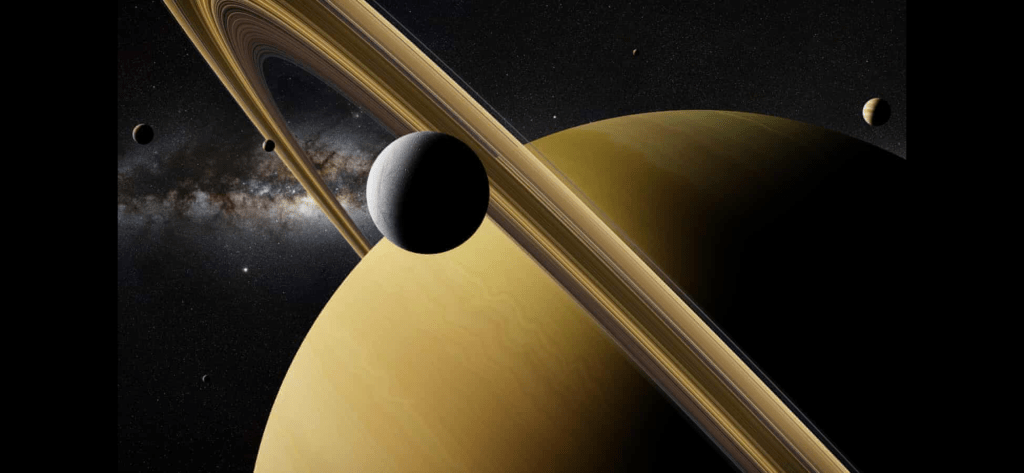
Scientists have suspected for a long time that this tiny moon of Saturn may be the best place in our solar system to look for life.
Now they have confirmed evidence of all six crucial elements necessary for life to exist (life as we know it, anyway): carbon (C), hydrogen (H), nitrogen (N), oxygen (O), phosphorus (P), and sulphur (S). If present as a phosphate, essential for DNA and RNA to exist, the discovery of phosphorus on the 310-mile-wide Enceladus may indicate life of sort sort, perhaps at a microscopic level beneath the icy surface.
One guess is that the oceans of Enceladus have at least 100 times more phosphorus than the Earth’s oceans. That would make for quite the carbonated fizzy pop. Methane has already been seen coming out out of various “ice geysers” (a.k.a. cryovolcanoes). Since methane results from rotten organic material, there logically should be something alive out there.
Now we just have to get back out there and figure out a way to find them.
In a few billion years, our aging Sun will run out of hydrogen fuel in its core and begin to swell, eventually engulfing Mercury, Venus, and probably Earth itself. Known as the red giant phase, this is a normal step in a mid-sized star’s life cycle, when it swells to hundreds of times its usual size. There are plenty of red giants in the night sky, but astronomers have never caught one in the act of swallowing its planets — until now.
The record-breaking plume reached nearly 6,000 miles into space – covering the distance between Ireland and Japan – and poured water into the void at an estimated rate of 300 litres a second.
Note that the water jetted out into space nearly 40 times longer than the actual size of the moon (about 500 in diameter, or as the Gurdian puts it “500-mile-wide” for those who forgot the meaning of “diameter).
Enceladus is probably the best bet for life elsewhere in the solar system due to its water — and while whipping around Saturn once per day, which is likely the reason for underwater volcanos and other vents that may provide the proper chemistry for life.








 M Thomas Apple Author Page