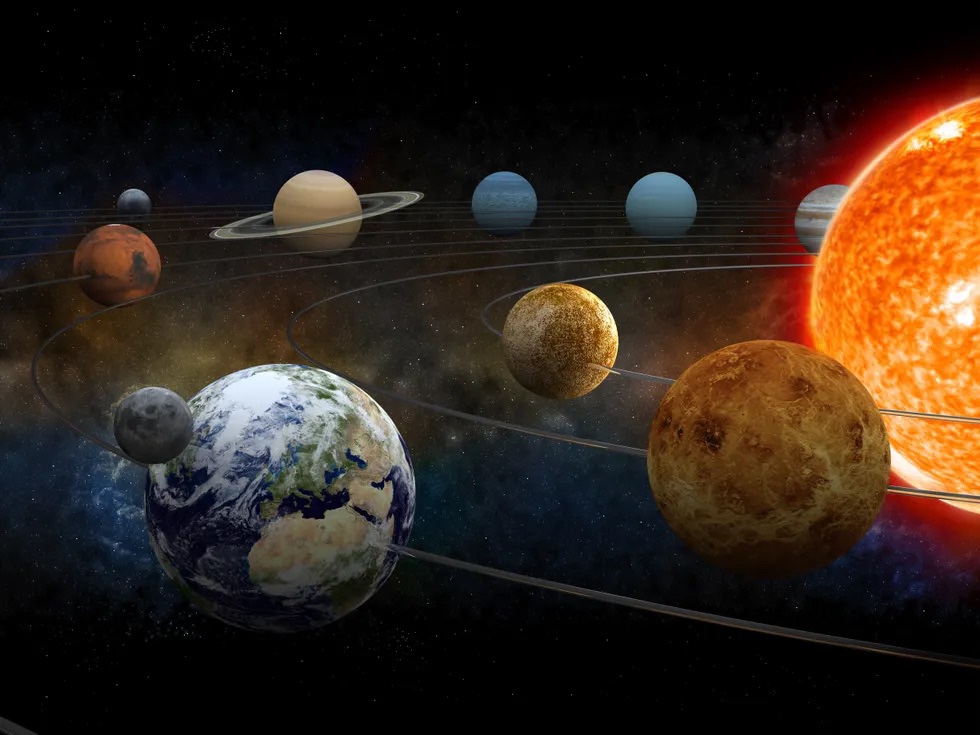
Note: not to scale (duh). Thanks, Getty. Uh, is this really the best way to show the solar system? (There…are…NINE..planets!)
Think of pizza dough flattening into an enlarging disk as it’s tossed. Because the cloud had an initial rotation, this same direction of spin has persisted…
So basically the answer is simply that that’s the way they all started out.
Some moons, however, do have retrograde orbits. I.e., they orbit in the opposite direction around their respective planets. Some small asteroids and comets also have retrograde orbits due to their small mass being easily affected by larger cosmic objects.
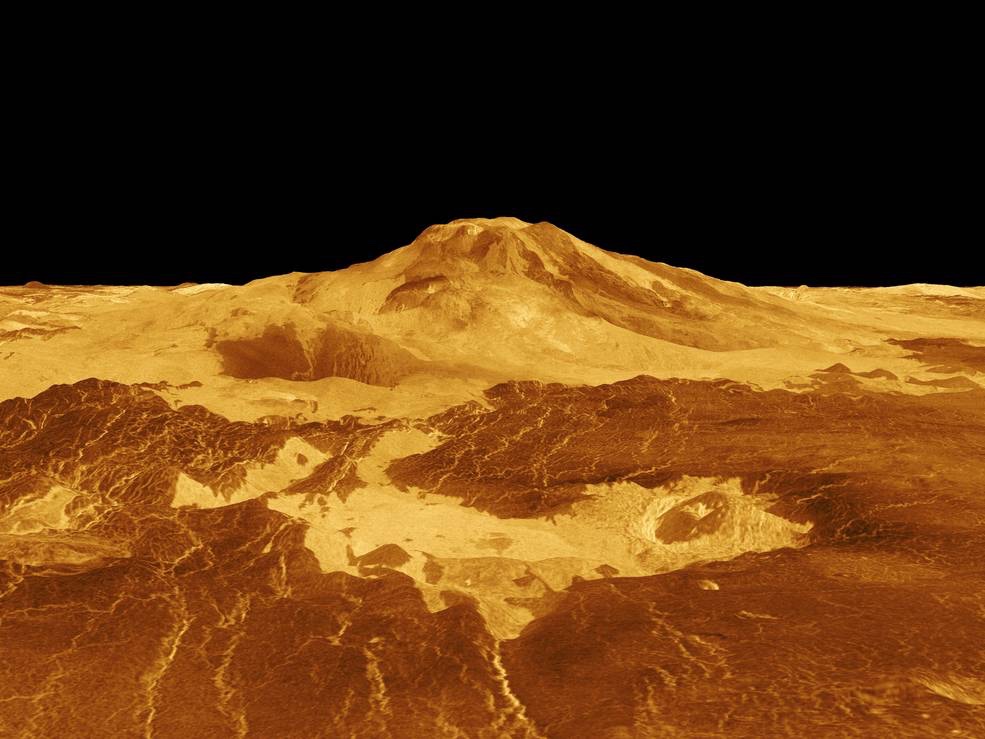
A new study shows that massive volcanic eruptions over an extended period of time may be responsible for changing the planet into what it is today. If there was simple life on ancient Venus, volcanism was its doom. The study also shows how powerful volcanic activity has played a role in shaping Earth’s habitability and how Earth only narrowly avoided the same fate as Venus.
Venus is hot enough to melt lead, which is why no spaceship has ever survived to land on the surface.
And, no, there is nothing alive floating around in its toxic atmosphere.
But this is a neat article. Three future missions are planned for Venus (two by NASA – VERITAS and DAVINCI – and one by ESA – EnVision, which sounds more like a song and dance competition than a scientific probe).
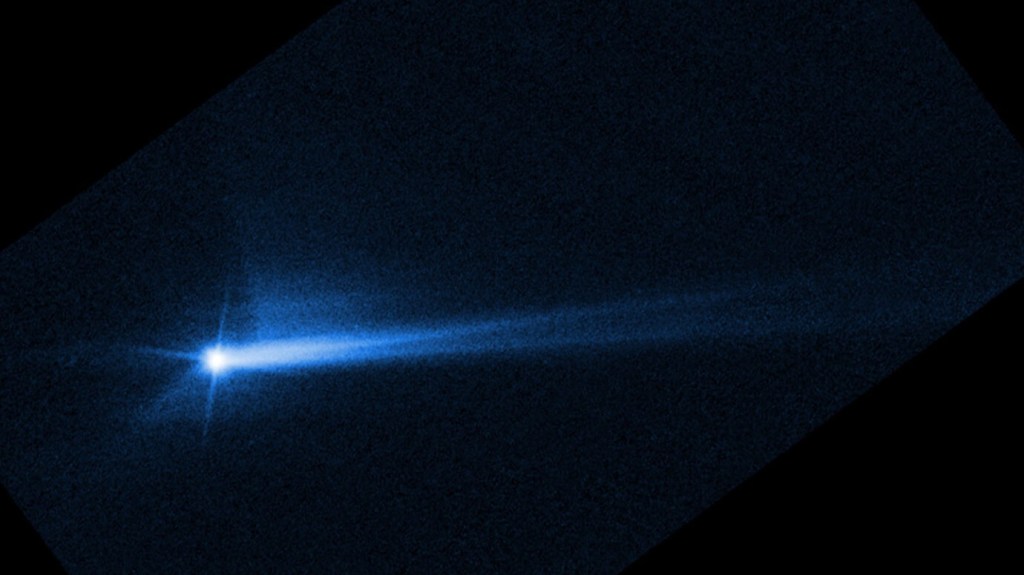
A change of 32 minutes in orbit — but only 4% of the total orbital period. To deflect an asteroid away from Earth, it’d better be done several years in advance. 🌏
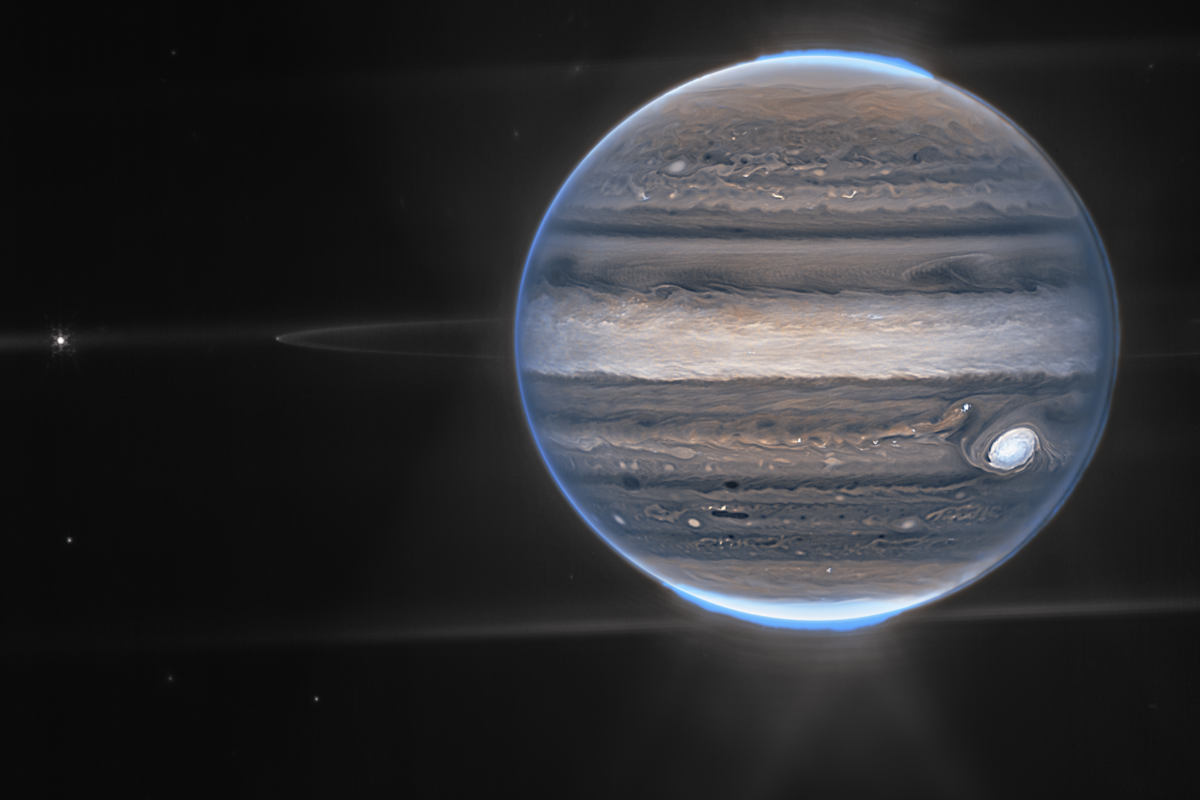
Courtesy NASA. Note that the blue, white, green, yellow, and orange colors are artificial, only added to make features revealed by infrared stand out for human eyes. You can see the planet’s rings, aurora, and two “tiny” moons (at left; they’re not really that tiny!).
“We’ve never seen Jupiter like this. It’s all quite incredible,” said planetary astronomer Imke de Pater, of the University of California, Berkeley, who helped lead the observations.
“We hadn’t really expected it to be this good, to be honest,” she added in a statement.
The above is supposed to be in “quote” format, but WP really messed up this feature when they switched to so-called “block” mode (which I can’t stand).
Anyway, the image is fairly spectacular, from the new James Webb Space Telescope which is positioned 1 million miles away from Earth (i.e., in the second LaGrange point, or L2).
First of all, stop calling it “the golden asteroid.” That’s confusing people (the headline of the article linked below even uses the phrase “gold mine.” Come on, lazy journalists.)
If 16 Psyche is worth mining, when could such operations proceed? Citigroup thinks that space mining, including from the moon and asteroids, will be a $100 billion-per-year business by 2040. Launch costs will continue to decrease and experience in operating in space will continue to expand until such a business makes economic sense.
Well, how heavy do you think the materials to make buildings and ships in outer space are?
If we’re serious about putting people on the Moon and Mars, then it makes much more sense to set up robotic mining factories and assemble everything in space.
All this needs is a little incentive…like a new space race…
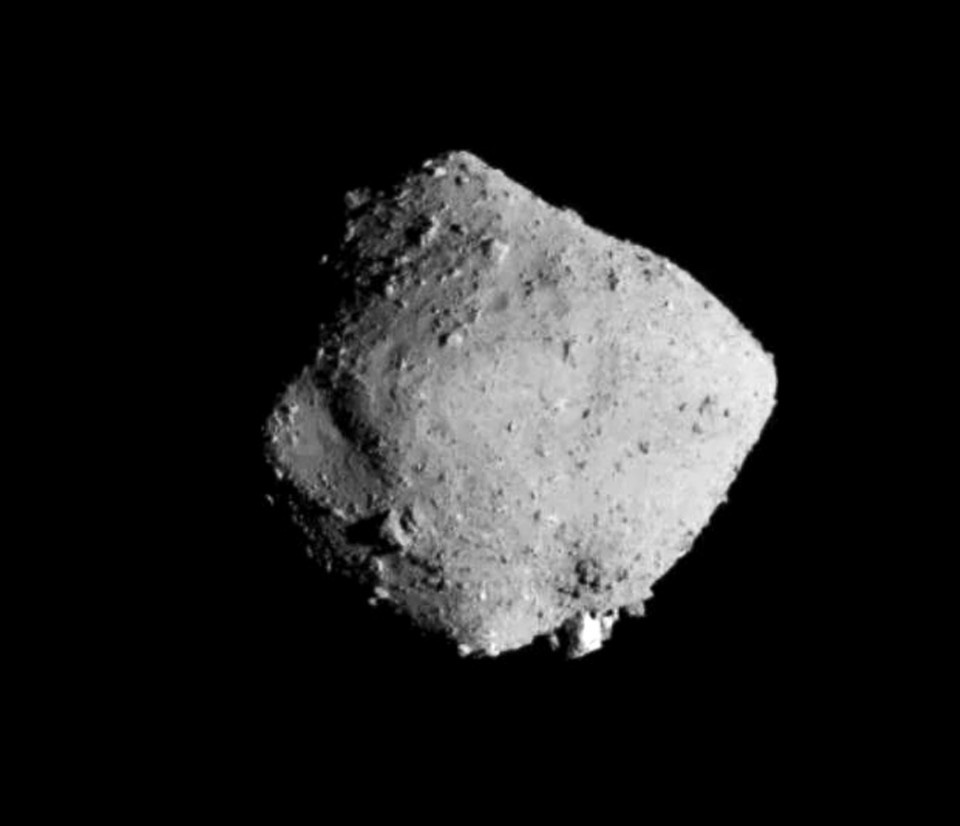
More than 20 types of amino acids have been detected in samples Japan’s Hayabusa2 space probe brought to Earth from an asteroid in late 2020, a government official said Monday, showing for the first time the organic compounds exist on asteroids in space.
This lends support to the hypothesis that life on Earth was brought to it during the Late Heavy Bombardment period – in which meteors brought not just water but the building blocks of life…
Now imagine if someone were to find an asteroid with addition proteins NOT found on Earth… (i.e., my novel’s scientific premise…)
The samples were extremely hydrophobic, and repelled water as if it were the most disgusting thing ever invented. Researchers labored to get the lunar soil to gradually soak up water. They also added a nutrient solution.