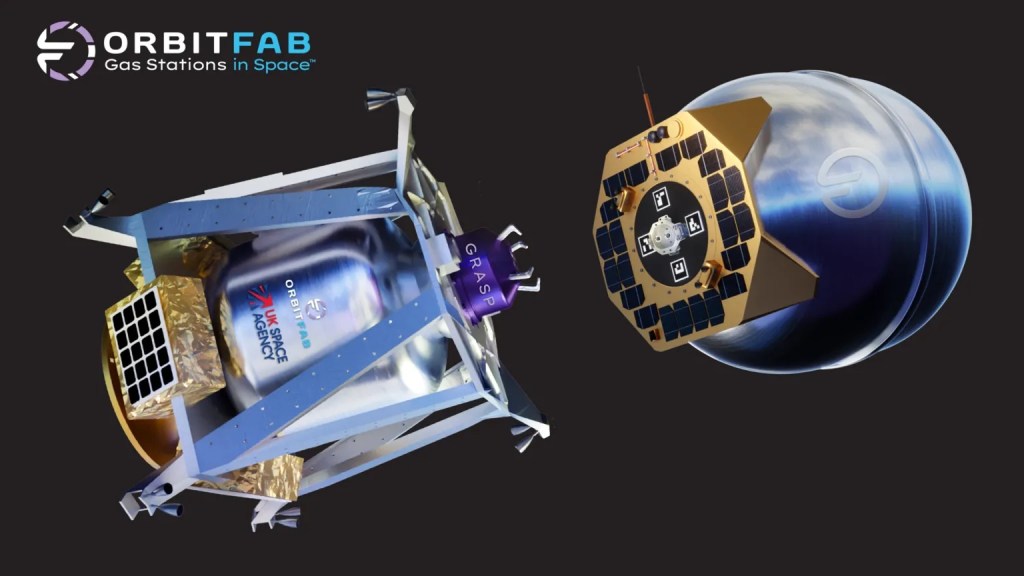
Jas Tiruvuru, business development manager for Orbit Fab in the UK and Europe, said the company was aiming to successfully demonstrate the technology in space by 2027.
“This will essentially be the first ever satellite to satellite refuelling demonstration funded here in the UK,” she said.
“Once we’ve proven that we can refuel to two spacecrafts we’ll be able to unlock a huge market potential.”
You know, maybe it’s just me, but I think 2027 may be a little optimistic. Just like the figure given in the article for how much the satellite sector will be worth in the future.
Aren’t there too many satellites already?
I’d like to see how this would help us colonize the solar system.
Actually, I’d like to see how they plan to get fuel up there in the first place.
Maybe my novel’s idea of using certain moons of Jupiter or Saturn as giant space gas pumps might help? 🪐
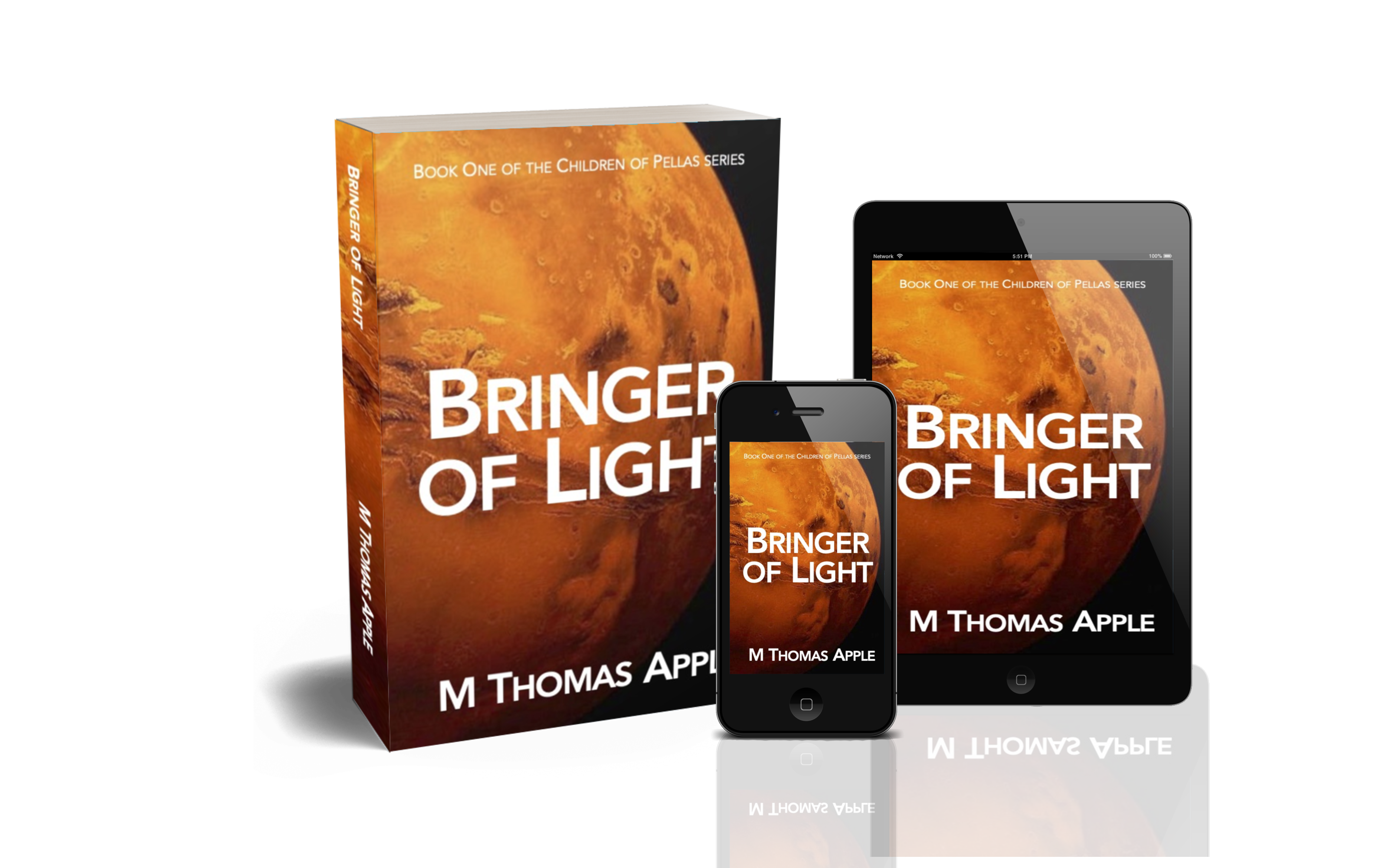
Bringer of Lightholds appeal for its imaginative setting and thought-provoking themes. Readers who appreciate a blend of speculative technology and introspective musings on the universe will find this book a stimulating read…For fans of science fiction, M. Thomas Apple’s novel offers a glimpse into a future filled with wonder and complexity.
This time I figured out how to import the slides directly into mmHmm, and I managed to update my MacOS to Sonoma, which allowed me to use my USB mic (yay). But I also called Ceres a “moon” at some point (it’s not a Moon but a dwarf planet in the asteroid belt near Mars). Oops. Not enough time to edit that bit out or record it again, so just word to the wise! Always fact-check videos, folks. Enjoy!
The moment we’ve all been waiting for is nearly here!
Bringer of Light is finally set to be released on March 15, 2024! (Click the link to see a book synopsis and two brief excerpts; Smashwords also has an excerpt from the beginning chapters.)
Stop by Draft2Digital to see links to your favorite bookstore online!
UPDATE: I have some difficulty convincing D2D to distribute to Amazon. Therefore, I have decided to publish Bringer of Light directly on Amazon. Stop by here to order for Kindle (released March 15th). Paperback and hard cover are also in the works.
Mimas, the smallest and innermost of Saturn‘s major moons, is believed to generate the right amount of heat to support a subsurface ocean of liquid water
But it demonstrates the fact that water may in fact be common in space, opening the possibility of finding life on celestial bodies with older (much older) water sources.
(FYI: Mimas orbits Saturn once every 22 hours, and is affected by tidal forces from Saturn that appear to have melted part of its icy surface.)
Now that I’ve got the manuscript completed, it’s time to search for typos!
Yup. Found some already. Oops.
I figure to rearrange and combine some of the later chapters as well. Look for a publication online in late March!
It’s taken nearly 9 years. Hm. Only 11 years fewer than Adam’s Stepsons.
Fortunately, I have outlined book two and started writing the opening chapters already. Hopefully it won’t take another 9 years to see the continuation of the Bringer of Light story!
The record-breaking plume reached nearly 6,000 miles into space – covering the distance between Ireland and Japan – and poured water into the void at an estimated rate of 300 litres a second.
Note that the water jetted out into space nearly 40 times longer than the actual size of the moon (about 500 in diameter, or as the Gurdian puts it “500-mile-wide” for those who forgot the meaning of “diameter).
Enceladus is probably the best bet for life elsewhere in the solar system due to its water — and while whipping around Saturn once per day, which is likely the reason for underwater volcanos and other vents that may provide the proper chemistry for life.
It is this subsurface ocean, or rather its interaction with the ice shell that covers it, that a team of researchers led by the Catholic University of Louvain (UCLouvain) in Belgium hope to better understand. More specifically, they wish to understand how the ocean’s depth and the pressure exerted by the icy shell on the underground water body influence the formation of tidal motions and currents inside of it.
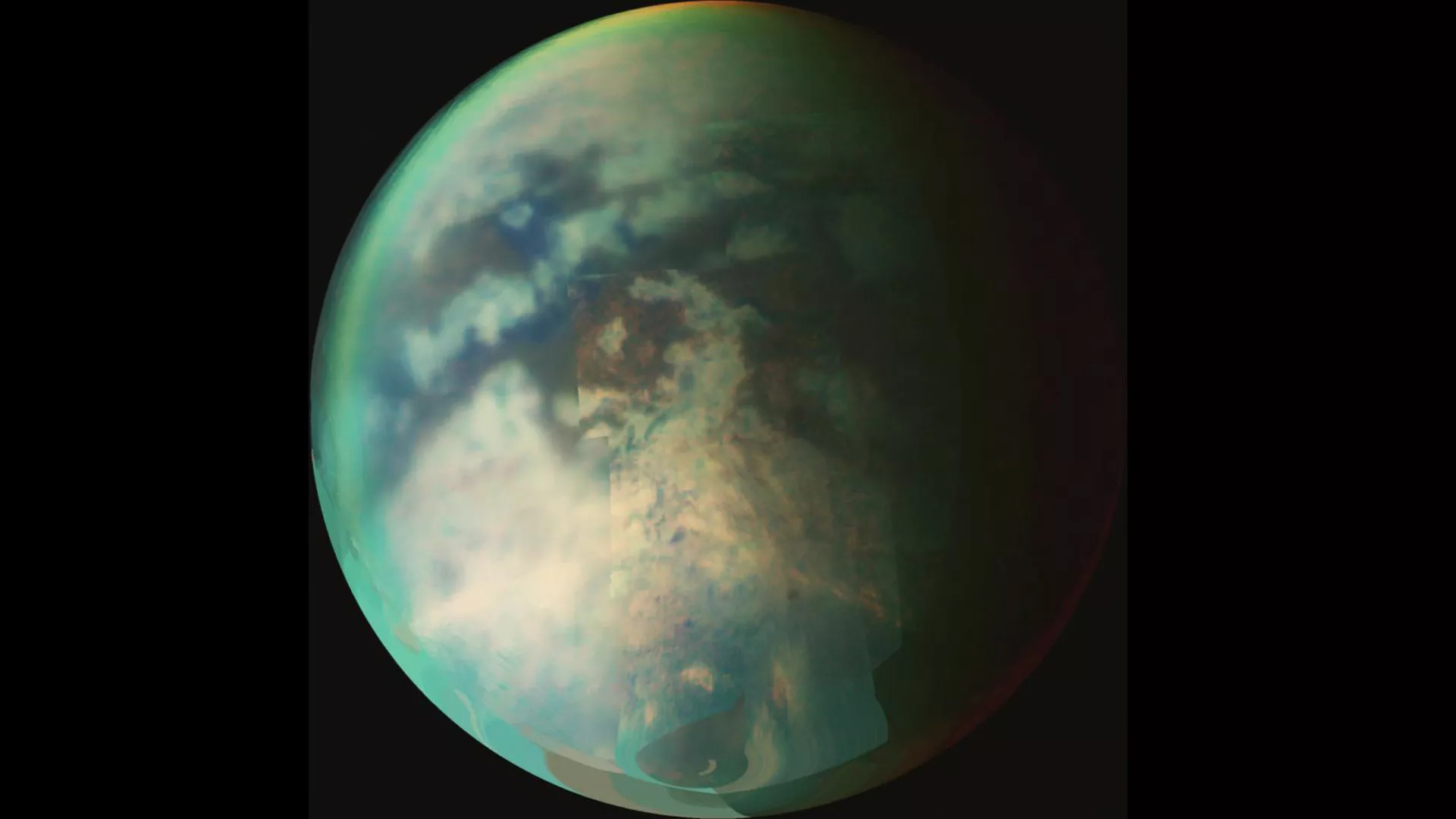
When I first heard of “Attack on Titan,” I was disappointed to learn that it didn’t take place actually on Titan. (The title in English is a mistranslation. It should be “Attack of the Titans” or “The Titans Attack” or even “Attacking Titans,” depending.) In any case, it’s a disgusting manga/anime with nothing to do with the icy moon of Saturn. Except for the name. And even that’s a misuse (they should have used “giant” as the storyline is very loosely based on Ymir and the frost giants of Scandinavian myth).
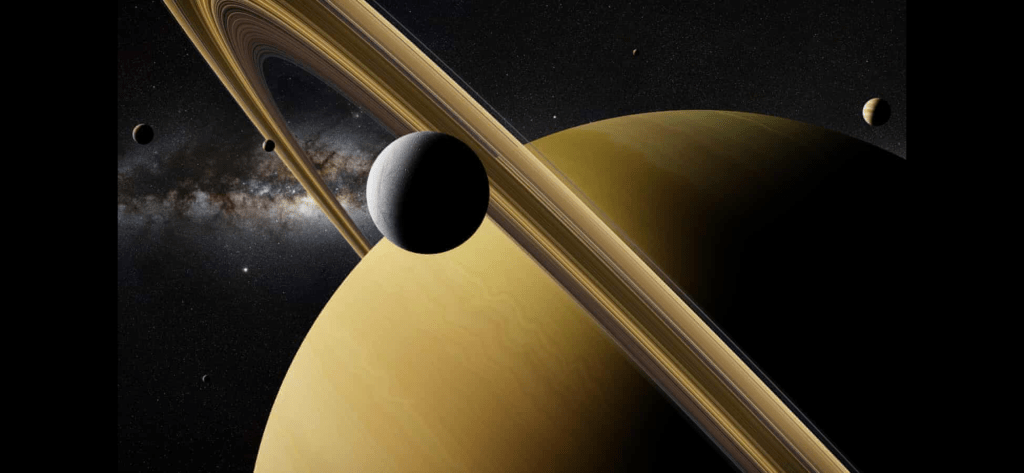
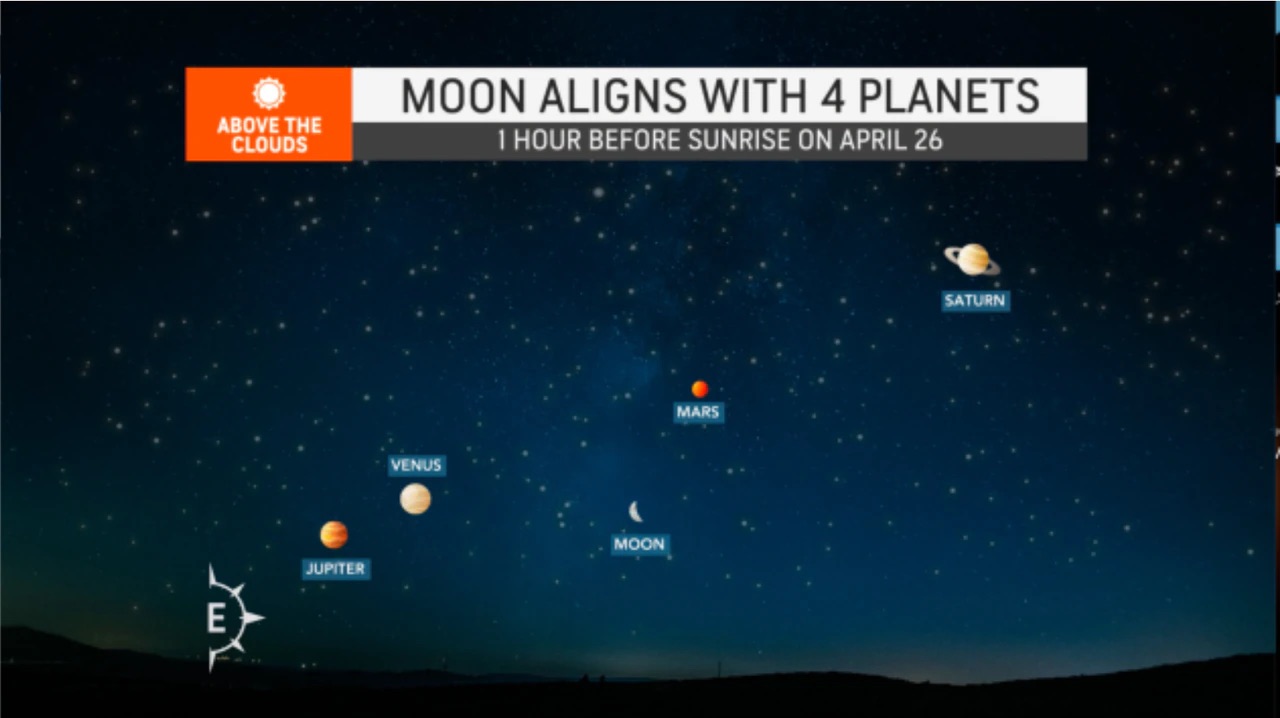
(Note: You won’t be able to see the planets actually looking like these photoshopped images…unless you happen to have a really powerful telescope in your backyard.)
Not sure why I first got this info from a site based in New Jersey. The info about what time of day and in what part of the sky is only relevant to people living in the NJ_NYC area.
Still, it’s an interesting phenomenon that occurs once every few years…
2005. 2016. 2020. And 2022. Not exactly a regular pattern, it seems.
And, no, there is no “spiritual significance” to a planetary alignment. It’s an illusion, an imaginary lining up of the solar system that doesn’t affect you personally. Sorry.
But it’s still fun to watch. Er, if you enjoy getting up before dawn (I don’t).
According to nj.com, “The planetary parade of sorts will occur when Jupiter, Venus, Mars and Saturn all appear to be lined up in a row above the horizon during the pre-dawn hours — starting Saturday morning, April 23. The alignment will also be visible during the next few mornings, and April’s crescent moon will soon join the parade, according to experts from LiveScience and AccuWeather.”
Yeah, lots of web sites are covering this. At least the one I linked above doesn’t have automated videos, flashing ad gifs, and other random pop-ups that drain your smartphone battery.




 M Thomas Apple Author Page