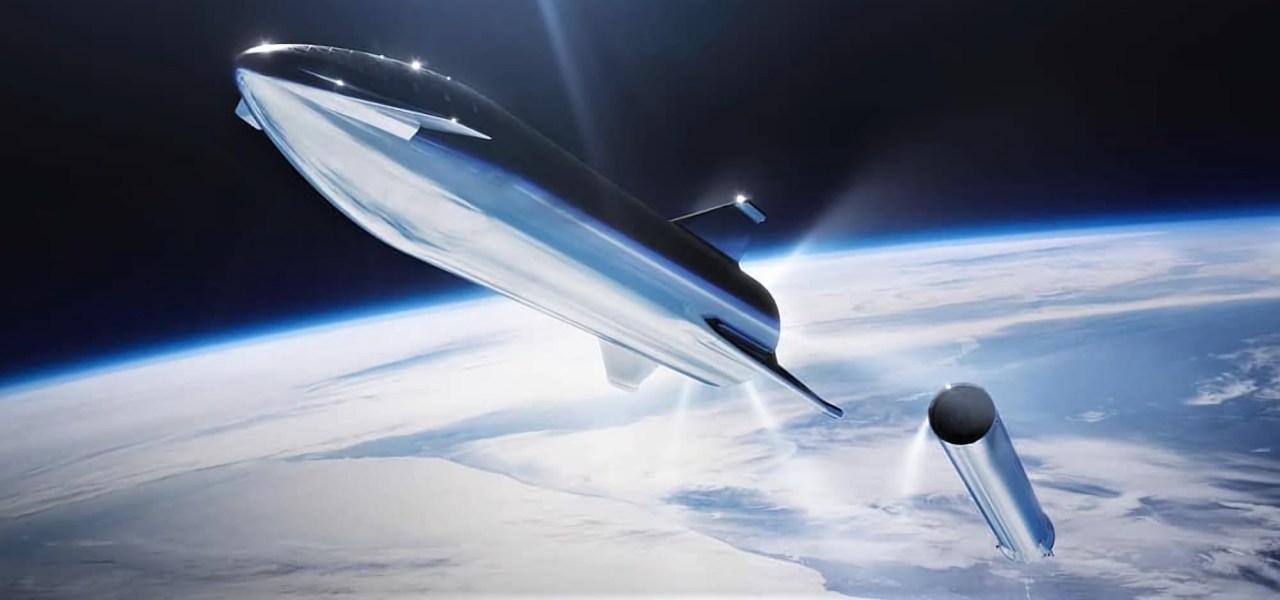
Youtubersmallstarshas proposed a concept that he calls theGravity Link Starship(GLS), a variation of SpaceX’sStarshipthat will be able to provide its own artificial gravity.
Hm, I guess we’re at the point where YouTubers have better ideas than NASA…
But who pays for this? is the several billion dollar question. Not just the construction of the “hub and truss” system, but the expense of getting it into space in the first place.
Seems like science fiction at this point. But still worth a read/look:
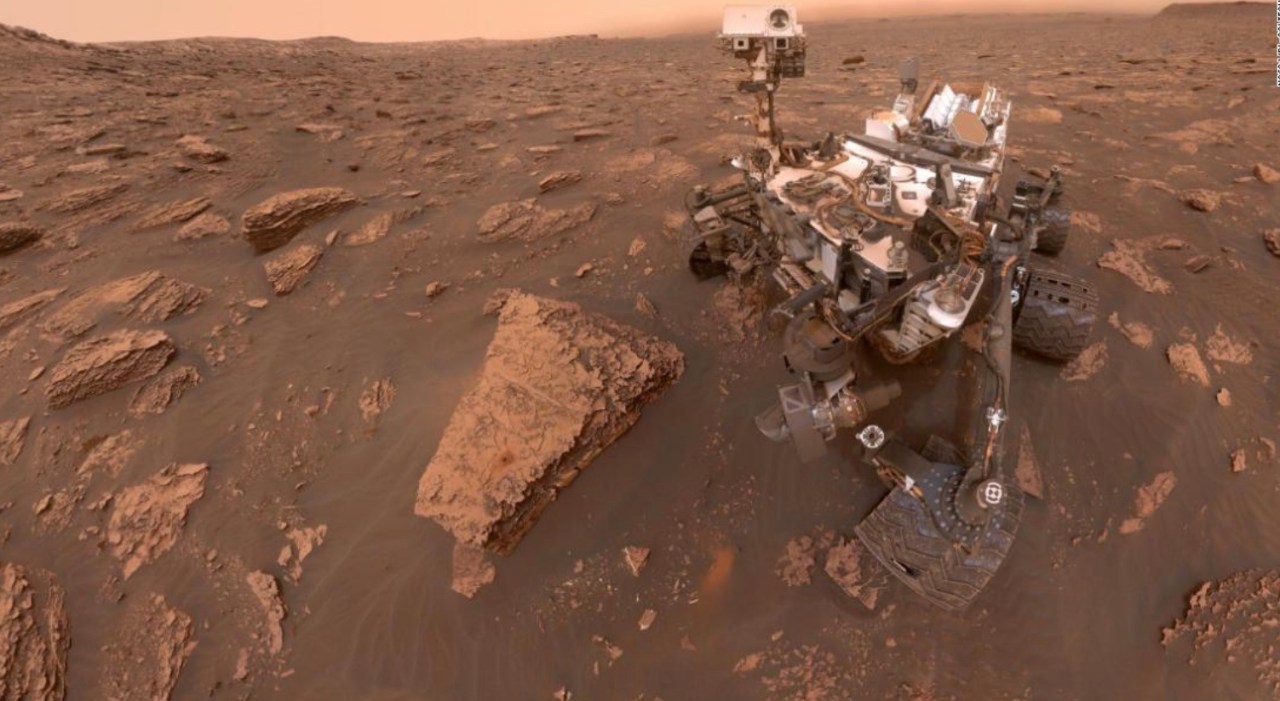
“What is the evidence against the possibility of life on Mars?” Levin wrote. “The astonishing fact is that there is none.”
Uh, no, sorry. That’s an illogical fallacy called “begging the question.”
Often phrased like this: “Absence of evidence is not evidence of absence.”
Or, as a friend once joked, “Just because you haven’t found any aliens doesn’t mean there aren’t any!”
Well, yeah, but that doesn’t prove anything except that we just don’t know.
See, science doesn’t work like that. It demands skepticism, careful theorizing based on positive evidence.
And replication.
If findings can’t be independently confirmed and reproduced by an outside observer, then the evidence isn’t strong enough.
Sorry. No smoking gun. Yet.
(Believe me, if scientists knew that Mars had life, we’d hear about it ad infinitum. Carl Sagan put it best: Scientists are terrible at keeping secrets.)
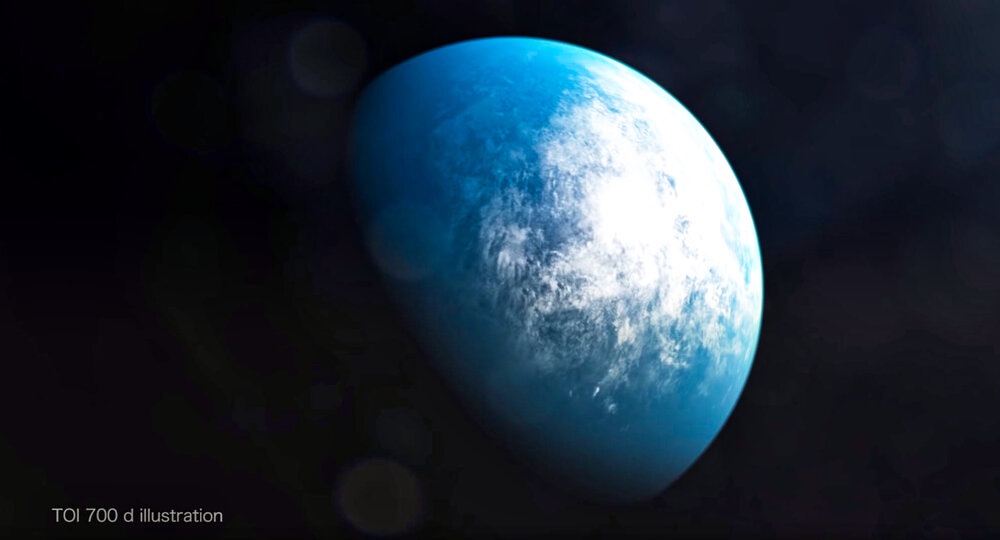
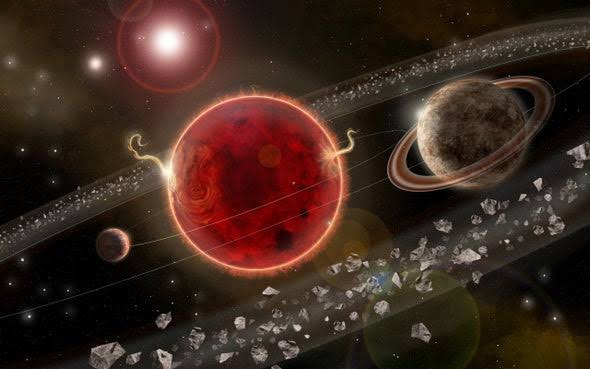
After completing its first year of observations in the southern sky, NASA’s Transiting Exoplanet Survey Satellite has spotted some intriguing new exoplanets only 31 light-years away from Earth.
Um. “Only” 31 light years.
One planet is 22% larger than Earth, has a surface average of around 490ºF, and a year of just under 4 days.
Another is more than 6 times the size of Earth, is a balmy -64ºF, and a year of about 56 days.
“It is time to venture beyond the known planets, on toward the stars.”
Yes, I agree, but I don’t see how any of the ideas in this article will help us achieve that goal. I think the problem is the reliance on conventional means of propulsion. Clearly some sort of bending of space/time is needed to leave the solar system faster than, say, a decade, let alone reach other star systems.
Dawn already used an ion engine (way too slow). The solar gravitational lens is neat but it won’t take us there physically. The “space-based laser” idea is funky but impractical.
Getting off Earth should help (Moon Base, Mars, somewhere else like Triton). Escaping our own planet’s gravity well takes way too much effort. But after that, it’s time to forget about rockets and start thinking of truly “wacked out” ideas.
For starters, Discover, how about dumping your absolutely awful page design? Yeesh, this page is hard to read.
We’ve learned a lot about Neptune’s largest moon, Triton, since it was first discovered in 1846. Some scientists believe it could be an “ocean world” with liquid water — and maybe even harbor life.
And now, pending approval, we might soon get our best glimpse yet. NASA’s Jet Propulsion Laboratory proposed on Tuesday [19 March 2019] at a conference in Texas to send a spacecraft called “Trident” to Triton — with the goal of sussing out whether it’s a habitable world.
A low-cost mission that would give us decent photos and even video of Triton, Io, and even Venus. Let’s do this.
OK, not actually glitterspray. Lots of tiny moons. Micromoons?
Exploding out of Bennu, which is an asteroid circling way out near Pluto right now, but will intersect Earth’s orbit in September 2060. And in 2135. And in 2175. And maybe soon again after that.
Doomsayers, prepare yourselves!
(Cumulative 1 in 2700 chance it’ll hit Earth by then. Too bad Bruce Willis won’t be around to save us.)