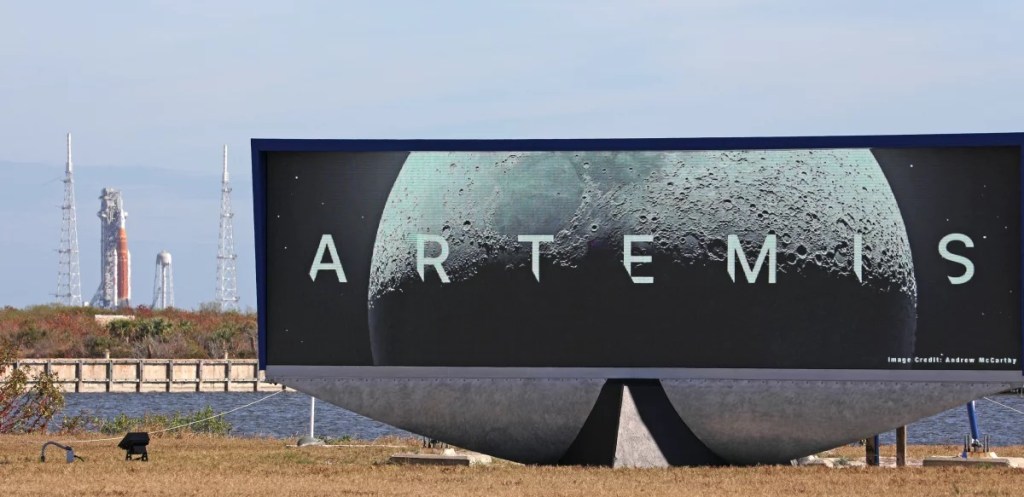
Just one day after NASA said it was eyeing a potential March 6 launch date for the Artemis II lunar mission, the space agency said Saturday that complications with the rocket could delay all launch attempts in March from the Kennedy Space Center in Florida.
(Btw, WordPress, the “quote” field used to have a separate area where you could put a link to the quote’s source. Where did that go? Nothing like helping the spread of unverified fake news…)
In two separate papers published Monday in the Astrophysical Journal Letters, astronomers zeroed in on the TRAPPIST-1 system, which consists of seven rocky planets that orbit a single star. Both studies outlined initial results from observations by NASA’s James Webb Space Telescope, suggesting that one planet in particular, known as TRAPPIST-1e, may have a nitrogen-rich atmosphere like Earth’s, though follow-up studies are needed to confirm the discovery.
Trappist 1e is in the “Goldilocks zone” in orbit around its star (i.e., not too cold, not too hot, just right). However, the Webb telescope can’t determine whether its atmosphere has any carbon dioxide, hydrogen, or oxygen, only nitrogen. Yet nitrogen is a clear sign that life is possible, because without nitrogen, DNA and other proteins are not possible. Of course, it could be simply a whole lot of microbes. Or even just ammonia.
Closer to home, the Mars rover Perseverance has found evidence of life in the distant past. Maybe. It found evidence that certain rock features may have happened because of microbes.
May.
That’s how science works, folks. A whole lot of maybes.
This group comprises millions of individuals who are deeply interested in our space programme
The name “Enterprise” is tied in with the system on which the Nation’s economic structure is built.
Use of the name would provide a substantial human interest appeal to the rollout ceremonies scheduled for this month in California, where the aeronautical industry is of vital importance.
It is really too bad that the shuttle looked nothing at all like the Enterprise (Constitution class).
And an odd coincidence that the original name chosen by NASA was…
Note that this is not from new data. It’s a re-analysis of what Voyager 2 sent back decades ago. Basically, it just had a bad day, with magnetic storms screwing up the scan.
Still…
There could be moons there that could have the conditions that are necessary for life, they might have oceans that below the surface that could be teeming with fish!
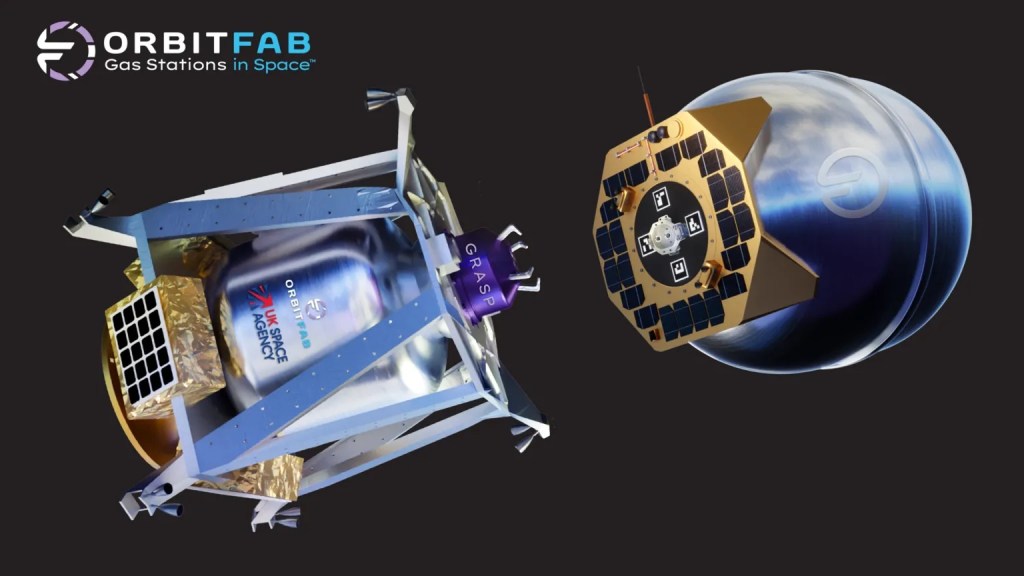
Jas Tiruvuru, business development manager for Orbit Fab in the UK and Europe, said the company was aiming to successfully demonstrate the technology in space by 2027.
“This will essentially be the first ever satellite to satellite refuelling demonstration funded here in the UK,” she said.
“Once we’ve proven that we can refuel to two spacecrafts we’ll be able to unlock a huge market potential.”
You know, maybe it’s just me, but I think 2027 may be a little optimistic. Just like the figure given in the article for how much the satellite sector will be worth in the future.
Aren’t there too many satellites already?
I’d like to see how this would help us colonize the solar system.
Actually, I’d like to see how they plan to get fuel up there in the first place.
Maybe my novel’s idea of using certain moons of Jupiter or Saturn as giant space gas pumps might help? 🪐
The researchers argue that “if” trees could be planted on Mars…
OK, just stop right there. I’m pretty sure Mars will struggle to support even grass, let alone trees.
And the argument that, due to a lack of oxygen, flammable wooden structures in space would not be in danger strikes me as a bit ludicrous…surely there would be oxygen inside the wooden structures?
And, you know, I do think I’ve seen this before some where…nah…
According to Thorne, who served as a consultant on the science of Interstellar, quantum mechanics could hypothetically explain a way to time travel via wormhole. So far, it’s a thought experiment that leads to the conclusion that you’d lose information along the way—not very practical.
First off, I’m incredibly annoyed at the way WordPress has screwed up the “quotation” function. It seems they are more focused on encouraging bloggers to use AI to write.
Uh. I don’t need AI. I blog. The end. WTH is the point of using AI to write my thoughts? It’s already being trained to USE my blog in the first place! Idiots.
OK. Second, the Popular Mechanics article I’m linking to is entitled “Interstellar travel is possible if we break into a higher dimension, scientists say.”
Only, that is NOT what scientists say. It’s still a thought experiment!