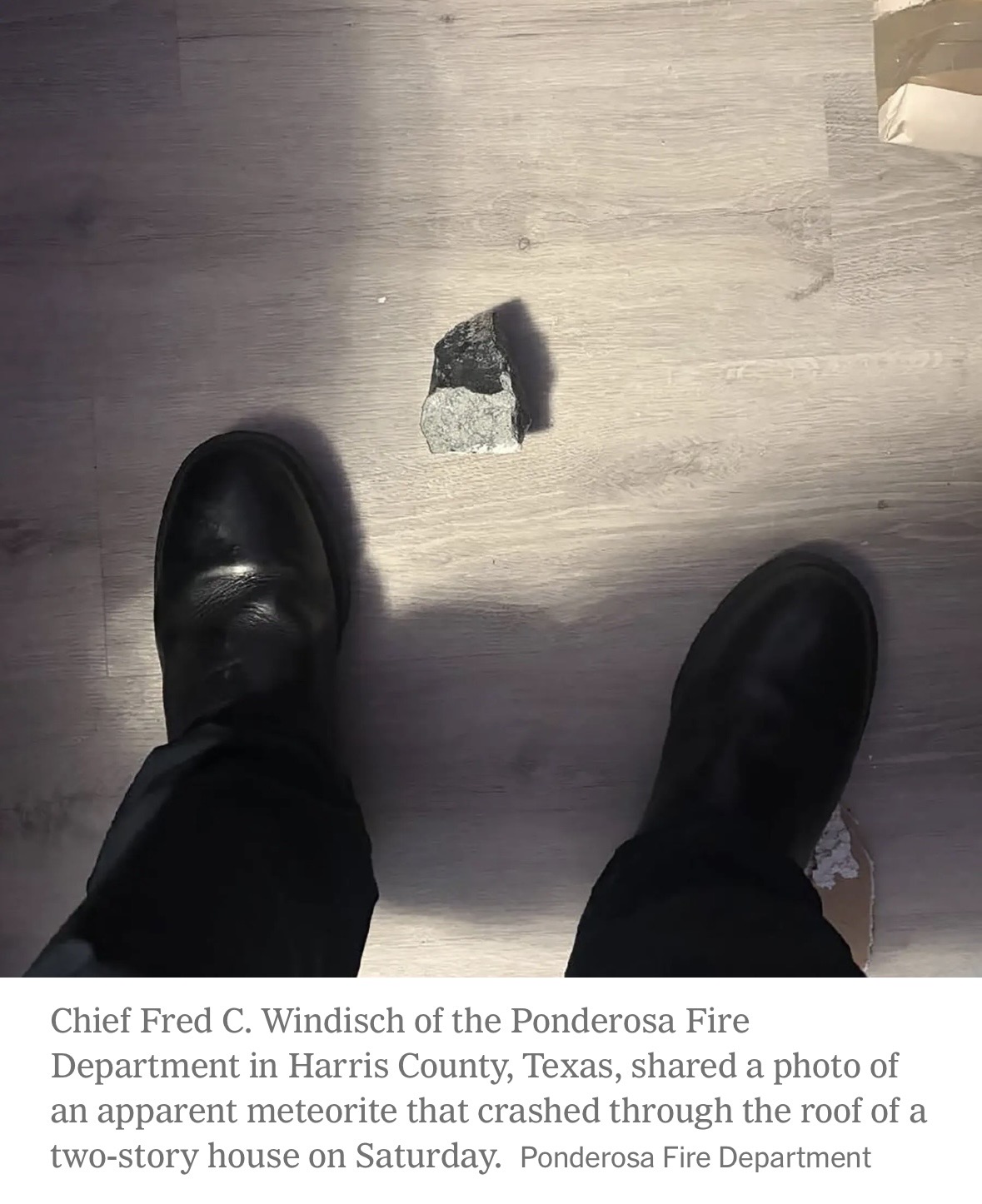
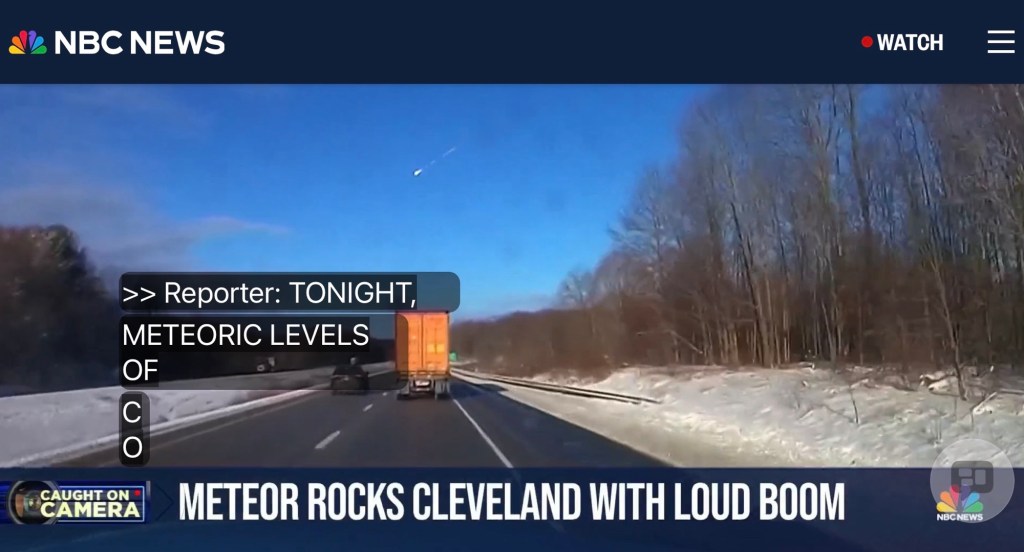
Rocky objects traveling through space are known as meteoroids, but when they enter Earth’s atmosphere and create fireballs, they are called meteors. Any fragments that fall to Earth’s surface are meteorites.
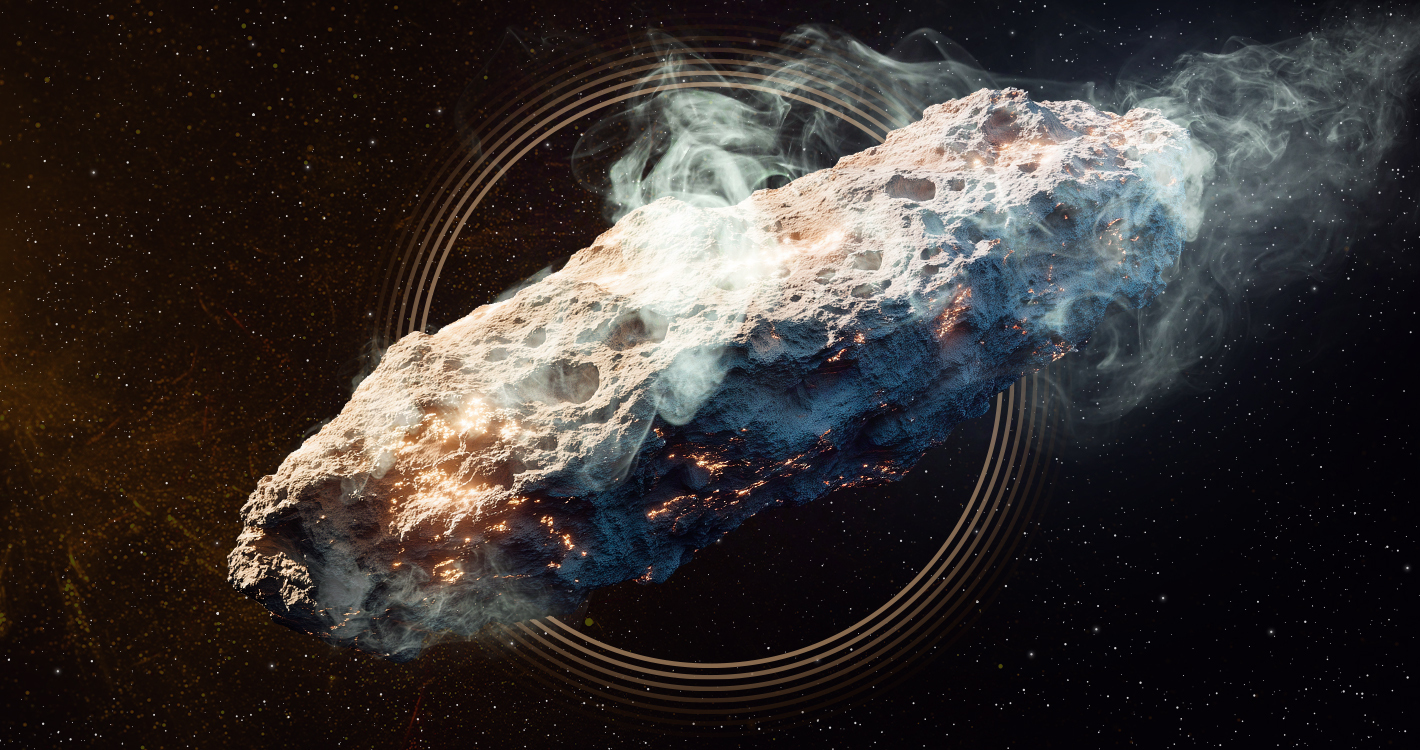
Discovered on July 1 by the NASA-funded ATLAS telescopes in Chile, 3I/ATLAS is only the third confirmed interstellar object known to have passed through our cosmic neighborhood, following 1I/‘Oumuamua in 2017 and comet 2I/Borisov in 2019. Its trajectory shows that it originated from beyond our solar system and will eventually travel back into interstellar space.
Of course, Avi Loeb has already claimed (once again) that an interstellar comet is an “alien probe.”
And naturally, other astrophysicists immediately refuted him. Again.
It’s fast. REAL fast. So fast that even as it entered the solar system it was traveling the distance from the Earth to the Sun in only a month, and then it began to pick up even more speed (from the Sun’s gravity, NOT from “jets out the back” or whatever else unscientific SF fans say online).
Of course, we can assume that the aliens’ spaceship will detach from it precisely during its approach to Mars, or during its passage through perihelion when we cannot see it. In this case, it will have to slow down by more than 20 km/s.
And even so, this will not help the aliens much, because the trajectory will remain retrograde relative to the direction of the planets’ rotation around the Sun. So, if the aliens who flew to us billions of years ago have a plan that is a little more complicated than becoming kamikaze pilots, they will have to slow down again, spending a lot of energy on it. And the aliens still need to get that energy from somewhere.
So, most likely, we should not expect any extraterrestrial visitors at the end of the year. And we will not be able to admire the interstellar comet itself. By the time it emerges from behind the Sun, its brightness will already be approximately 11 stellar magnitudes, meaning it will be inaccessible even to small amateur instruments, let alone the naked eye.
It’s been several months since I last posted…too much work and no play!
Until this past Sunday. Whew.
After a morning lecture about ancient Japanese myths and “deliberately forgotten” kings (maybe), I was grateful to be able to take a quick power nap…
…so that the family could go up a nearby mountain and watch the Geminid meteor shower. (By “mountain,” I mean about 640m/2100ft.)
After a brief lecture/quiz by a staff member at our local culture center, we stayed outside, lying flat on the ground, for over an hour. And, yes, it was cold, despite the sleeping bag and thermal underwear. I saw three shooting stars. Not nearly as many as I’d hoped.
After we got home and took evening baths, the kids went out on our second-floor balcony and found out that the night view was even better at home than on top of a mountain! At least they knew what to look for, thanks to the culture center event.
And by “meteor,” I mean the size of grains of rice. Look to the eastern sky, just a bit to the northwest of Orion, to find the Twins (Castor and Pollux in Greco-Roman mythology).
For more on the origins of the Geminids, check out the JAXA mission to Phaeton, the parent body asteroid. It’s DESTINY!
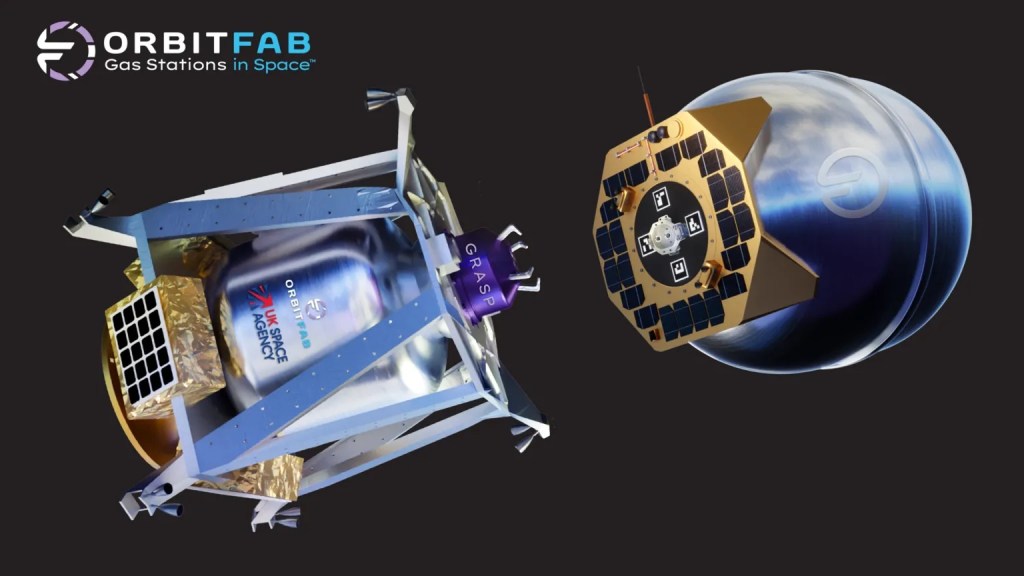
Jas Tiruvuru, business development manager for Orbit Fab in the UK and Europe, said the company was aiming to successfully demonstrate the technology in space by 2027.
“This will essentially be the first ever satellite to satellite refuelling demonstration funded here in the UK,” she said.
“Once we’ve proven that we can refuel to two spacecrafts we’ll be able to unlock a huge market potential.”
You know, maybe it’s just me, but I think 2027 may be a little optimistic. Just like the figure given in the article for how much the satellite sector will be worth in the future.
Aren’t there too many satellites already?
I’d like to see how this would help us colonize the solar system.
Actually, I’d like to see how they plan to get fuel up there in the first place.
Maybe my novel’s idea of using certain moons of Jupiter or Saturn as giant space gas pumps might help? 🪐
The scientists hope to learn about the asteroid’s surface composition and how fast it rotates, he said. Those observations could help researchers figure out its origin, which in turn could shed light on other asteroids, including ones that could be dangerous to Earth.
This is of course not the first “mini-moon” to have been discovered. These are wandering asteroids that get trapped briefly by Earth’s gravity well before being flung back into space.
Read the article for more information about the “school-bus sized” 2024PT5!
In BRINGER OF LIGHT, M. Thomas Apple crafts a satisfyingly complex future where mankind has moved off Earth but must fight and struggle against the harsh realities of physics—and each other—in order to survive.
Researchers will fly rockets into the path of the eclipse, stand in zoos watching animals, send radio signals across the globe, and peer into space with massive cameras.
And you don’t need to be a scientist to take part.
If you’re lucky enough to have no clouds or rain, that is.
Things the eclipse affects:
Radio waves
Animal behavior
The birds and the bees (seriously; read about what tortoises did last time)
Things scientists can view thanks to an eclipse:
The solar wind (plasma on the surface of the Sun)
Coronal mass ejections (which interfere with satellites)
Dust rings around the Sun and possibly even new asteroids
The East Coast of North America, where most of my relatives live, is currently 13 hours behind me in Japan. So the event will be long over by the time I wake up.
Hope to see video of it on the morning news show tomorrow!




 M Thomas Apple Author Page