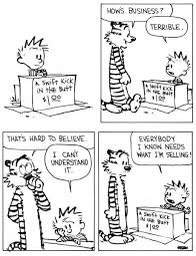
If you were going to open up a shop, what would you sell?
OK, OK, in all seriousness, I would probably open a jazz café / restaurant. But only on the weekends.
We live at the foot of a mountain trail, and it’s really popular with retired folks and young families.
My wife and I have already begun thinking about our “second life” after retirement, and I’ve been frankly bored with the whole EFL teaching thing for a while now.
Yeah, minor surgery. On March 3, 2020, I had a benign tumor the size of a gum ball removed from my left shoulder.
It had been created by repeated rubbing of my shoulder bag strap on sweaty skin. Or rather on sweaty shirt over sweaty skin. I walk half an hour back and forth the train station to my workplace each morning and evening, and the summers in Kyoto are hot hot hot.
So there I was lying on a surgeon’s bed, getting my shoulder skin snipped into three pieces and pried open. My blood pressure shot up to 190 at one point. The surgeons told me to relax.
Uh. Yeah. They didn’t tell me how close the tumor was to a major artery, but I could make an educated guess.
There was a cloth screen between my face and my shoulder so that I couldn’t see what they were doing. And of course they had numbed the entire area and I couldn’t move my left arm at all.
But it was an unpleasant experience. No pain, but I could of course still hear the clip clip clipping of scissors on skin. And I have an imagination.
(Fwiw I have written a short story based on getting my wisdom teeth taken out—also with local rather than general anesthesia—though I didn’t include the factoid that my root tips shot across the room like tiny cannonballs and were never found again).
Fortunately, the surgery was successful— they even showed me the tumor (it looked like a tiny blancmange, and now you’ll have that image in your mind next time you eat one). They even asked me if if wanted to keep it (um, no thanks).
And afterwards the scar was barely visible, so good a job they did with the stitches.
Two days after the surgery, we went into lockdown and had to wear masks everywhere.
Are there things you try to practice daily to live a more sustainable lifestyle?
Now this is an interesting prompt.
1. Organic gardening
I’ve been gardening for just over ten years now. My father had an organically-grown garden for several decades, and I’ve been able to get a lot of advice from him on how to grow vegetables without using chemically-based fertilizers and pesticides/herbicides.
To be honest, sometimes the insects and the weather do get the best of the plants. But at least I know what’s in them, and I can keep the soil healthy as well.
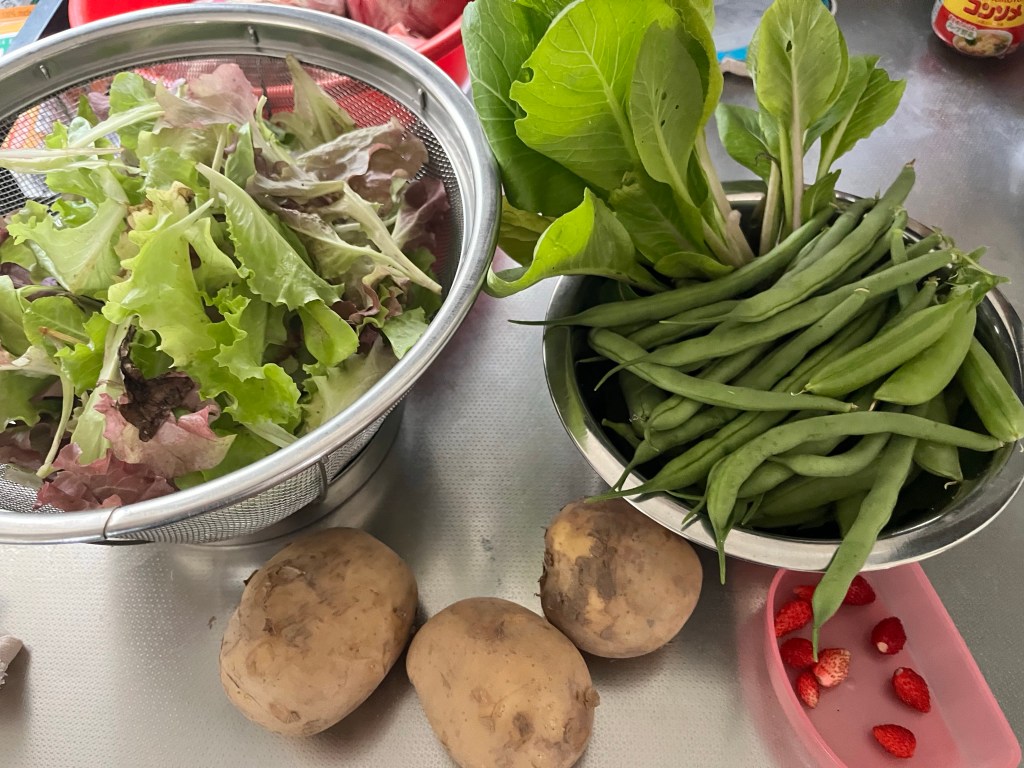
Everything in this photo was organically grown. Well, not the bowls…
2. Composting
Part of gardening is using compost, or rotten food scraps, as fertilizer. We recycle any food left uneaten as well as the bits of vegetables that are often tossed into the garbage, things like roots, insides of peppers, the ends of beans, and of course egg shells.
Egg shells can be reused to help bushes as well, due to their calcium content. Although I have found that the shells need to be rinsed before chucking them near the stem of bushes. Otherwise we get some unwelcome animal nightlife…
3. Reuse reuse reuse
Any clothing we no longer have a use for (kids got too big, Dad spilled coffee on a favorite shirt or cooking oil on a favorite pair of shorts, a towel that frayed and is too dangerous to use…) we do one of two things:
(i) recycle with our local school’s monthly clothing pick up, or
(ii) turn it into rags that can be used to clean up spills rather than use kitchen paper towels.
We also get a lot of plastic bags — and I do mean a lot — because practically everything in Japan comes wrapped in plastic. Cookies and sweets are all wrapped individually. Vegetables are wrapped in plastic. Even meat from the store winds up in separate plastic bags (just in case they leak on the way home).
So we reuse as many of the plastic bags as possible, typically to collect household trash (especially during allergy season!). And, of course, to collect plastic, plastic bottles, cans and bottles for recycling.
4. Bath water
Like most homes in Japan, we have a pump attached to our clothes washer. Japanese are accustomed to taking evening baths (I don’t; at least, not in summer, since the water makes me sweat and then I have to take a shower all over again). The next morning, we reuse the bath water to wash clothes.
5. No AC or dryers
Strictly speaking, we do use the AC on occasion. But we designed our home to have lots of sliding doors between rooms and wide windows and balcony doors. That way, we can just open up everything and have a nice breeze come down the mountain behind us. The house stays relatively cool even during the hot sticky summer months and we can avoid using air conditioning (except when it rains and we have to close windows).
We also hang out clothing to dry to avoid using the dryer. It’s better for clothing, anyway, and in addition to not wasting electricity, lowers our utility bills.
These are just a few examples. It’s not much, but a little bit here and there adds up to a lot over time.
Now if you’ll excuse me, I need to go throw some used egg shells under the tomato plants. 🍅 🥚
I got two bone spurs, separated by two years, thanks to playing baseball in junior high school. Both were fingers on my left hand.
The first time was my left thumb first joint. The second time was my left hand ring finger second joint.
Both times, our local health clinic doctor put a metal splint on the finger, wrapped it in flexible bandage and sealed it off with a tiny metal clip.
And of course I stupidly went on playing baseball, because at age 15 guys think they are completely indestructible.
My ring finger stuck out when I batted. I’m lucky I didn’t get hit by a pitch in the hand (I did get hit on the knee, but that’s a whole ‘nother story).
Also, it inspired my baseball novel. So there was a silver lining!
I’ve been testing ChatGPT over the last couple of days. (If you don’t know what this chatbot is, here’s a good NYT article about ChatGPT and others currently in development.)
The avowed purpose of ChatGPT is to create an AI that can create believable dialogues. It does this by scouring the web for data it uses to respond to simple prompts.
By “simple,” I mean sometimes “horribly complicated,” of course. And sometimes a little ridiculous.
Somehow, I doubt that people in the US said “livin’ the dream” in the ’50s…
As has been pointed out, chatbots only generate texts based on what they have been fed, i.e., “garbage in / garbage out.” So if you push the programs hard enough, they will generate racist, sexist, homophobic etc awful stuff — because unfortunately that kind of sick and twisted garbage is still out there, somewhere online in a troll’s paradise.
So far, I have asked the program to:
Write a haiku about winter without using the word “winter”
Write a limerick about an Irish baseball player
Write a dialogue between God and Nietzsche (I just had to…)
Imagine what Jean-Paul Sartre and Immanuel Kant would say to each other (see above) but using US ’50 slang
Have Thomas Aquinas and John Locke argue about the existence of God (that one was fun)
Write a 300 word cause-effect essay about climate change
Write a 300 word compare and contrast essay about the US and Japan
Write a 1000 word short science fiction story based on Mars
Write a 1500 word short science fiction about robots in the style of Philip K Dick