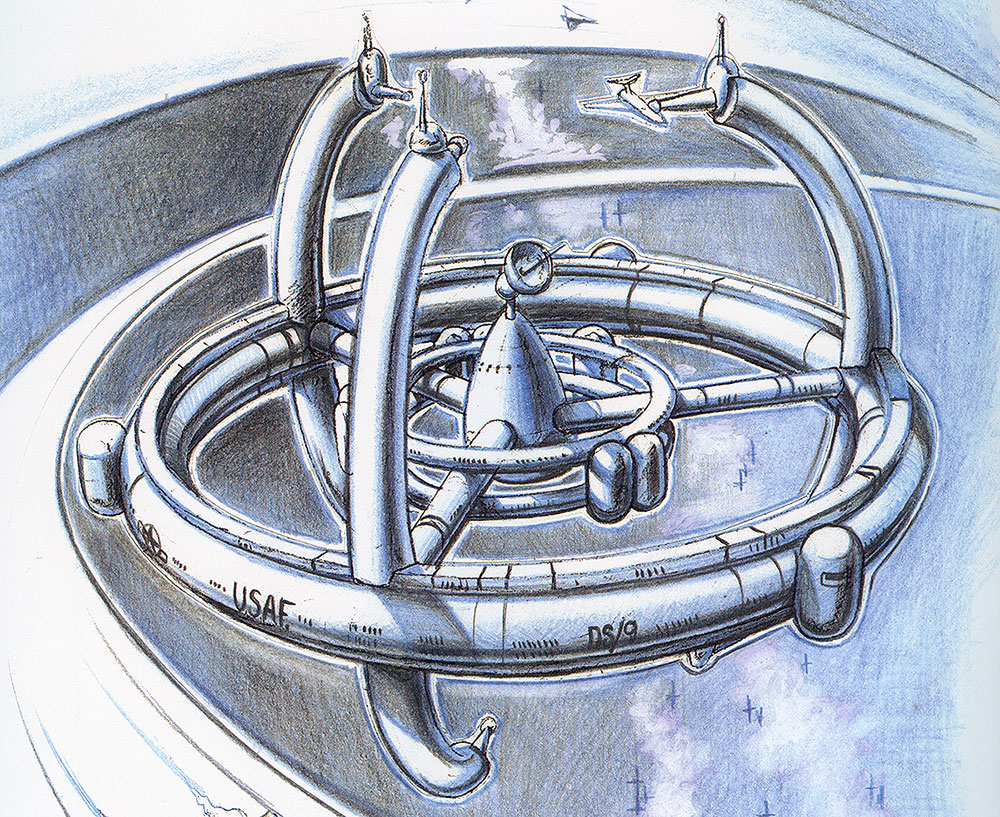
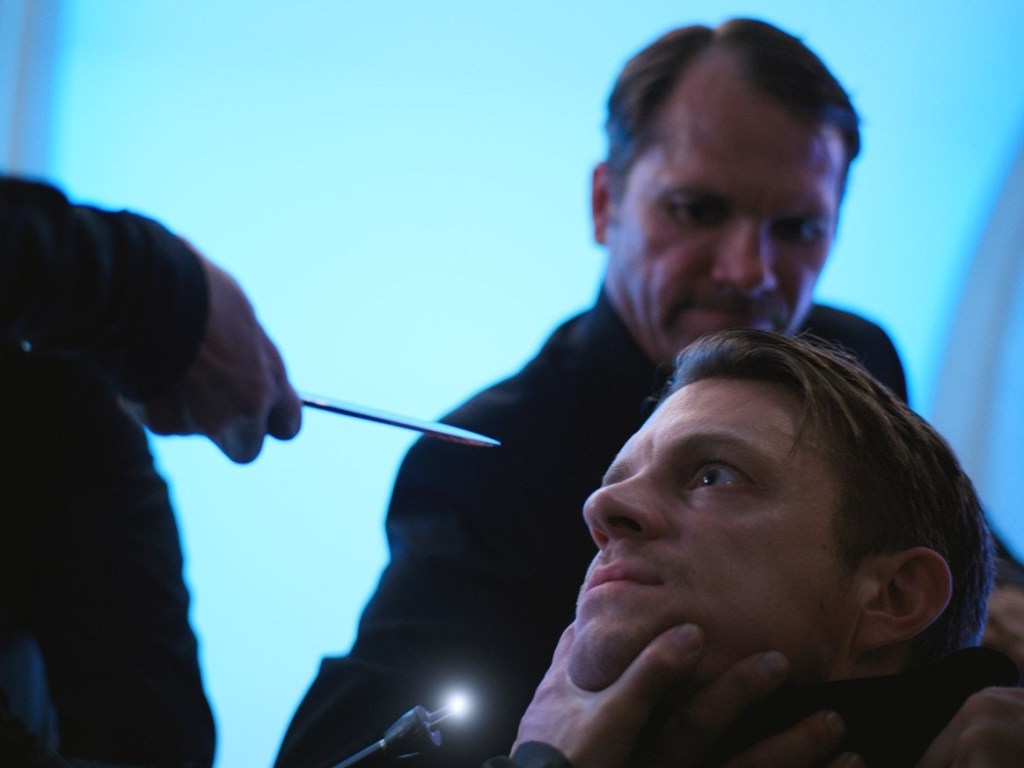
On February 9, 1998, Star Trek Deep Space 9 broadcast one of the most important episodes in the entire history of the franchise.
And what it said about society back in 1953 was just as relevant as for 1998. And perhaps even more important for 2021.
Others have written more eloquently about the plot line, the characterizations, the background, the actors (Avery Brooks directed himself, and his performance should have earned him an Emmy). So I’ll just link to:
It’s hard to believe that it’s been 35 years since the disaster that claimed the lives of all seven Space Shuttle Challenger crew members.
I remember it well. Being sent home early without being told. Watching the TV news at home in silent shock with my parents and younger siblings, tears streaming down our faces.
President Reagan’s speech at Congress, made in the place of the traditional State of the Union address, ended with “they slipped the surly bonds of Earth…and touched the face of God.” Probably the finest and most decent thing he ever did (even my parents, who voted for Jimmy Carter and Walter Mondale and intensely disliked Reagan and everything he stood for, couldn’t help but be moved by his words that day).
Thoughtless jokes circulated our school the next week or two. (“What’s the last thing Christa MacAuliffe said to her husband? “You feed the dog; I’ll feed the fish.”)
There was a morbid fascination with the way in which the Challenger crew met their fate. My friends came up with all sorts of gruesome stories they claimed to have “heard,” mostly about body parts washing up on beaches around the Caribbean.
The fact is, we were traumatized. Kids do all sorts of insane things to hide their fears, insecurity, and general inability to answer the question what am I supposed to feel/do/say about this?
Challenger marked a turning point in the US space program. It set NASA back in many ways but also provided great insight into what needed to be fixed, what needed to be done to push forward our knowledge of space and the great beyond.
There is/was no going back. Humanity is a space-faring race and must continue to strive to reach beyond its grasp…”Or what’s a heaven for?”
This past Thursday I got a metal spike screwed into my jaw.
And it hurt.
But not as badly as I feared. To be honest, it’s all my fault. Well, all my 20-year-old-self’s fault. Too much soda and not enough brushing and flossing in college.
“But decoding and storing memories raise a new set of ethical, moral and legal questions. For instance, who would own these memories after a person has died? Could the police obtain warrants to search through memories? Given that memory itself isn’t completely reliable, could memories be used in lawsuits? How could we ensure that unscrupulous professionals don’t sell or share them?”
Hm, I think I can see another direction this might eventually take…
I get the attraction of people like Steve Jobs and Elon Musk. They have big ideas. They’re enthusiastic, ecstatic, even. They’re great at simplifying difficult concepts and promoting tech to the lay person.
But they’re not creators. They’re “visionaries.”
I.e., salespersons.
Is that a bad thing? Of course not. I was in computer sales once. It was hard. Only the charismatic are good at it. But I didn’t have the knowledge and ability to make the products I was selling, let alone the power to innovate.
Sticking a chip in a person’s brain and sending thousands to the Moon or Mars sound cool. Possible, even.
But science isn’t sales. Someone might die.
Small difference.
We need visionaries, but scientists are more important. Maybe if they talked to each other…
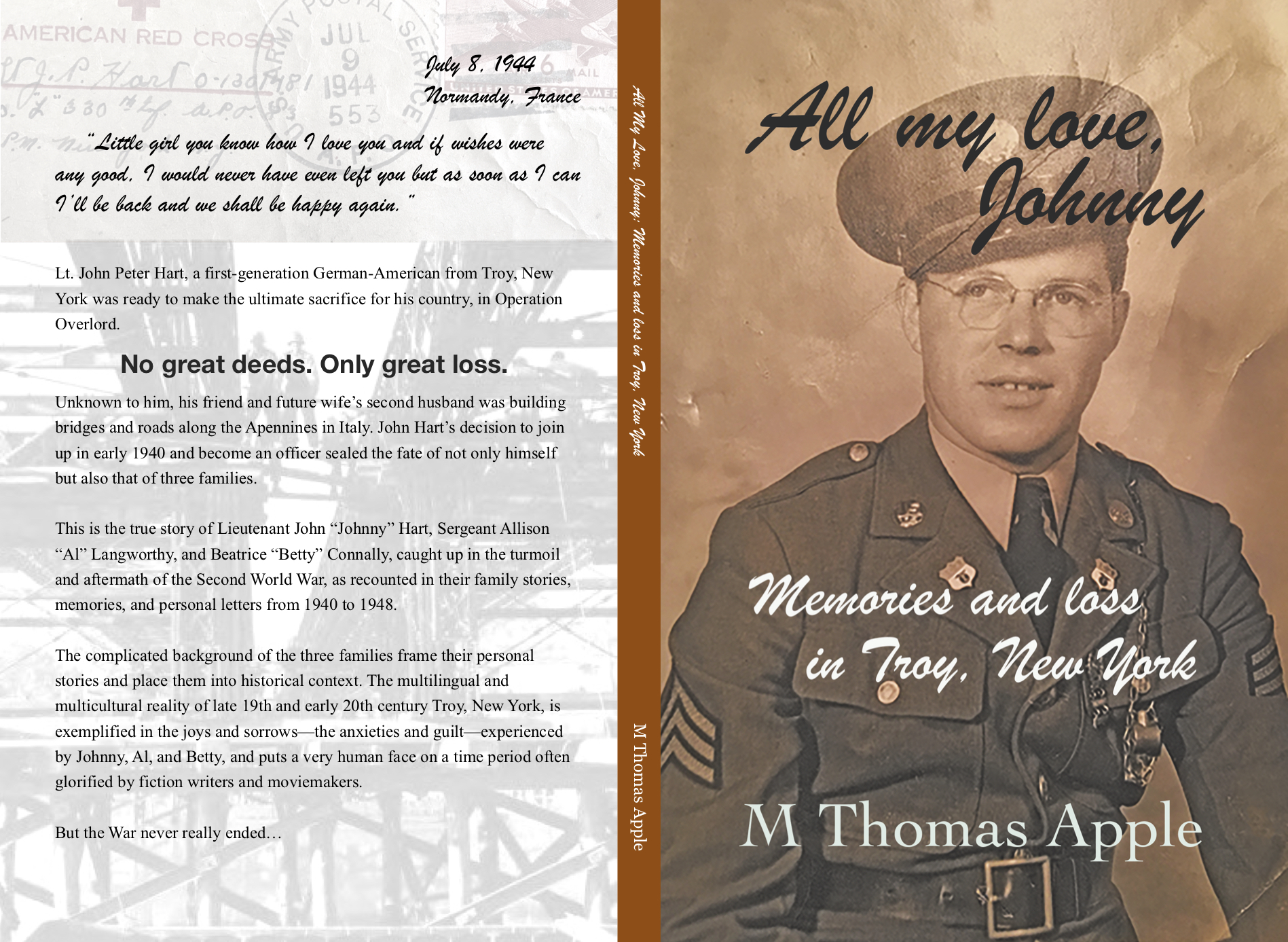
“Over sixteen million Americans served during World War II and this story offers in rich detail the story of two men in uniform and a woman they both cared about. A story of love and tragedy that is more representative of the experiences of many that served than the ones often told of generals and politicians. A story that needs to be told and remembered.”
— Dr. Rick Derrah, Professor of Social Studies, Kindai University, Osaka; former US Army E-4 Specialist
“Not only is this a touching and interesting family story, it is a great snap shot of the war and its effects, as well as Trojans and Troy history connection.”
— Don Rittner, historian, former Albany City Archaeologist and founder of the Pine Bush Historic Preservation Project