OK, I readily admit that I am once again waaaay behind on my scifi blogging.
At some point last week, I looked up from the mass amounts of work I had left to do and went, “Uh. August 21st? Was that really the last time I posted?”
Uh. Yup.
😣
I’ll do my best to get the rest of Riss’s story online on a biweekly basis, like I promised I would.
The inclusion of an ion propulsion system in a long-running, Earth-orbiting space station will give researchers a chance to test out the tech while astronauts are still close to home — and if it works as hoped, it could one day ferry explorers to Mars and even more distant destinations.
It’s a small step. It applies only to companies that are working with NASA; it pertains only to U.S. lunar landing sites; it implements outdated and untested recommendations to protect historic lunar sites implemented by NASA in 2011. However, it offers significant breakthroughs. It is the first legislation from any nation to recognize an off-Earth site as having “outstanding universal value” to humanity, language taken from the unanimously ratified World Heritage Convention.
The author believes this shows that “nonpartisan” desire to journey to space and preserve human heritage.
Hmm.
Well, I do agree with the assessment that it’s only a matter of time before the Moon is occupied by multiple political entities (China, India, Russia, the US, ESA…) and probably even a few private enterprises as well. Will the private company-sponsored missions agree to abide by a US law?
Despite the impact, scientists believe that if anything survived the crash intact, it may well have been the tardigrades. The microscopic creatures were sandwiched between micron-thin sheets of nickel and suspended in epoxy, a resin-like preservative that acts like a jelly — potentially enough to cushion their landing.
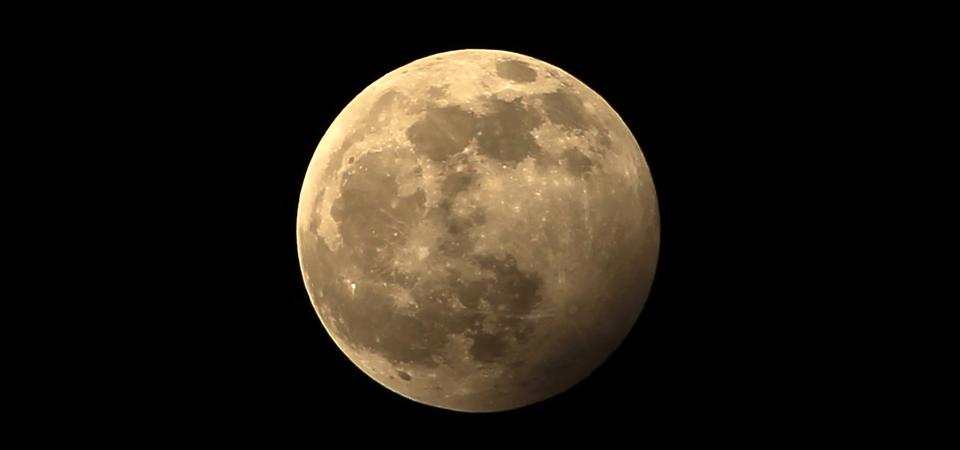
Visible from the Americas, Australia and Asia, the “Beaver Moon” will pass through Earth’s outer shadow (penumbra) at 07:32 Universal Time, causing a slight penumbral lunar eclipse that will see 83% of the Moon visibly darken at 9:42 Universal Time…
The new research is especially topical given that NASA plans to land humans on the Moon in the 2020s and use lunar resources as part of its Artemis program, prompting thorny discussions about legal and ethical extraction of materials on the Moon.
I get the attraction of people like Steve Jobs and Elon Musk. They have big ideas. They’re enthusiastic, ecstatic, even. They’re great at simplifying difficult concepts and promoting tech to the lay person.
But they’re not creators. They’re “visionaries.”
I.e., salespersons.
Is that a bad thing? Of course not. I was in computer sales once. It was hard. Only the charismatic are good at it. But I didn’t have the knowledge and ability to make the products I was selling, let alone the power to innovate.
Sticking a chip in a person’s brain and sending thousands to the Moon or Mars sound cool. Possible, even.
But science isn’t sales. Someone might die.
Small difference.
We need visionaries, but scientists are more important. Maybe if they talked to each other…





 M Thomas Apple Author Page