OK, so my post about a big ole spider got the most likes of any post in ten years of blogging about science.
I have so not got the zeitgeist of the 2024 blogosphere lol – anyway, thanks, all, for the “likes”! Although one person used AI to write a very meaningless comment about arachnophobia. What’s the point, man?
By the way, back to science and space stuff. I forgot to post about the Europa Clipper project back in October.
So here you go. (It’s too late to add a message, but the project obviously is going to take some time arriving there, and you can supposedly hear US Poet Laureate Ada Limón read her poem online, although I’ve had trouble with the audio lately:
“Arching under the night sky inky with black expansiveness, we point to the planets we know, we
pin quick wishes on stars. From earth, we read the sky as if it is an unerring book of the universe, expert and evident.
Still, there are mysteries below our sky: the whale song, the songbird singing its call in the bough of a wind-shaken tree.
We are creatures of constant awe, curious at beauty, at leaf and blossom, at grief and pleasure, sun and shadow.
And it is not darkness that unites us, not the cold distance of space, but the offering of water, each drop of rain,
each rivulet, each pulse, each vein. O second moon, we, too, are made of water, of vast and beckoning seas.
We, too, are made of wonders, of great and ordinary loves, of small invisible worlds, of a need to call out through the dark.”
In that case, you should keep a diary, his advisor suggested. Write every day.
OK, he said.
And bring me a story or two to look at.
OK.
October
These aren’t stories, his advisor informed. These are more like diary entries.
How should I write a story, then? he asked.
Write what you know. Base your stories on people and things around you.
OK.
And bring me another story or two.
OK.
November
The narration isn’t believable, his advisor imparted.
Why? he asked.
It’s too difficult for the reader to identify with the characters. Nobody has a family with nine children.
What should I do?
Go read Sherwood Anderson’s Winesburg, Ohio.
OK.
And bring me a couple more stories.
OK.
December
I don’t get any sense of through-story, his advisor complained.
What do you mean? he asked.
The stories aren’t connected. They’re all different.
Well, what should I do?
Try an internal perspective. Go read James Joyce’s Portrait of the Artist as a Young Man.
OK.
And bring me another story.
OK.
January
This is too abstract, his advisor mused.
What do you mean? he asked.
This isn’t a true plot. The symbolism is too obscure.
It’s a translation of something I wrote for a German class.
You don’t want to be Kafka.
I don’t?
You need real life stories, with real people and real problems.
What should I do?
Go read Raymond Carver’s “Cathedral.”
OK.
And…
Bring you another story?
Two.
February
I think I see the problem, his advisor intuited.
What is it? he asked.
I think you need to experience more life before you can be an effective writer.
What do you mean?
You need to go out into the world and work different jobs, meet different people, move around a bit.
My thesis is due in two months.
So it is. Make sure you give your draft to me next month.
OK.
And…
Another story?
No. Just read my comments and rewrite what you have.
OK.
March
I don’t see the point of adding poetry between the stories, his advisor grumped.
Why? he pondered.
The poems interfere with the prose.
I thought you didn’t like the prose.
I would say you need to add a poetic sense to your prose.
How do I do that?
Try writing poetry. For practice.
…
And finish the rewrite of the draft by next week.
OK.
And print three copies on a laser printer. And buy three of those thesis black cover binders.
OK.
April
Well, the three of us have examined your thesis, and we decided on a grade of B+, his advisor beamed.
…
I know it’s not as high as you wanted, but I argued that the interplay of letters, poetry, and stories woven together formed an interesting kind of metadiscourse narrative depth to the thesis structure.
…
Congratulations.
Thanks.
If you like this, you might enjoy Notes from the Nineties, a book with short stories and poems (the above is the first one, and may or may not be partially based on personal experiences my senior year in college).
Check out this free five-minute reading of “The Magic Wood,” by Henry Treece, one of many New Apocalypse poets who influenced Neil Gaiman’s dialogue in Sandman. Available only for the next 29 days.
Truly creepy. With Great Pleasure at Christmas (great title, BBC).
Link courtesy of the wordsmith Neil, himself, @neilhimself. Thanks!
We all knew it would happen sometime soon. But still it seemed sudden.
My grandfather also died during Easter weekend, many years ago. Good Friday, in fact. I was 10. We had to have the wake and funeral right away. The Church said they wouldn’t allow him to be buried on Easter Sunday.
My mother told us that Grandpa went straight to Heaven, because he died on Good Friday. That we would one day see him again.
Terry, you died on April 1st. But it was no Fool’s. It was Easter. You were sleeping, and did not wake. Continue Reading
Some people have asked me on FB for some previews of Notes from the Nineties. It’s difficult to prepare excerpts from short stories (which are already short). So while I’m thinking of what’s appropriate as a teaser, here’s another poem from the volume. It appears right after the story “Boys Will be Boys” together with the poem “Grandmother.”
1000 Isles
Summers of my Upstate youth were spent
in the family station wagon, the six of us, or was it seven,
traveling to the great St. Lawrence
Seaway of a thousand islands.
The first time we stayed one night at Mosquito Heaven,
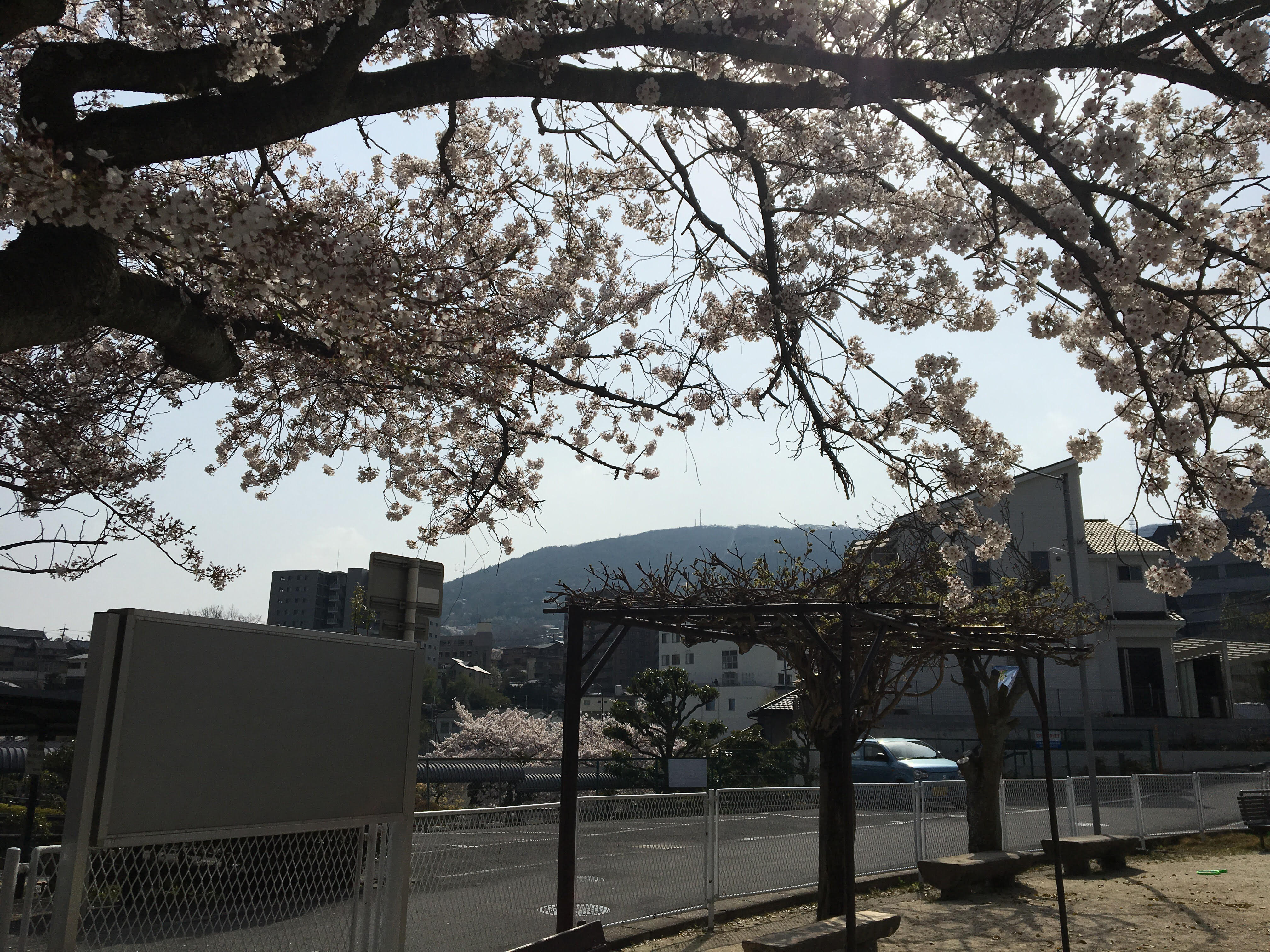
Today marks the first day of spring, as well as the start of the Easter Week. And while it is the end of Spring Break for some schools in North America, it’s still spring break for others…and it was, in fact, around this time of year back in 1996 that the seeds of “The Four Teeth of the Apocrypha” were planted. Like teeth.
That remark alone should let you know that this is not a typical story (if the title hadn’t already tipped you off by now). Continue Reading
From first to last: the final story in the collection, “Training the Mountain Warrior,” is based on two specific events that happened to me shortly after moving to Japan in 1999. The date thus places the story barely in the Nineties; the paired-poem (“Asian Dreams”) was written hastily—scrawled, really—in an old yellow lined notepad the night before I left the US (permanently, as it turned out). I still have the notepad, well used and abused.
The short story describes my attempted nighttime climb of Mt. Fuji (which ended short of the summit due to high winds) and my trek through the ancient mountains of the Kinai peninsula, whose hiking trails later became a World Heritage Site. There were a lot of details that I deliberately left out, and of course the dialogue is completely fictional. But I did, actually, dangle my friend over a cliff.
I’m putting the finishing touches on an anthology of short stories and poems, some of which date alllll the way back to 1992. Pre-SNS. Pre-email, even. Scary stuff.
A few come from my undergraduate Senior Project. A couple from my MFA thesis (the main part of which became Approaching Twi-Night). Another handful were used to apply to said MFA program. Aside from two that were published in university literary journals, the poems have basically never seen the light of day. A couple of the stories did appear in previous versions elsewhere.
The stories are meant to provoke, to inspire, to draw a contrast between aspects of life in Upstate, out of state, and overseas, to see the world through different eyes…to challenge perceptions. And naturally, to make you laugh and cry, sometimes at the same time. Readers should find something to interest them, no matter their reading preference. That, in my humble opinion, is one of the biggest benefits of daring varying writing styles.
This space will be updated from now until the book release with notes on the stories — some shorter, some longer — but the poems I leave to the reader’s interpretation.


 Today marks the first day of spring, as well as the start of the Easter Week. And while it is the end of Spring Break for some schools in North America, it’s still spring break for others…and it was, in fact, around this time of year back in 1996 that the seeds of “The Four Teeth of the Apocrypha” were planted. Like teeth.
 From first to last: the final story in the collection, “Training the Mountain Warrior,” is based on two specific events that happened to me shortly after moving to Japan in 1999. The date thus places the story barely in the Nineties; the paired-poem (“Asian Dreams”) was written hastily—scrawled, really—in an old yellow lined notepad the night before I left the US (permanently, as it turned out). I still have the notepad, well used and abused.
 I’m putting the finishing touches on an anthology of short stories and poems, some of which date alllll the way back to 1992. Pre-SNS. Pre-email, even. Scary stuff.
 M Thomas Apple Author Page