…the team’s results suggest that, while the physical processes that drive the structure of the Universe and the structure of the human brain are extremely different, they can result in similar levels of complexity and self-organisation…
On the scorching hot planet, hundreds of light-years away, oceans are made of molten lava, winds reach supersonic speeds and rain is made of rocks. Scientists have referred to the bizarre, hellish exoplanet as one of the most “extreme” ever discovered.
The new research is especially topical given that NASA plans to land humans on the Moon in the 2020s and use lunar resources as part of its Artemis program, prompting thorny discussions about legal and ethical extraction of materials on the Moon.
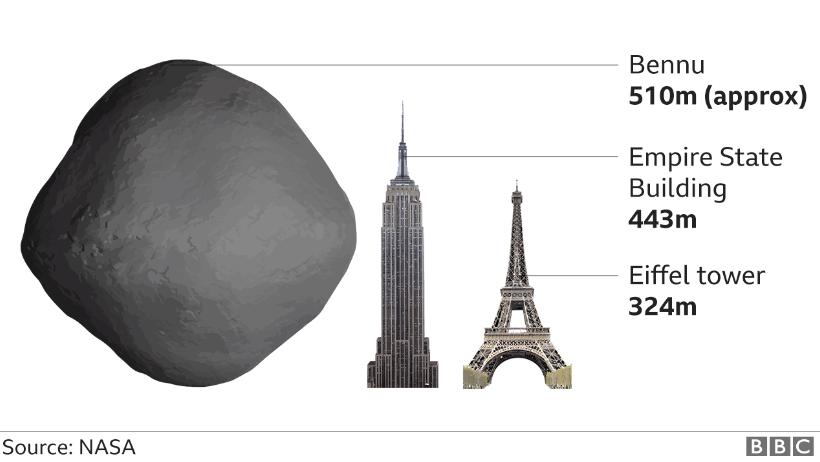
Why are 3D objects always compared to the Empire State Building?
Researchers understand it to be what they call a carbonaceous asteroid, meaning its rocks still retain a lot of the chemistry that was present when the Sun and the planets came into being more than 4.5 billion years ago. Hence the desire to bring some of its material home for analysis in sophisticated Earth laboratories.
If it’s a spinning top, I don’t see how showing it in comparison to the Eiffel Tower will help us understand how big it is…
Then again, usually media compare things like this to a football field (US) or a football pitch (UK). Or they say things like “as long as [insert type of moving vehicle here] end to end.”
Honestly, just say “510 m3” and leave it at that. All we care about is what the probe will do: Vacuum up and bring back at least 60g of materials from the beginning of the solar system.
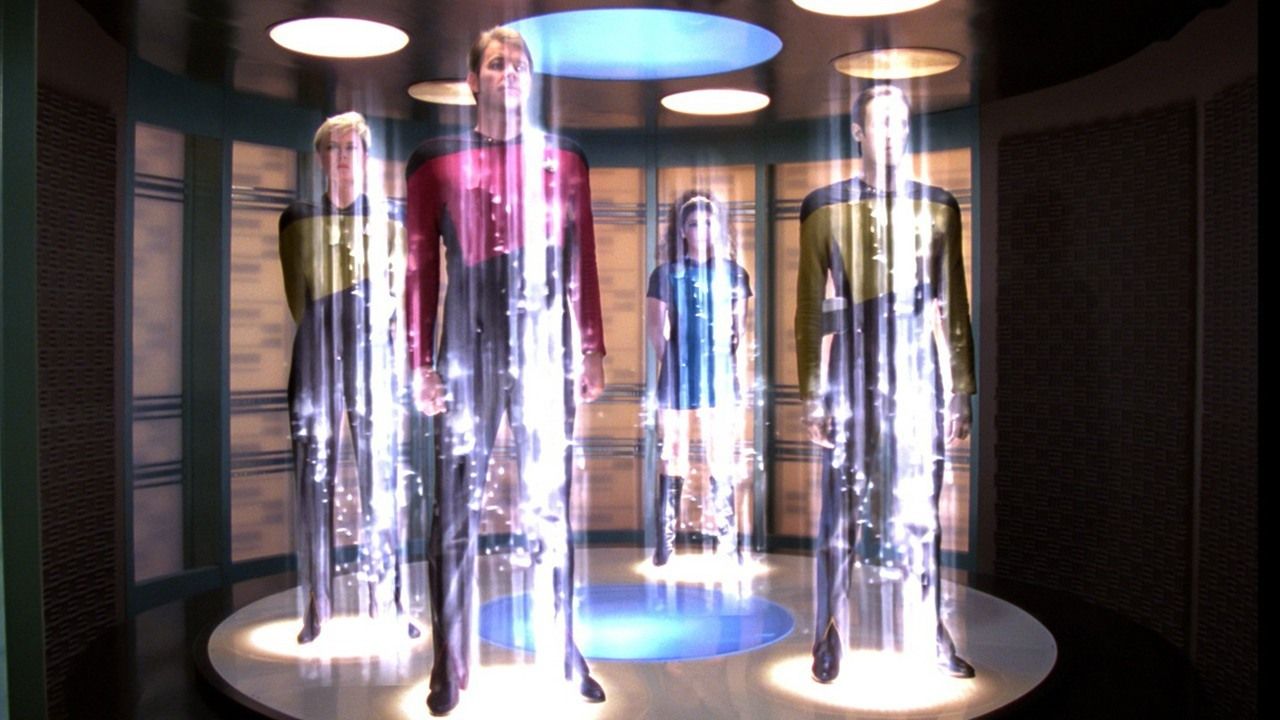
“Beam us down, Mr. O’Brien! No, wait, I didn’t meaaaannnnnnnnn……”
Some would argue that having one’s “molecules scrambled,” as Dr. McCoy would put it, is actually the surest way to die. Sure, after you’ve been taken apart by the transporter, you’re put back together somewhere else, good as new. But is it still you on the other side, or is it a copy? If the latter, does that mean the transporter is a suicide box?
An old article (2017, whose impetus was the imminent release of ST: Discovery) but a good one.
Is the copy of you, you? Or is it a brand new person with the same memories? Would it have ANY memories? Would it have the same consciousness? (Or ANY consciousness?)
Of course, you can always stick to the “David Brin Theory” of teleportation: “Some dude in the future will figure this all out.”
Lazy writers!
(This is why, in my novel, I stick to quantum teleportation of inanimate objects only. That includes quantum communication relays, chunks of asteroids…miniature nuclear bombs…you know, “realistic” things like that.)
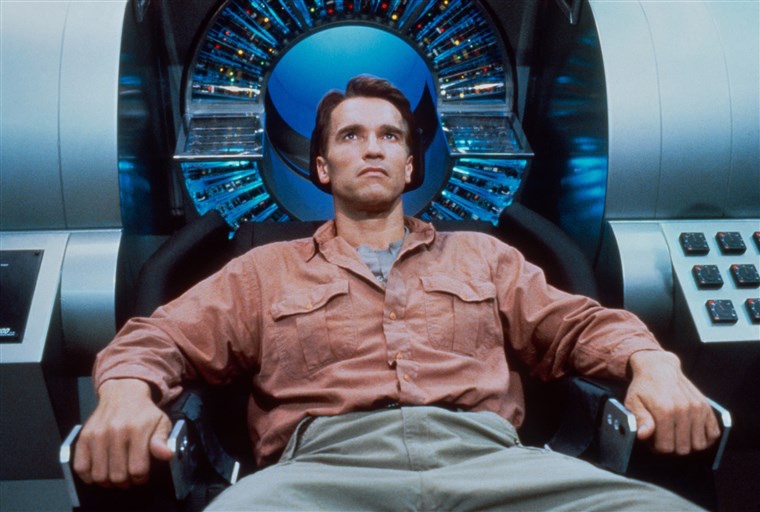
“But decoding and storing memories raise a new set of ethical, moral and legal questions. For instance, who would own these memories after a person has died? Could the police obtain warrants to search through memories? Given that memory itself isn’t completely reliable, could memories be used in lawsuits? How could we ensure that unscrupulous professionals don’t sell or share them?”
Hm, I think I can see another direction this might eventually take…
I get the attraction of people like Steve Jobs and Elon Musk. They have big ideas. They’re enthusiastic, ecstatic, even. They’re great at simplifying difficult concepts and promoting tech to the lay person.
But they’re not creators. They’re “visionaries.”
I.e., salespersons.
Is that a bad thing? Of course not. I was in computer sales once. It was hard. Only the charismatic are good at it. But I didn’t have the knowledge and ability to make the products I was selling, let alone the power to innovate.
Sticking a chip in a person’s brain and sending thousands to the Moon or Mars sound cool. Possible, even.
But science isn’t sales. Someone might die.
Small difference.
We need visionaries, but scientists are more important. Maybe if they talked to each other…
The Airbus spacecraft will have to manoeuvre itself into a position to capture these samples that will be packaged inside a football-sized container.
After ingesting this container, the satellite must then prepare it for return to Earth.
This means not only shipping it across hundred of millions of km of space, but also putting the football inside a re-entry capsule that can be dropped into Earth’s atmosphere to land in an American desert.
This would be, indeed, a feat of engineering as well as a first in interplanetary exploration.
But I wouldn’t go so far as to call it an “interplanetary cargo ship.” Unless the intention is to maintain it as a permanent link between research locations (i.e., some kind of permanent orbitor stationed above the Jezero Crater) and research facilities on Earth (or the Moon, or the International Space Station).
Political will is needed in addition to the enormous funding. Semi-privatization, anyone?