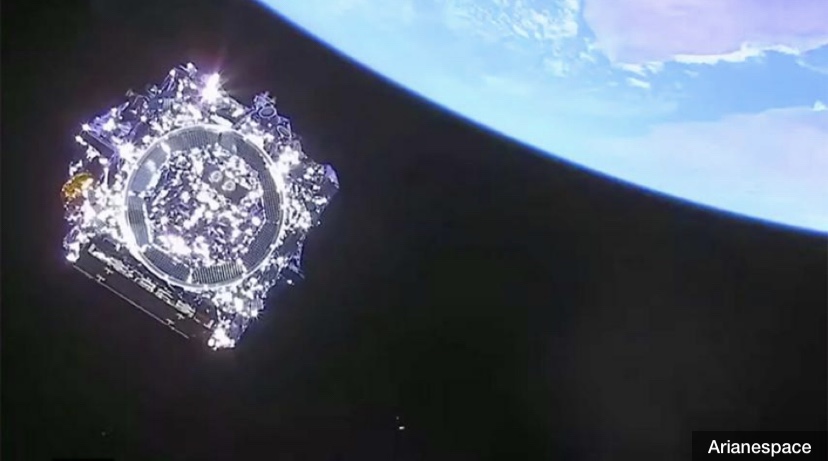
The James Webb Space Telescope – Hubble’s successor – has successfully lifted off.
Now starts the “two weeks of terror” as it gets into position and unfolds. Fingers crossed! 🤞

December 26, 2021
The James Webb Space Telescope – Hubble’s successor – has successfully lifted off.
Now starts the “two weeks of terror” as it gets into position and unfolds. Fingers crossed! 🤞
November 24, 2021
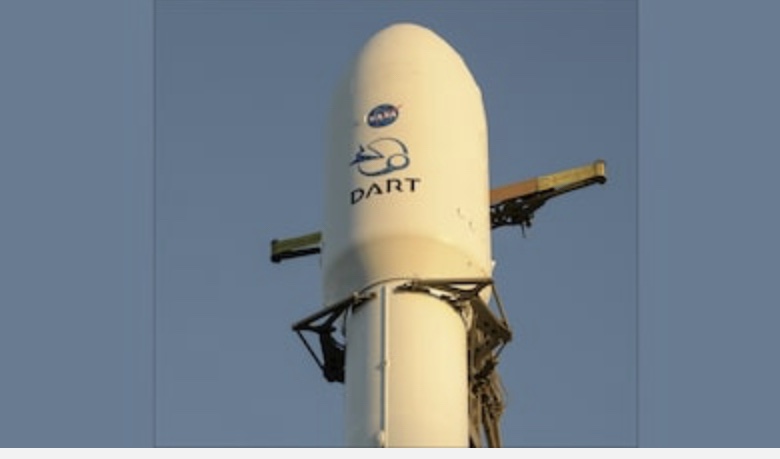
twitter.com/nasa/status/1463315612042678279
Technically, the two asteroids the DART is aiming at are a “binary” (they orbit each other).
The BBC’s explanation is pretty good.
They don’t even mention Bruce Willis until the final sentence.
November 12, 2021
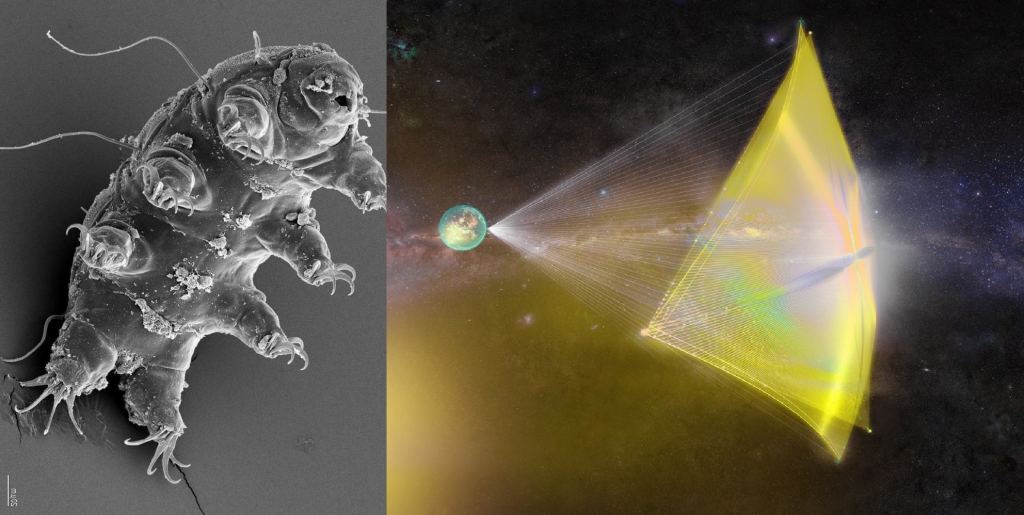
Hang on, I think I’ve seen this before…
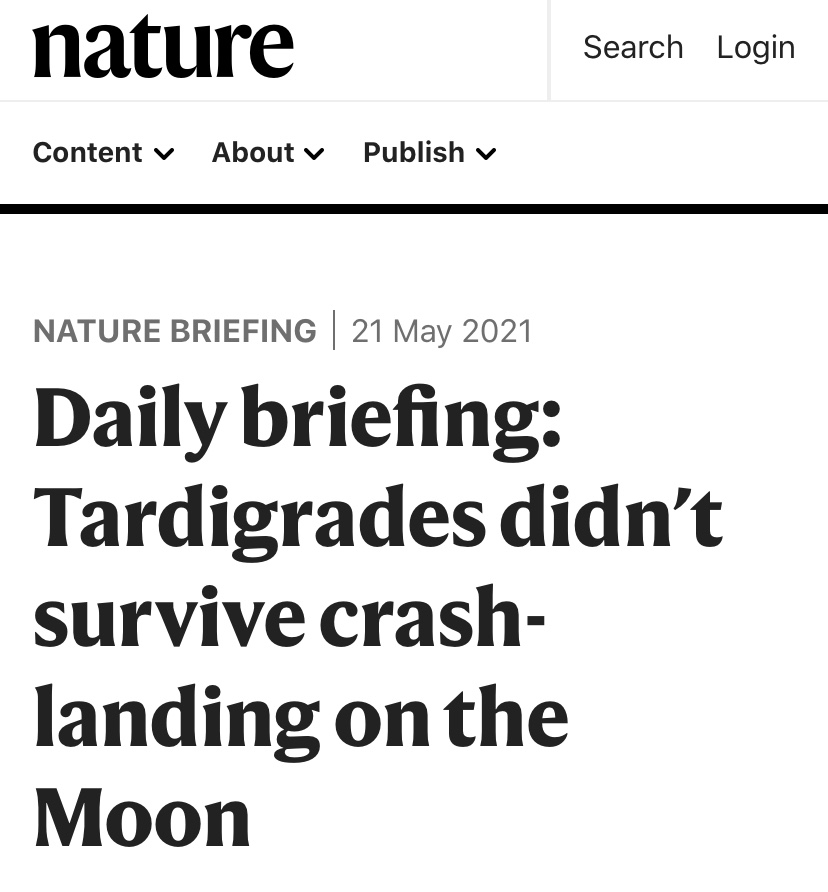
Oh.
Not such a great idea, then, to send them on an interstellar cruise…
November 5, 2021
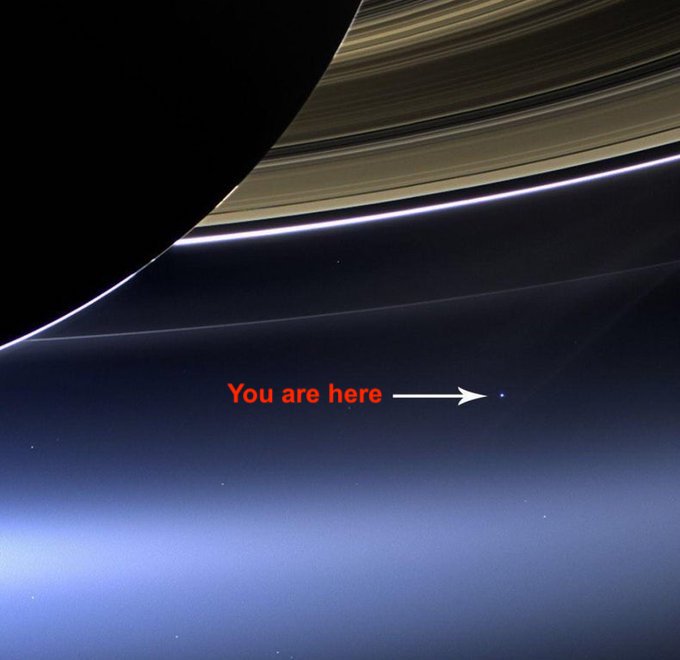
There. Feel better already?
🖖
October 6, 2021

Over the years, the SAA has been responsible for several spacecraft failures and even dictates when astronauts can and can’t perform spacewalks. As the space around Earth becomes filled with an increasing number of craft, what does the SAA mean for the future of spaceflight?
https://astronomy.com/news/2021/02/hidden-spaceflight-danger-the-south-atlantic-anomaly?utm_source=asyfb&utm_medium=social&utm_campaign=asyfb&fbclid=IwAR1LeNgz7Eynvjw3_AmU232xwz9WbJpSMOmid7NTEE9qm4VxYpdcNmVDc8Q
This post is from back in February 2021, but I just stumbled across it this morning and thought it was an interesting read.
Learn something new every day!
This part caught my eye…
Radiation is a colorless, tasteless, and odorless enemy…
…and I couldn’t help thinking…
Iocaine powder?!?

It’s okay. I’m immune 😂

Anyway, the article linked above is food for thought. Whenever electronic objects pass through the SAA, which is where the loops of the Van Allen Belt dip perilously close to the Earth, the electronics get a massive amount of radiation and go haywire.

Seriously expensive to shield stuff up there — and as more and more satellites (and people) go up, so does the risk.
September 18, 2021
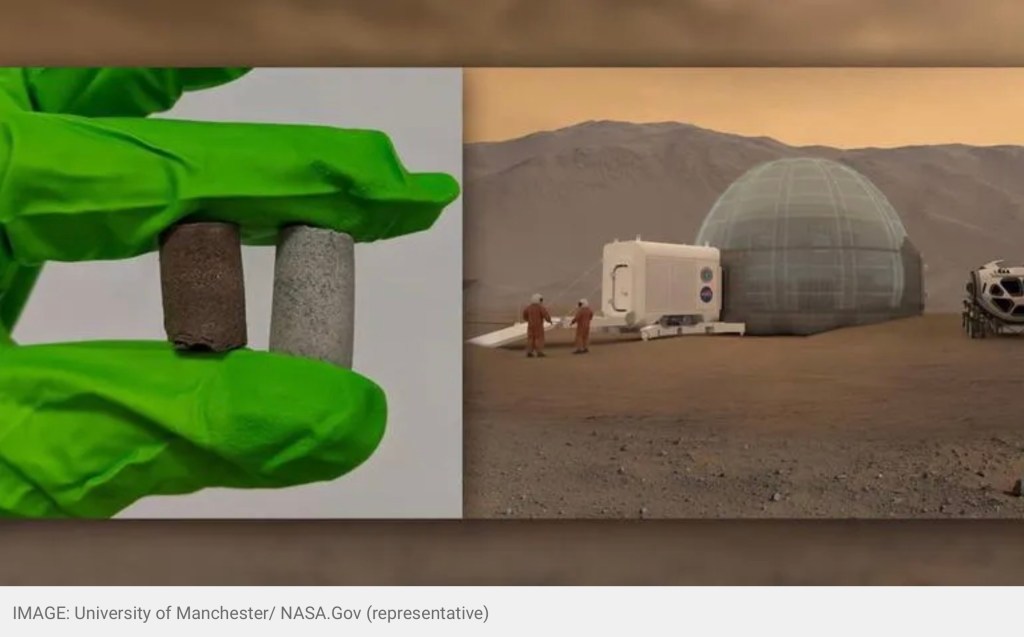
The blood, sweat, and tears of pioneering astronauts could literally turn Mars regolith into building materials.
First, however, they’d need to get the 3D printers there…
July 31, 2021
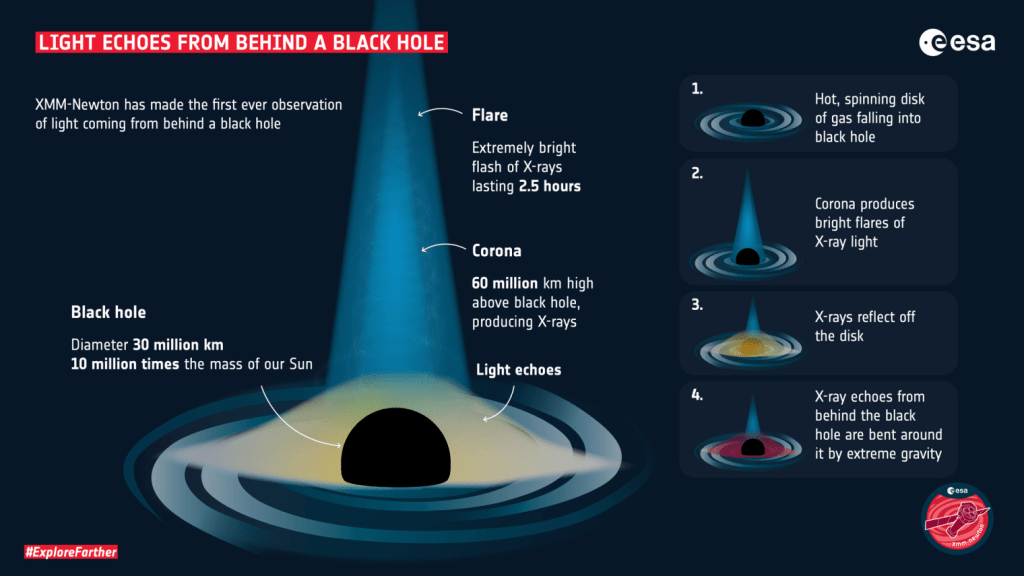
…while light cannot escape a black hole, its extreme gravity warps space around it, which allows light to “echo,” bending around the back of the object. Thanks to this strange phenomenon, astronomers have, for the first time, observed the light from behind a black hole.
https://www.nbcnews.com/science/space/einstein-right-researchers-see-light-echo-black-hole-rcna1553
Einstein has been proven right. Again.
July 28, 2021
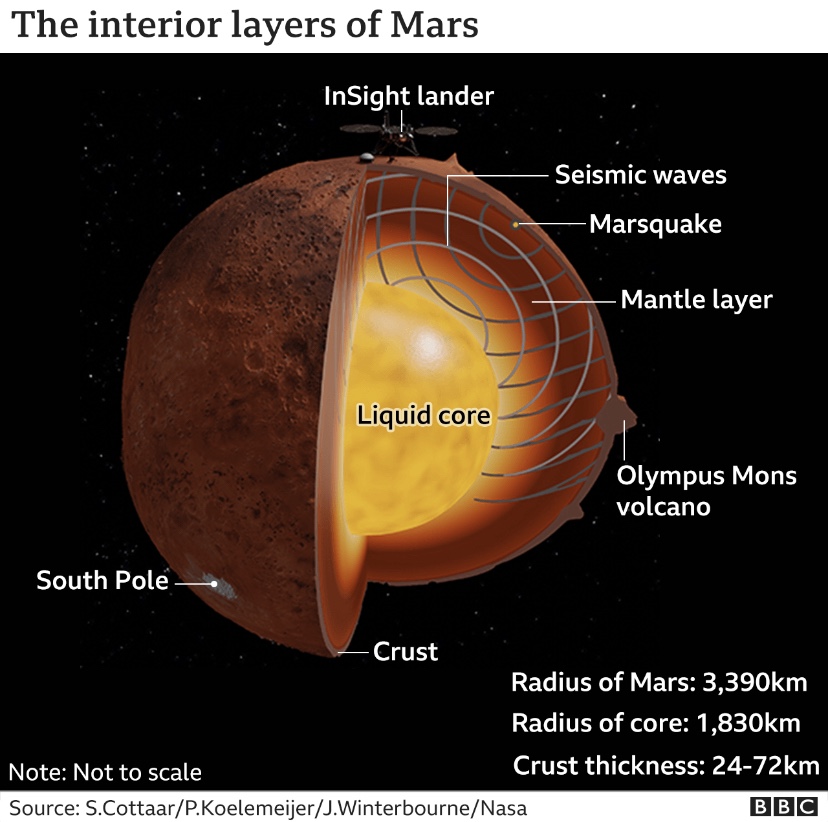
Well, OK, technically it’s the mantle, not the crust.
But it is thick. Super thick. And no gradations like the Earth.
Extrapolating to the known surface geology of the rest of the planet, this suggests an average thickness of between 24km and 72km. By contrast, Earth’s average crustal thickness is 15-20km.
https://www.bbc.com/news/science-environment-57935742
So what does this mean?
For one thing, it probably explains why there’s no breathable atmosphere on Mars.
Mars never developed a global magnetic field to block solar radiation. So it’s atmosphere was basically ripped right off.
And any terraforming attempts in the future would fail on a global scale. But maybe locally it might work…
July 16, 2021
Man, I did it again.
I forgot to post the next chapter of Bringer of Light.
Also the next one after that. And the one after that.
It’s been a very tiring summer so far.
(For starters, we STILL don’t have enough Pfizer or Moderna vaccines, doses are get wasted left and right as the elderly randomly cancel reservations and the bureaucratic pinheads in charge refuse to give them to others, and several students at my school went out drinking and guess what happened…)
I haven’t even posted any science news lately.
But I promise that I’ll make up for it. Soon.
In the meantime, here’s a neat little article about some wild theories of the universe, starting with the Brane Universe and the Big Splat.
Yeah. I thought you might like that one.
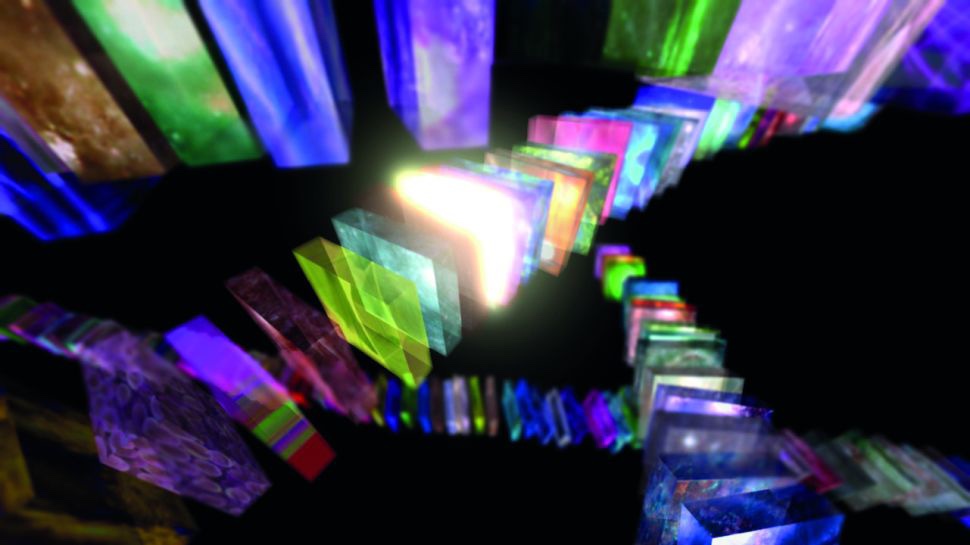
https://www.livescience.com/strange-theories-about-the-universe.html?utm_campaign=socialflow
June 27, 2021
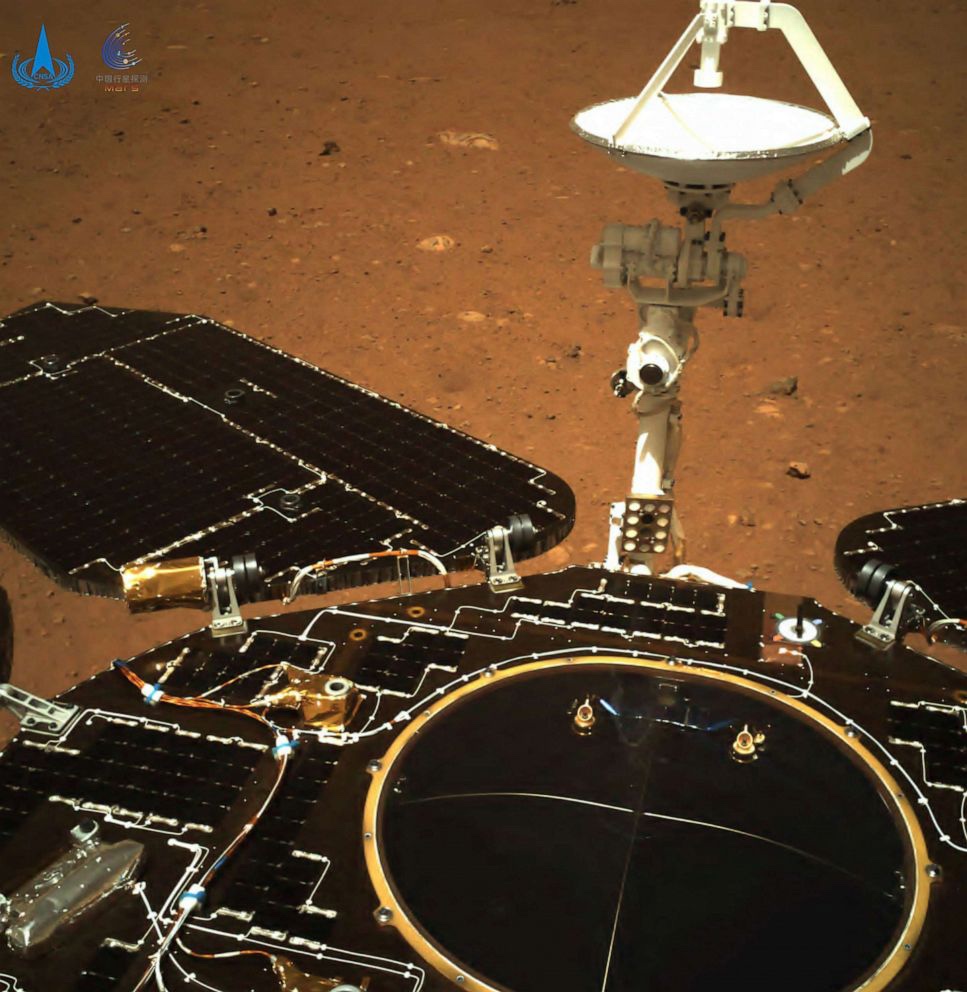
Like other nations, China “regards Mars exploration as the preferred destination for deep space exploration,” Wang said.
https://abcnews.go.com/amp/Technology/china-unveils-ambitious-roadmap-human-mars-exploration/
China’s plan calls for setting up a permanently occupied base and a fleet of interplanetary craft. Probably it’s a good idea to first see whether it can meet its goal of landing people on Mars in 2033.
Of course, China is “willing to join hands with our counterparts and partners all over the world,” but it’s unlikely NASA, JAXA, ESA, and the UAE and other countries not named Russia will “cooperate.”
The next space race is here. Just wait until multinats actually decide asteroid mining is worth the risk and expense.
Space sustainability watch, co-produced by a human and an AI agent
Writing Fanfiction in the worlds of Tolkien and Beyond!
Learning more about our place in the universe...
Best Tech Gadgets Advise
Writing blogs is miracle I am a writer blogger and my site mission is to give information on maximum information to audiences
Reflections of an inquiring retiree ...
Simple ideas to make every room feel stylish and welcoming
Rock & Metal Reviews That Hit Hard
Short stories | Reflections | Poetry

