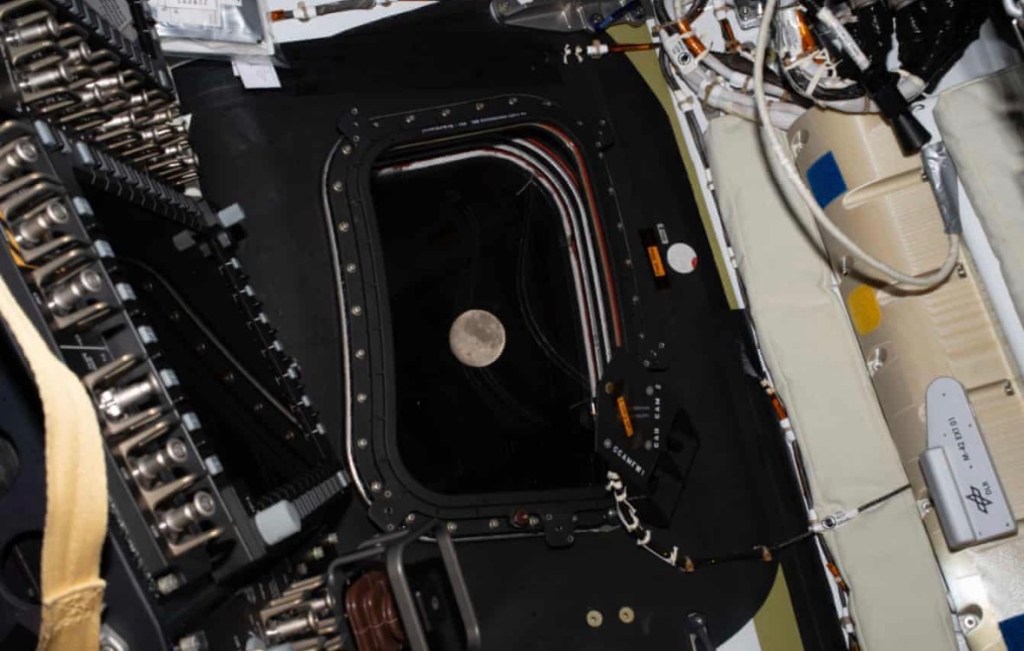
“It is blowing my mind what you can see with the naked eye from the moon right now,” Canadian astronaut Jeremy Hansen radioed ahead of the flyby. “It is just unbelievable.”
Just like Apollo 8 in 1968.
History does not repeat, but it sure does rhyme.

April 7, 2026
“It is blowing my mind what you can see with the naked eye from the moon right now,” Canadian astronaut Jeremy Hansen radioed ahead of the flyby. “It is just unbelievable.”
Just like Apollo 8 in 1968.
History does not repeat, but it sure does rhyme.
April 2, 2026

Live up dates of the Artemis II mission to “cislunar space” (it will not actually land on the Moon but will take four astronauts farther away from Earth than anyone else so far).
March 23, 2026
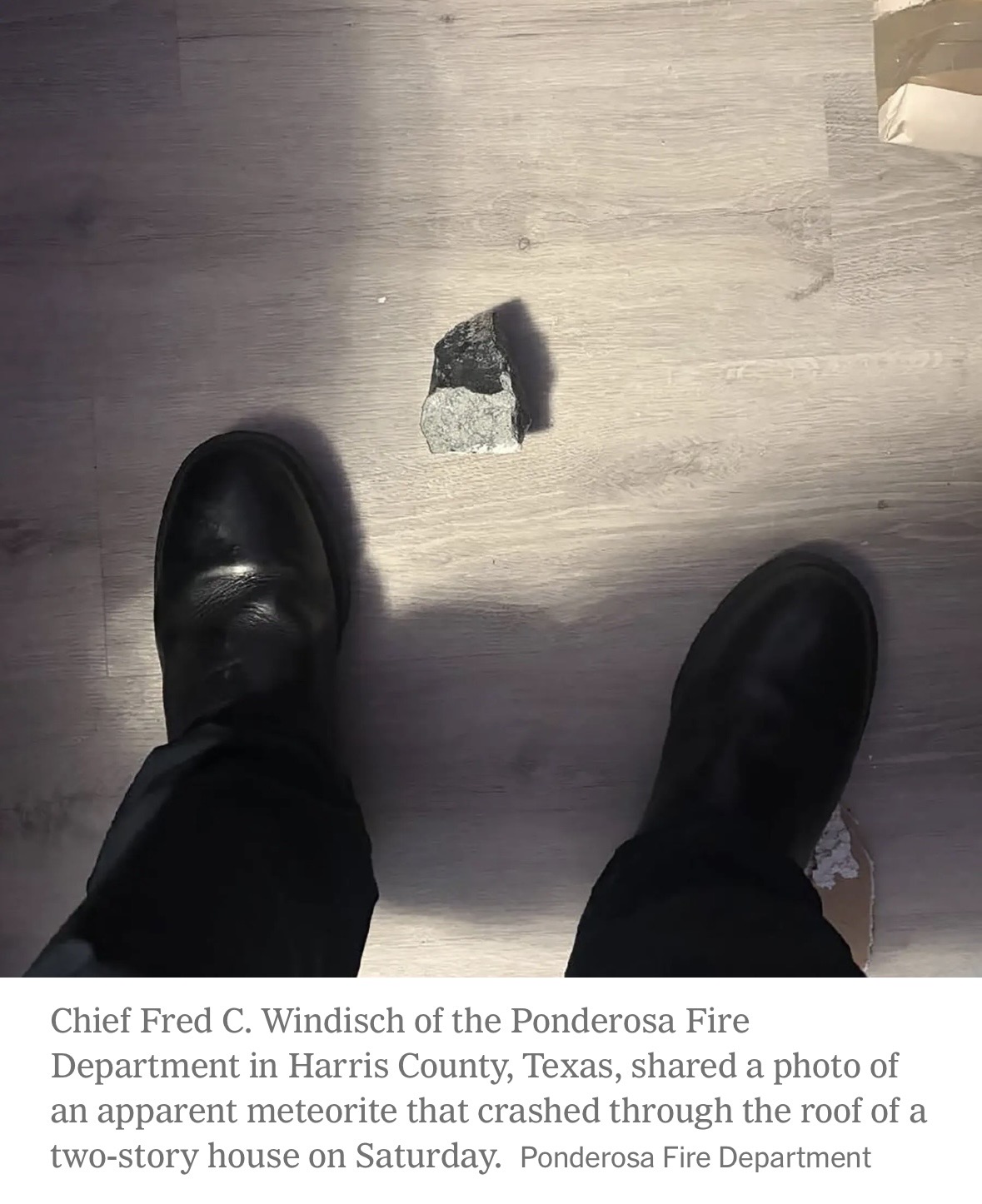
Just four days after a meteor streaked through skies above Cleveland, another one broke apart above Houston.
My favorite quote from the woman whose house was targeted by a meteorite:
“It looked just like a rock, and ain’t no rocks got no business falling out of the sky.”
Um. Yeah. Ain’t no blogger got no business complaining about grammar what don’t make no sense, boy.
My favorite thing about the photo of the meteorite chunk: It was sent to the media from the Ponderosa Fire Department.
Now we’re cooking!

March 23, 2026
“A palentir is a dangerous tool, Saruman,” Gandalf said. “We do not know who may be watching.”
March 18, 2026
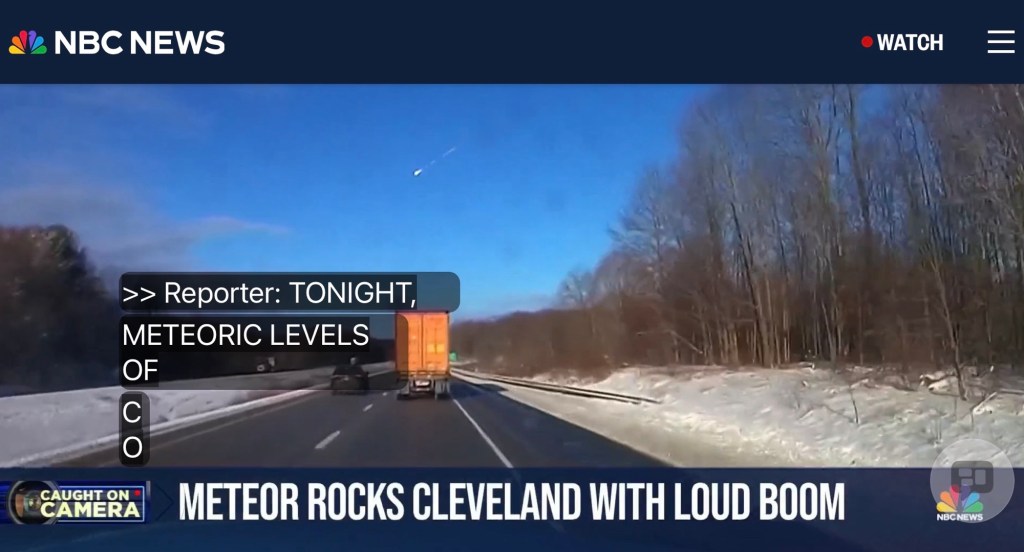
Rocky objects traveling through space are known as meteoroids, but when they enter Earth’s atmosphere and create fireballs, they are called meteors. Any fragments that fall to Earth’s surface are meteorites.
https://www.nbcnews.com/science/science-news/meteor-boom-ohio-pennsylvania-rcna263876
The Earth is bombarded on a daily basis from outer space.
Just not usually over urban areas during daylight.
In Ohio.
Not a whole lot going on there, apparently.
(On FaceCrap, people are posting things like “The sky literally exploded over Ohio!” Um. No, it didn’t, and that’s not possible. Morons.)
March 12, 2026
“As a science fiction author, I’ve always loved hearing from fans of my fiction,” [US based author Jason Sanford] tells the Guardian. “But now when someone emails saying they loved one of my stories, my first thought is that this is yet another scammer setting me up for the kill.”
Yet another reason I hate AI.
I, too, have been contacted repeatedly by people claiming to be literary agents, or to have connections with major publishers or bookstores.
I don’t trust any of them. And that’s sad.
All I want is for people to read and enjoy my work. Not steal it, scrape it, resell or repackage it. And certainly not to think I’m eager to give them thousands of dollars for horrible AI-generated videos.
It’s impossible to make a living as a writer.
March 11, 2026

“For the average person, it will be a nice light in the sky if you get lucky and, otherwise, don’t worry about it,” Dr. McDowell said. “We have much more scary re-entries that happen. Occasionally, there is a 20-ton Chinese rocket stage that comes down. Those are much scarier for me.”
OK, granted that the odds are 1 in 4200. But still, we should figure out how to predict where pieces of satellites are going to land. There’s far too much stuff floating above our heads for us to feel 100% safe.
And an expectation of “7:45 pm give or take 24 hours” is not particularly helpful, either…
Especially when a private corporation is saying 11:45, give or take three hours.
Jeez.
March 6, 2026
I feel as if I have two personalities, one which speaks English and one which speaks Japanese. The one which speaks English can never get past being a high school geek. The one which speaks Japanese cannot get past being a “strange foreigner.” The only time I feel comfortable now is when I am teaching. Only there can I be an actor and change who I am any time I want.
March 5, 2026

Incredible! What did he do with such power? As I said, he took his findings to the Verge. One of its reporters gave Azdoufal the serial number of a DJI Romo vacuum he’d just been testing for review; within minutes Azdoufal could see it cleaning the reporter’s living room, that it had 80% battery life remaining, and had it generate and transmit a floor plan of the house.
And the Internet of Things seemed like such a good idea…
March 5, 2026
“WE will decide the fate of our Country – NOT some out-of-control, Radical Left AI company run by people who have no idea what the real World is all about,” Trump wrote.
Hmm. OK, what did this “Radical Left AI company” want?
US defense officials have pushed for unfettered access to Claude’s capabilities that they say can help protect the country, while Anthropic has resisted allowing its product to be used for mass surveillance or autonomous weapons systems that can kill people without human input.
So the WE is actually just ME, then.
I’ve written repeatedly about the dangers of AI: it’s not really AI, it repeats very human bias and mistakes, and it will become potentially extremely dangerous to humanity if left unregulated.
But go on, keep using these programs. I’m sure it’ll all work out…

Writing Fanfiction in the worlds of Tolkien and Beyond!
Learning more about our place in the universe...
Best Tech Gadgets Advise
Writing blogs is miracle I am a writer blogger and my site mission is to give information on maximum information to audiences
Reflections of an inquiring retiree ...
Simple ideas to make every room feel stylish and welcoming
Rock & Metal Reviews That Hit Hard
Short stories | Reflections | Poetry
Read. Reflect. Grow
 M Thomas Apple Author Page