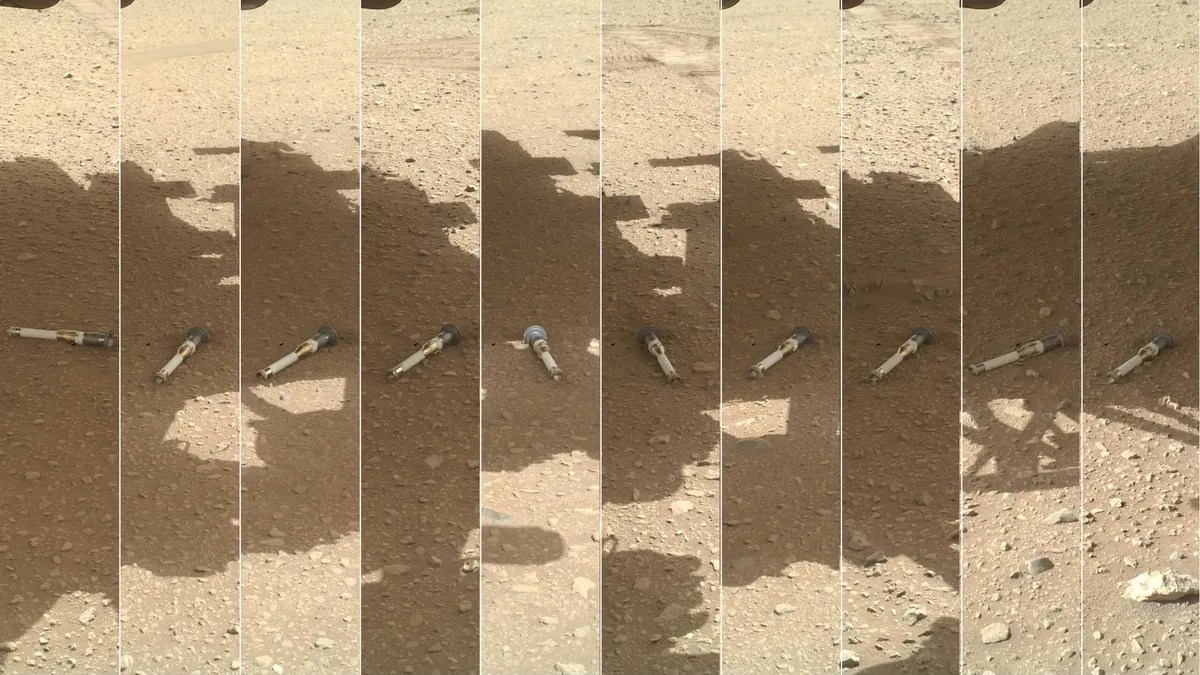
NASA’s plans for Mars sample return are effectively cancelled as part of a bill approved by the U.S. Congress, ending efforts to collect Perseverance rover samples that could contain evidence of alien life.
Using the new method, one metric tonne of lunar soil will be able to produce about 51 to 76 kilograms of water, equivalent to more than a hundred 500-millileter bottles of water, or the daily drinking water consumption of 50 people, the state broadcaster said.
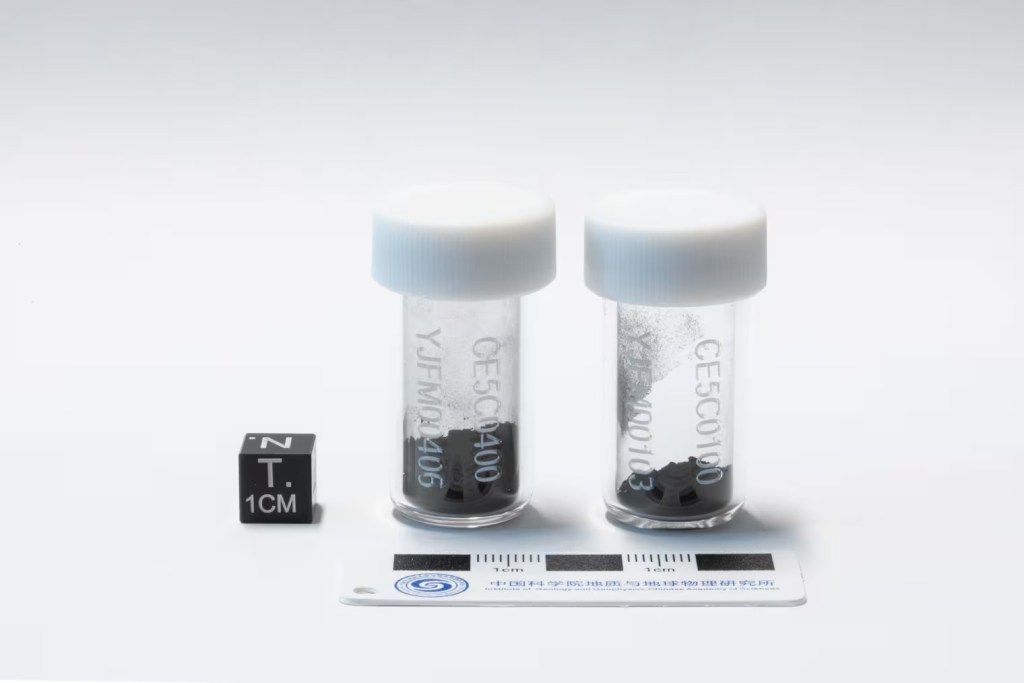
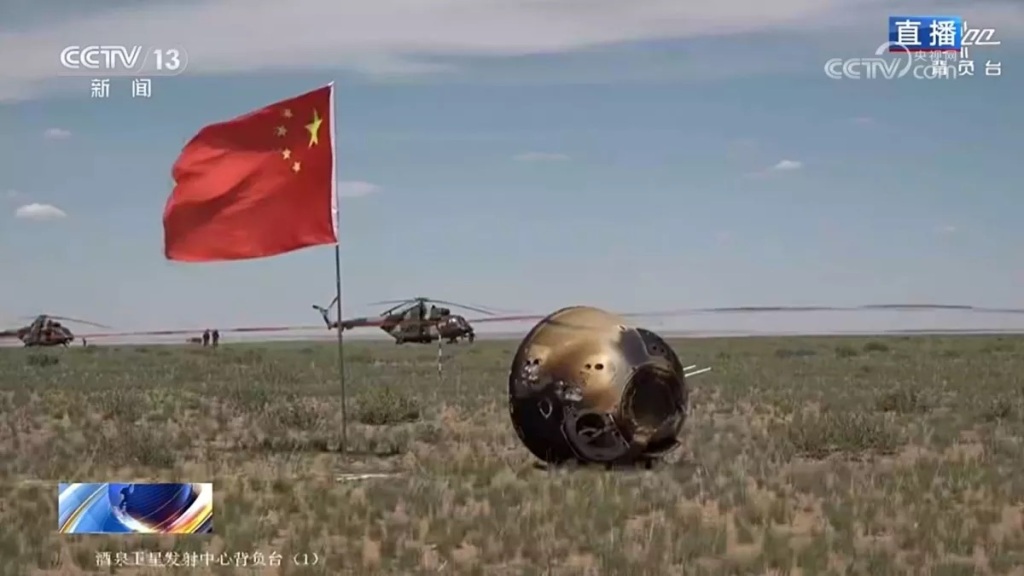
The soil was from the 2020 expedition, which was the first in 44 years to bring back soil from the Moon.
Considering all of NASA’s problems, it looks like China will have a moon base years before the US does…and probably in prime resource locations as well.
And don’t forget that the hydrogen in the soil can also be used for rocket fuel. It would be a lot easier to launch ships to Mars and beyond without having to deal with Earth’s gravity…
Footage making the rounds on social media shows what appear to be astonishingly lifelike humanoid robots posing at the World Robot Conference in Beijing last week.
But instead of showing off the latest and greatest in humanoid robotics, two of the “robots” turned out to be human women cosplaying as futuristic gynoids, presumably hired by animatronics company Ex-Robots.
During the World Robot Conference 2024 in Beijing from Aug 21 – Aug 25, 🇨🇳 animatronics company EX-Robot (or EX Robots as reported by some news media) hired 2 women cosplayed as robots to spice up the exhibition.
But China has also offered to share at least some of its new moon samples with American researchers, and NASA is allowing the U.S. scientists to submit proposals.
This is a welcome change of heart. International politics need not prevent international space exploration.
On the other hand…
China is not planning a mere short-term, flags-and-footprints presence on the Moon. Their ambition is more like Nasa’s Artemis than it is Apollo. China plans to launch two separate missions to the south pole of the Moon around 2026 and 2028 – including testing using lunar soil to 3D print bricks – as precursors to a lunar base.
The short story accused of violating the national security law, “Our Time,” is set in a dystopian 2050. It tells of an authoritarian future in which vast swaths of Hong Kong history have been erased from both the city’s structures and the public consciousness, and all aspects of life are subsumed under the Chinese Communist Party.
I’m not sure this is science fiction. Seems more like reality.
Every political entity wants power. When people resist being controlled, and they use a dialect or another form of the “official” language, those in charge try to eliminate the language of resistance.
When people write about a dystopian future in which they have no right to their own language, customs, ways of thinking and behaving, and political representation — and those in charge respond by banning the fiction — it really only shows the reality. And the reality is this:
Those in charge have small, frail, male egos that need constant stroking. Poor frail eggshell minds.
Language is power, because language is identity. Those in charge are always afraid of losing control over all three. And whenever they respond this way, they always get exactly the opposite of what they want.
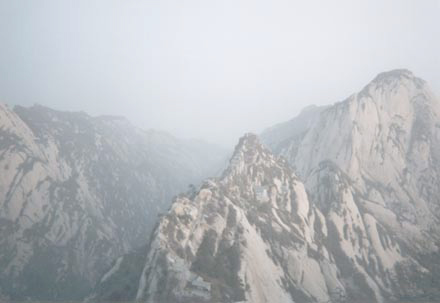
My legs, especially my left calf, still ache from Hua Shang. That experience alone justifies my whole trip. I walked 6 km starting at about 1pm. Stopping only once for maybe 15-20 minutes for a Sprite and a flashlight, I reached the North Peak (Bei Feng) at a little after 5. I really should have continued to the South Peak (the highest at 2160m), but at just before a particularly treacherous climb, a stranger offered to take my picture. He did this twice later; he then asked me where I was going, so because I told him North Peak, he led me to the North Peak Hotel. I signed into an expensive room, thinking a locked door proof against bag theft — but unnecessarily, as there were no other guests at all! I got a TV, a washbasin (no running water) and access to outdoor lavatories (Must have been the “private bath” the guidebook lied about). Public toilets basically meant an open outhouse shitting down the rock face — so much for sacred mountain vibes.
I slept and, waking at 4 am, set off to climb the Blue Dragon. Only then did I know why one traditionally climbed the mountain at night: to conquer fear. Once I began, I could not return. Grasping the iron-link chain with one hand and flashlight with the other, all I could see were tiny, steep steps underfoot and clear stars overhead. Most stairs were about 60º, but several inclined more, and at least one near the beginning of the Blue Dragon was almost vertical, certainly 80º. At the very end, just before the sunrise viewing point, was the actual peak (2100m). From atop an enormous boulder crowned with pine trees and a lone camp light came the voices of two crazy park workers, exhorting all to brave the true East Peak. A guide at the bottom told me to be careful before I attempted to climb the rock. But as I realized the steps were actually more than 90º, and that my pack was pulling me backward as I yanked myself up on the chains, I gave up and went down again after about 10 feet.
When I returned after watching daybreak, I looked down at the Dragon and could only marvel at my audacity; I had come alone at night, scared half out of my wits, with heavy packpack and asthma and glasses and only 1 free hand, and I had climbed steps narrower than the width of my foot. With sheer rock cliffs on both sides and only a single metal chain between me and a quickly plummeting death. I did it. I have nothing left to fear.
The link below includes a night sky in Montana, which makes little sense when the researchers were in Beijing and Honolulu…
“The first-generation star we observed has the potential to become the oldest star we have ever seen,” said Alexander Heger, a professor in the school of physics and astronomy at Monash University in Australia who was part of the research team. “It probably had only lived for 2 1/2 million years and then exploded.”
Oh, and it also was discovered to be 260 times the size of our own Sun…just as theorized.
More importantly, this involved scientists from three different countries (China, Japan, and Australia), sharing information and working together for science.
Imagine if that spirit of cooperation could be extended into other domains…
Half of a dilithium crystal? (It’s a new type of crystal called “Chang’esite” (after the ancient Chinese moon goddess).
I should be posting another chapter from Bringer of Light, but I don’t feel like writing that right now, what with a humongoid typhoon slowing churning its way here.
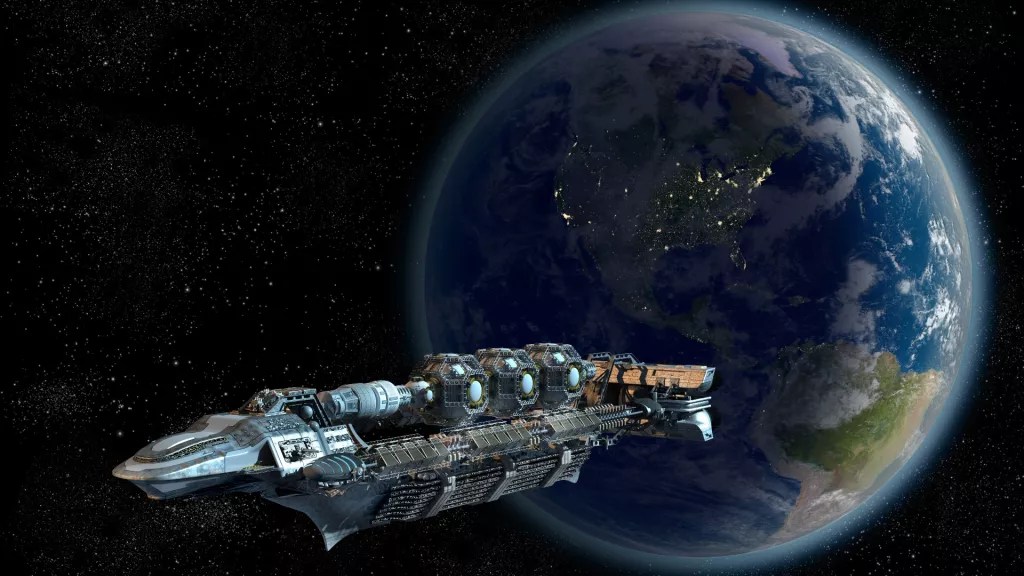
“China is investigating how to build ultra-large spacecraft that are up to 0.6 mile (1 kilometer) long. But how feasible is the idea, and what would be the use of such a massive spacecraft?“
The original title of the Live Science post linked above is “China wants to build…” but this is incorrect. The National Natural Science Foundation of China is proposing a feasibility study. This is not the same thing as “China wants to build a kilometer-long ship.”
Likely the study will find out that it’s just too expensive and not worth it in terms of effort, resources, and maintenance costs. But it may show the benefits of setting up a base on the Moon and then sending materials there to be 3D-printed for future exploration or human colonies elsewhere.
Sending up a ginormous ship from Earth is foolhardy. Figuring out how to build stuff in space is much smarter.





 M Thomas Apple Author Page