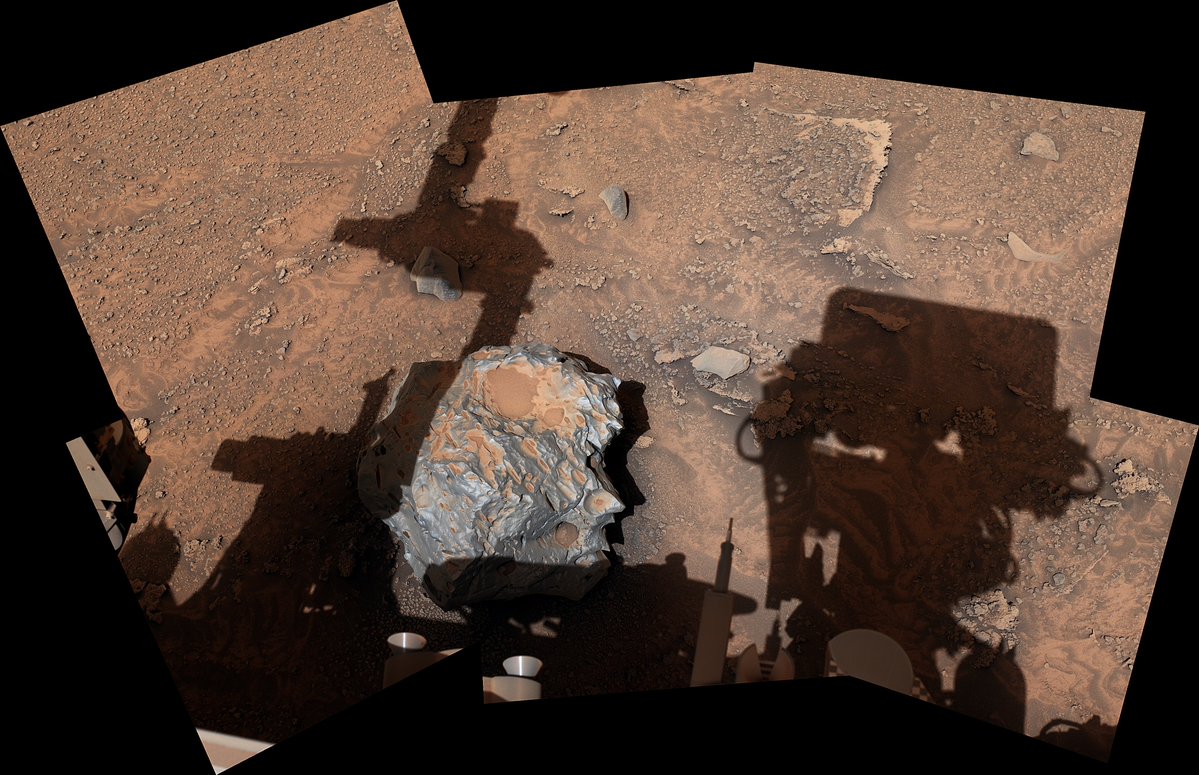
The mysterious object’s lovely silver metallic hue stands out like a sore thumb in the surrounding, rust-colored landscape, a sulfate-bearing region of the Red Planet’s Mount Sharp.
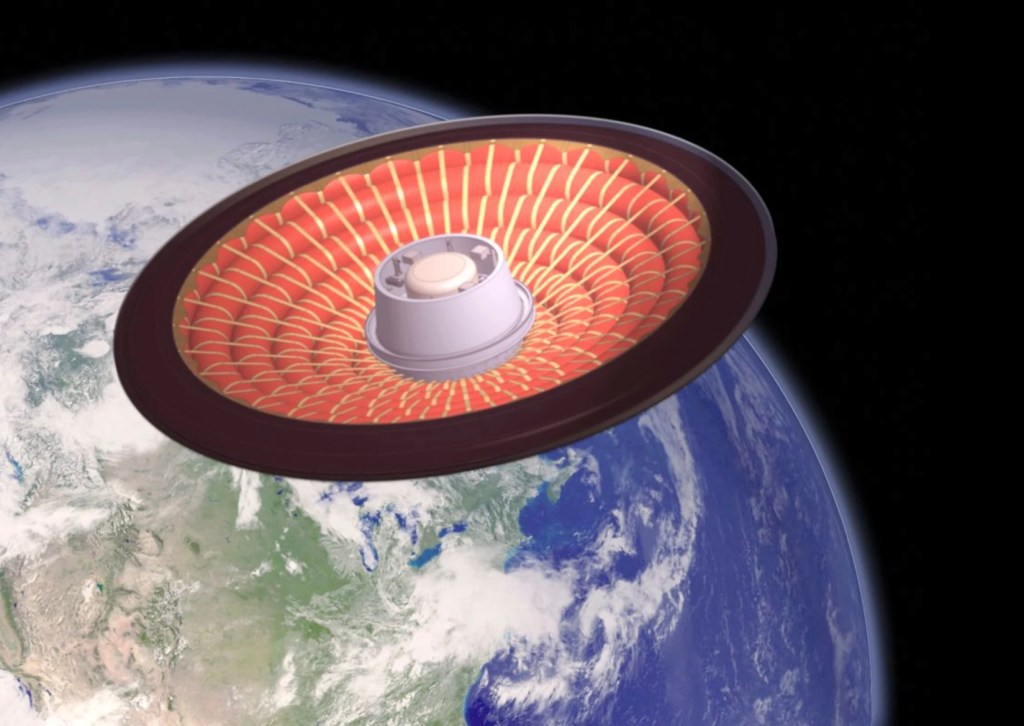
Also, see this one (pay wall, Washington Post) about NASA and DARPA working on one to reach Mars much faster to reduce astronauts’ exposure to radiation.
I still think “durp” every time I see that acronym 😝
Since the Hayabusa2 returned with the sample from the Ryugu asteroid in December 2020, several important discoveries have been made – most notably analyzes confirming the presence of substances thought to be the building blocks of life on the asteroid, such as liquid water and organics fabrics.
Hayabusa-2 took several years to land on Ryugu (literally “Dragon Palace”), pound out just over 5 grams of asteroid material, and bring it back to Earth (landing in Australia in late 2020).
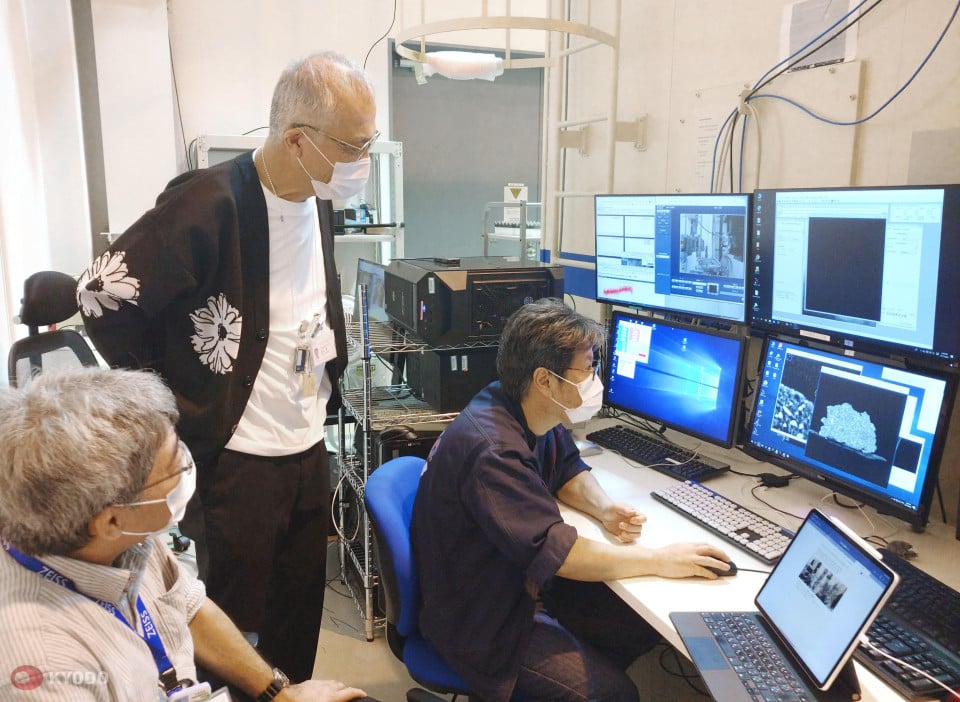
NASA scientists have confirmed not just frozen water but liquid — inside crystals called pyrrhotites. JAXA scientists (pictured above with Prof Tsuchiyama of Ritsumeikan University, my main employer!) continue to check the density of the samples.
The water is similar to the carbon dioxide-laden water of hot springs. The research teams have already discovered over 20 amino acids, the basic protein building blocks of carbon-based life.
Another theory called “panspermia” proposes that a key mineral (boron) missing on early Earth came in an asteroid from Mars. ☄️ Hmm. Did Mars produce asteroids? Or more like asteroids hit Mars and broke off lots of tiny fragments? That somehow survived the journey to Earth?
Seems a little unlikely. But there is now evidence that at least some proteins came from space rocks.
So, sorry, Ridley. This isn’t how it happened. Cool movie, though.
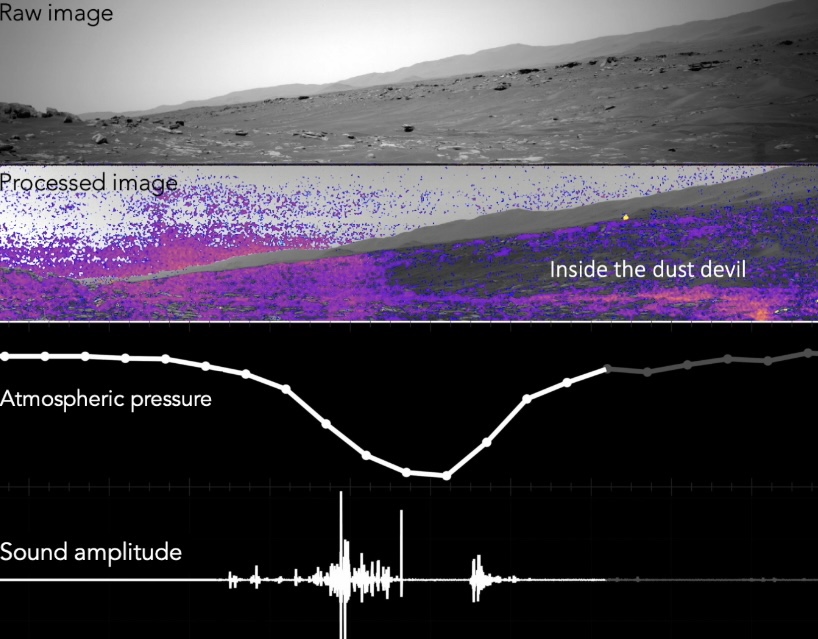
It was “definitely luck” that the dust devil appeared when it did, said the study’s lead author, who estimates there was just a 1-in-200 chance of capturing the audio.
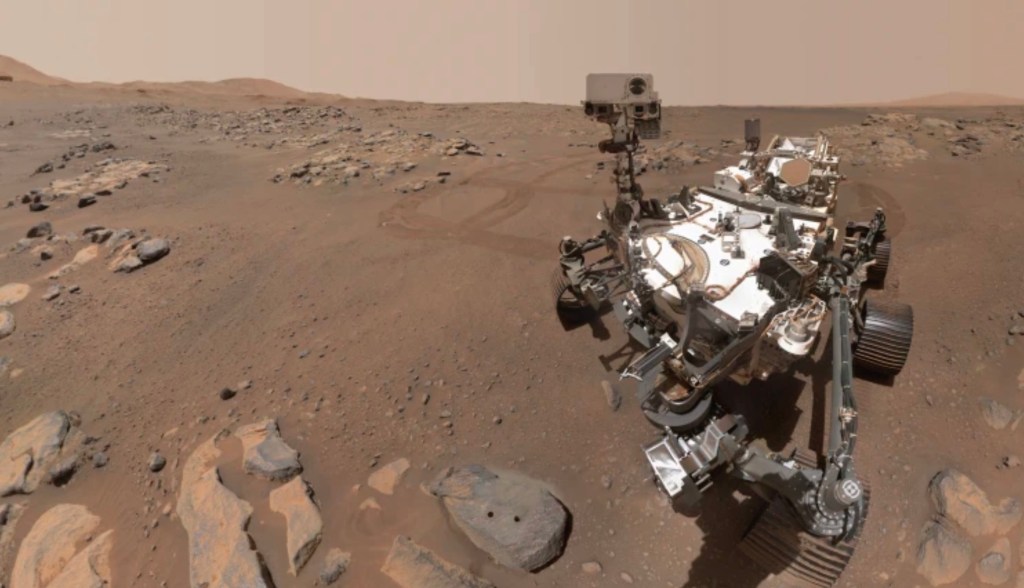
Perseverance has been on Mars for almost two years now, and already recorded wind on Mars for the first time in February 2021.
This dust devil was recorded in late September 2021 (wonder why only now it’s being revealed?). The dust devil was “average size,” which is described as about 400 feet / 122 meters tall and 80 feet / 24 meters wide, traveling at 16 feet / 5 meters per second (≈ 11 mph / 18 mph).
UPDATE. NBC incorrectly reported in the above linked article that the dust devil was recorded by Perseverance. It was actually recorded by InSight, which has just fallen silent after four years of operation. Sigh. I should get science news directly from the source and not from unreliable “news” sites.
There are a lot of dust devils on Mars. A whole lot. Any settlement would have to be extremely prepared to deal with dust all the time, everywhere. If it ever got into equipment that regulated, say, breathable air inside habitats…
I’ve been testing ChatGPT over the last couple of days. (If you don’t know what this chatbot is, here’s a good NYT article about ChatGPT and others currently in development.)
The avowed purpose of ChatGPT is to create an AI that can create believable dialogues. It does this by scouring the web for data it uses to respond to simple prompts.
By “simple,” I mean sometimes “horribly complicated,” of course. And sometimes a little ridiculous.
Somehow, I doubt that people in the US said “livin’ the dream” in the ’50s…
As has been pointed out, chatbots only generate texts based on what they have been fed, i.e., “garbage in / garbage out.” So if you push the programs hard enough, they will generate racist, sexist, homophobic etc awful stuff — because unfortunately that kind of sick and twisted garbage is still out there, somewhere online in a troll’s paradise.
So far, I have asked the program to:
Write a haiku about winter without using the word “winter”
Write a limerick about an Irish baseball player
Write a dialogue between God and Nietzsche (I just had to…)
Imagine what Jean-Paul Sartre and Immanuel Kant would say to each other (see above) but using US ’50 slang
Have Thomas Aquinas and John Locke argue about the existence of God (that one was fun)
Write a 300 word cause-effect essay about climate change
Write a 300 word compare and contrast essay about the US and Japan
Write a 1000 word short science fiction story based on Mars
Write a 1500 word short science fiction about robots in the style of Philip K Dick
First of all, stop calling it “the golden asteroid.” That’s confusing people (the headline of the article linked below even uses the phrase “gold mine.” Come on, lazy journalists.)
If 16 Psyche is worth mining, when could such operations proceed? Citigroup thinks that space mining, including from the moon and asteroids, will be a $100 billion-per-year business by 2040. Launch costs will continue to decrease and experience in operating in space will continue to expand until such a business makes economic sense.
Well, how heavy do you think the materials to make buildings and ships in outer space are?
If we’re serious about putting people on the Moon and Mars, then it makes much more sense to set up robotic mining factories and assemble everything in space.
All this needs is a little incentive…like a new space race…
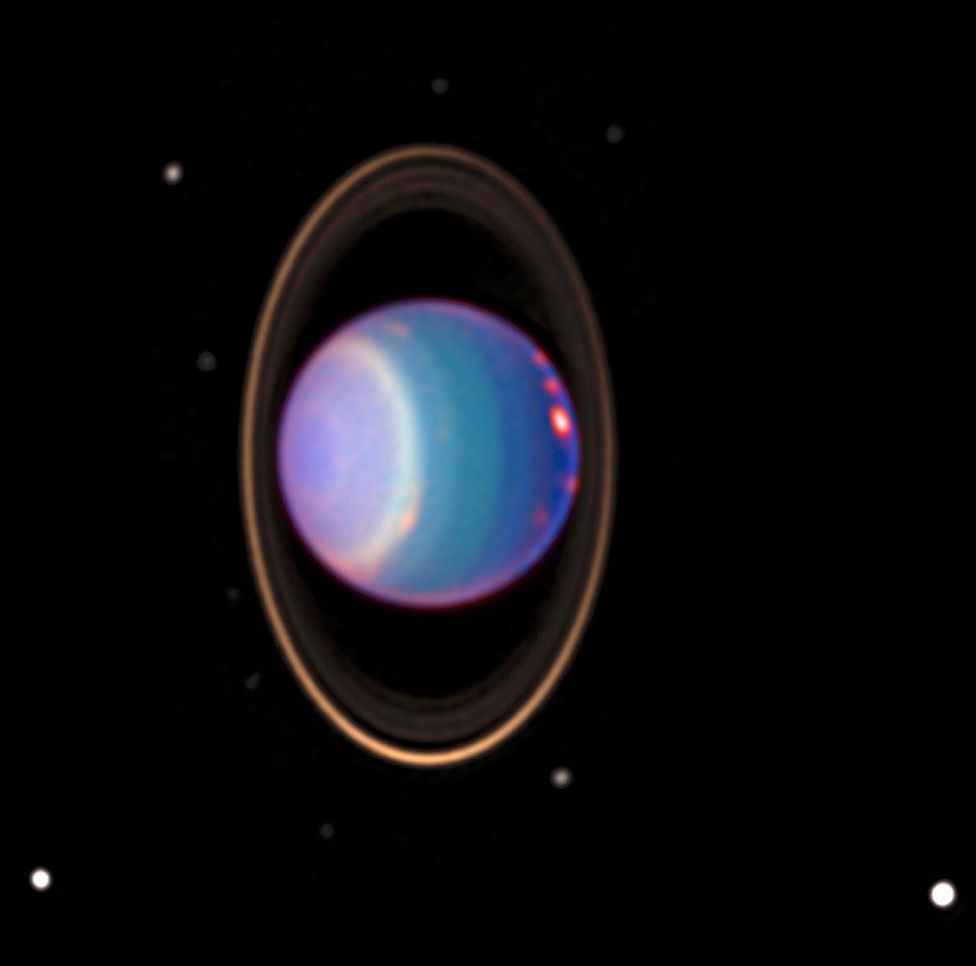
“Researchers think an in-depth study of Uranus can help them better understand the many similarly sized objects now being discovered around other stars.“
Uranus’s strange tilt is probably due to getting smacked by a very large body a long time ago…
Uranus is weird. It has rings. It has 13 moons, some of which may harbor life beneath their icy surfaces.
It has a funny name.
I get it. But learning more about how its formation affects planet formation is just not that important.
“Pure” researchers probably are interested, but frankly, if NASA wastes its time doing this, they will miss the opportunity to settle the Moon and Mars, mine asteroids for valuable resources, and explore other moons like Titan and Europa.
China will get there first.
Pure research is all fine and dandy, but it’s also incredibly expensive — taxpayer dollars should be spent on projects with more tangible benefits.
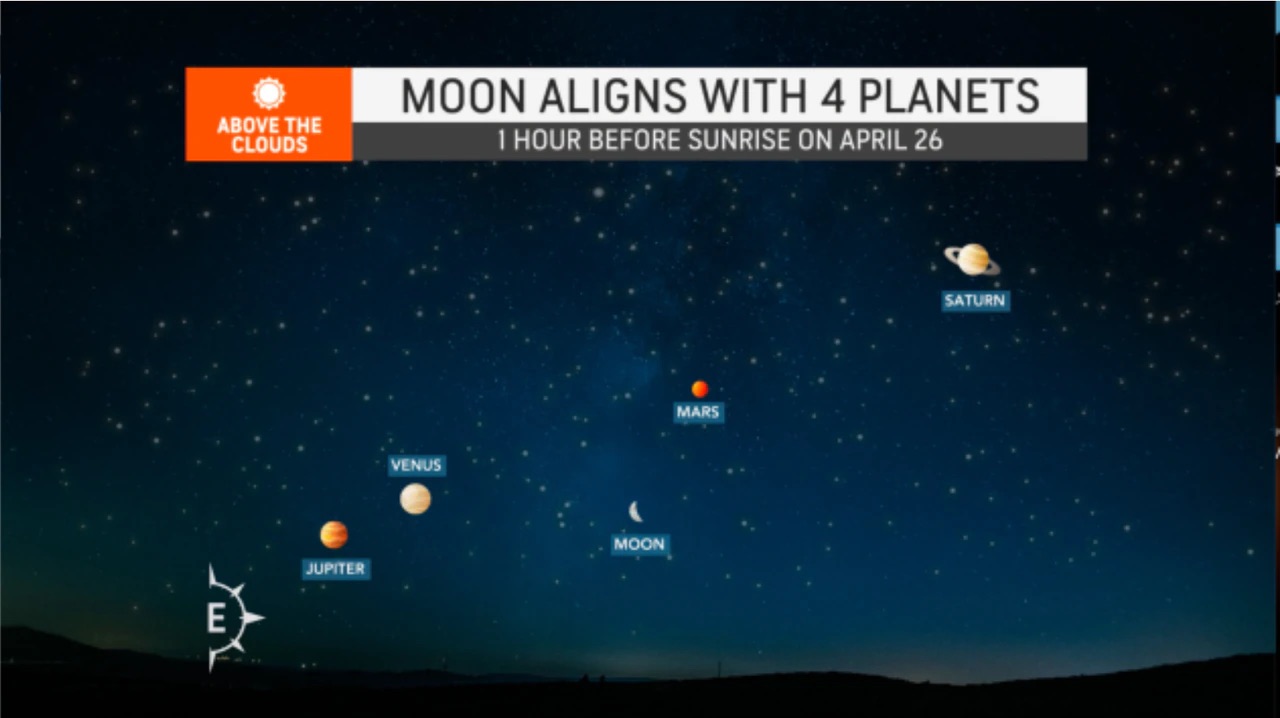
(Note: You won’t be able to see the planets actually looking like these photoshopped images…unless you happen to have a really powerful telescope in your backyard.)
Not sure why I first got this info from a site based in New Jersey. The info about what time of day and in what part of the sky is only relevant to people living in the NJ_NYC area.
Still, it’s an interesting phenomenon that occurs once every few years…
2005. 2016. 2020. And 2022. Not exactly a regular pattern, it seems.
And, no, there is no “spiritual significance” to a planetary alignment. It’s an illusion, an imaginary lining up of the solar system that doesn’t affect you personally. Sorry.
But it’s still fun to watch. Er, if you enjoy getting up before dawn (I don’t).
According to nj.com, “The planetary parade of sorts will occur when Jupiter, Venus, Mars and Saturn all appear to be lined up in a row above the horizon during the pre-dawn hours — starting Saturday morning, April 23. The alignment will also be visible during the next few mornings, and April’s crescent moon will soon join the parade, according to experts from LiveScience and AccuWeather.”
Yeah, lots of web sites are covering this. At least the one I linked above doesn’t have automated videos, flashing ad gifs, and other random pop-ups that drain your smartphone battery.