Remember New Horizons? The Little Probe That Could?
No?
You know, the photos of Pluto, Formerly Known As the Ninth Planet?
Doesn’t ring a bell?
Hmpf. Go read about about it.
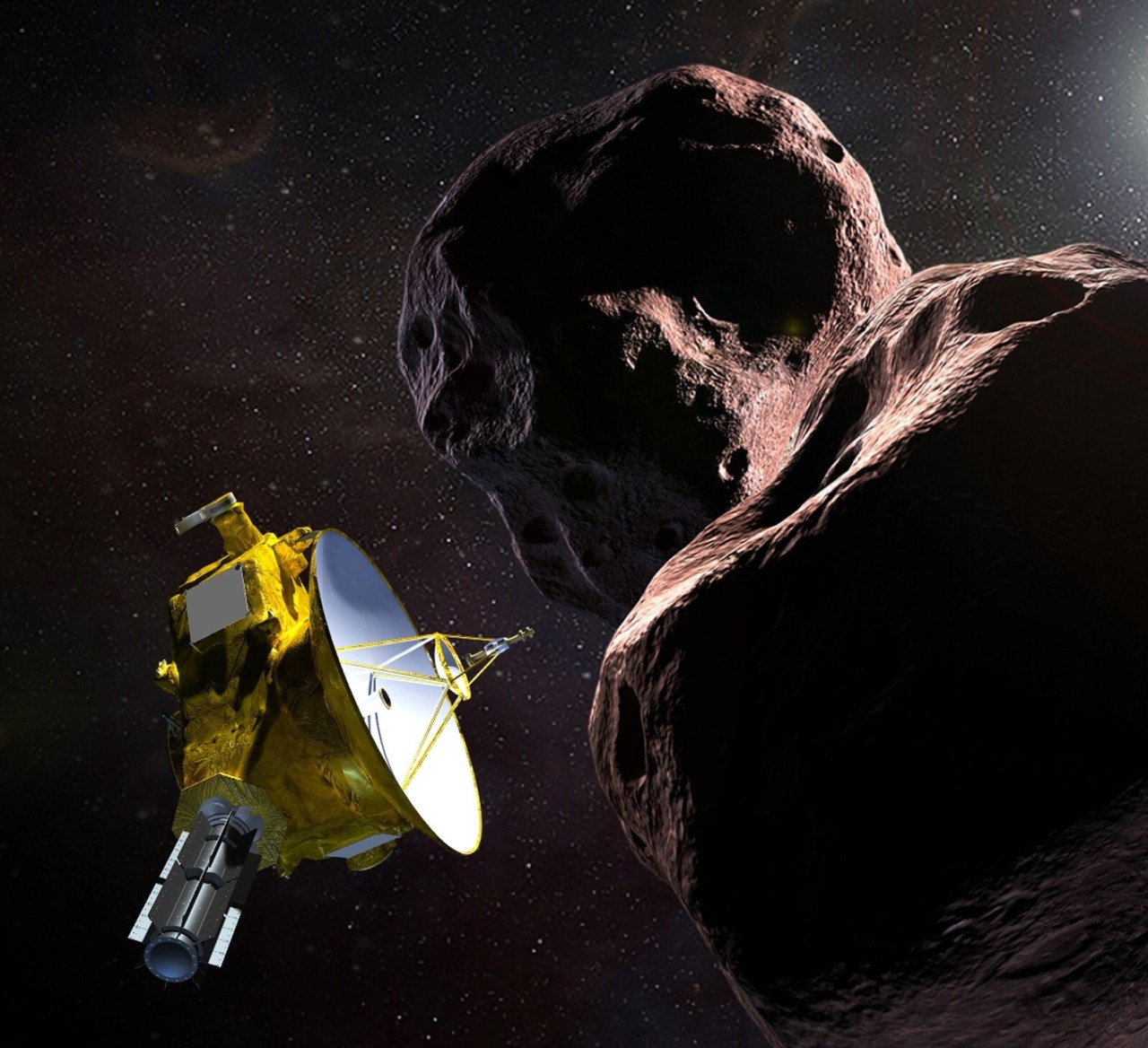
Anyway, by sheer chance, New Horizons happens to be close enough to grab some pictures of an object in the Kuiper Belt (which looks like KEW-per or KWEE-per but is actually pronounced KAI-per and is completely unrelated to former SF Giants player and current announcer Duane).
Ever wanted to see a peanut-shaped tiny rock (or rocks)
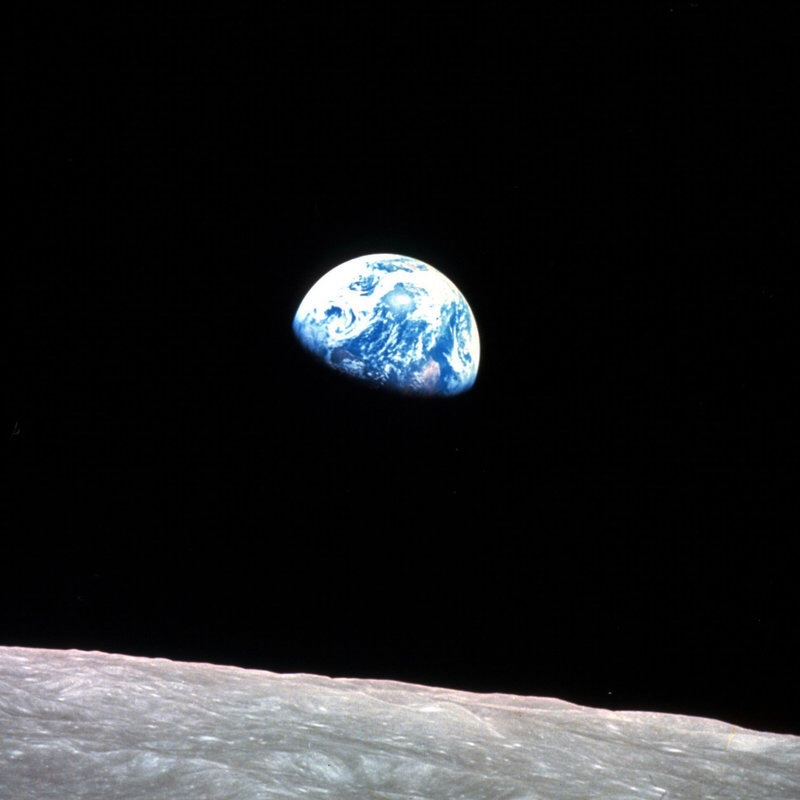
“To really think about ourselves as citizens of Earth is something that I think we’re still working toward,” Jacob Haqq-Misra, a research scientist at Blue Marble Space Institute of Science, told Space.com. “[Seeing this image] may be enjoyable and fun and awe-inspiring, and you might think about it later that day, but I don’t think most people have a perception of ‘I’m a citizen of Earth’ when they’re driving to work.”
He’s curious how potential future space developments — establishing a human presence on Mars, or discoveringextraterrestrial intelligence, for example — might make that Earthling perspective easier to grasp by creating a group to contrast it against.
That’s us: the forever simian, defining ourselves in contrast to what we aren’t as opposed to what we could be.
So what would happen if some of us became Martians, Venusians, or Jovians? Hmmm…
Check out this free five-minute reading of “The Magic Wood,” by Henry Treece, one of many New Apocalypse poets who influenced Neil Gaiman’s dialogue in Sandman. Available only for the next 29 days.
Truly creepy. With Great Pleasure at Christmas (great title, BBC).
Link courtesy of the wordsmith Neil, himself, @neilhimself. Thanks!
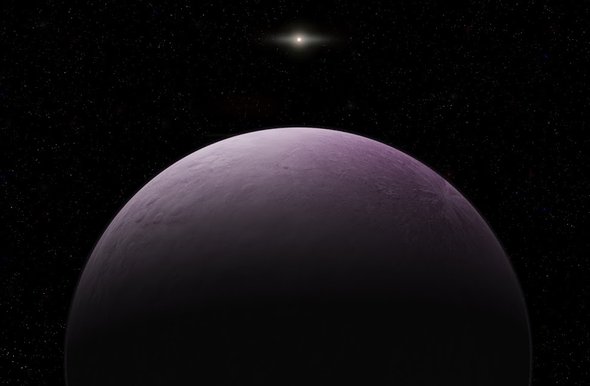
A newly discovered object is the most-distant body ever observed in the solar system—and the first object ever found orbiting at more than 100 times the distance from Earth to the sun.
Keep in mind this is in addition to several other dwarf planets — Eris, the “Goblin,” and Sedna. Oh, and of course Ceres (which is much closer than the others). And Pluto. Which used to be a “planet” and not a “dwarf planet” (I say COUNT THEM ALL! Planet / dwarf planet / who cares).
So why is 2018 VG18 important?
Because it adds to the existing body of knowledge indicating the possible existence of a mysterious “Planet 9” (which used to be Planet X before Pluto got demoted) — which still has not been actually observed (emphasis!) and yet is the source of endless internet hoaxes, influencing all the whackadoodles who think we’re about to be invaded by alien hordes and/or that the Nibiru Apocalypse is coming / has come / will have had already been coming repeatedly (the date keeps getting changed when the end fails to occur).
Two of the greatest Science Fiction authors of all time, were both born on this day December 16 – Arthur C. Clarke in 1917 and Philip K. Dick in 1928.
Note that I always put “Sir” in quotes, because, basically, $%# that BS. Clarke may have conceived of (NOT invented) the satellite, but PDK (NOT a “Sir”) has had infinitely more influence on modern society.
So I’m calling PKD “Esq.” Also a Pope. Remember that “All statements are true in some sense, false in some sense, meaningless in some sense, true and false in some sense, true and meaningless in some sense, false and meaningless in some sense, and true and false and meaningless in some sense.” Hail Eris!
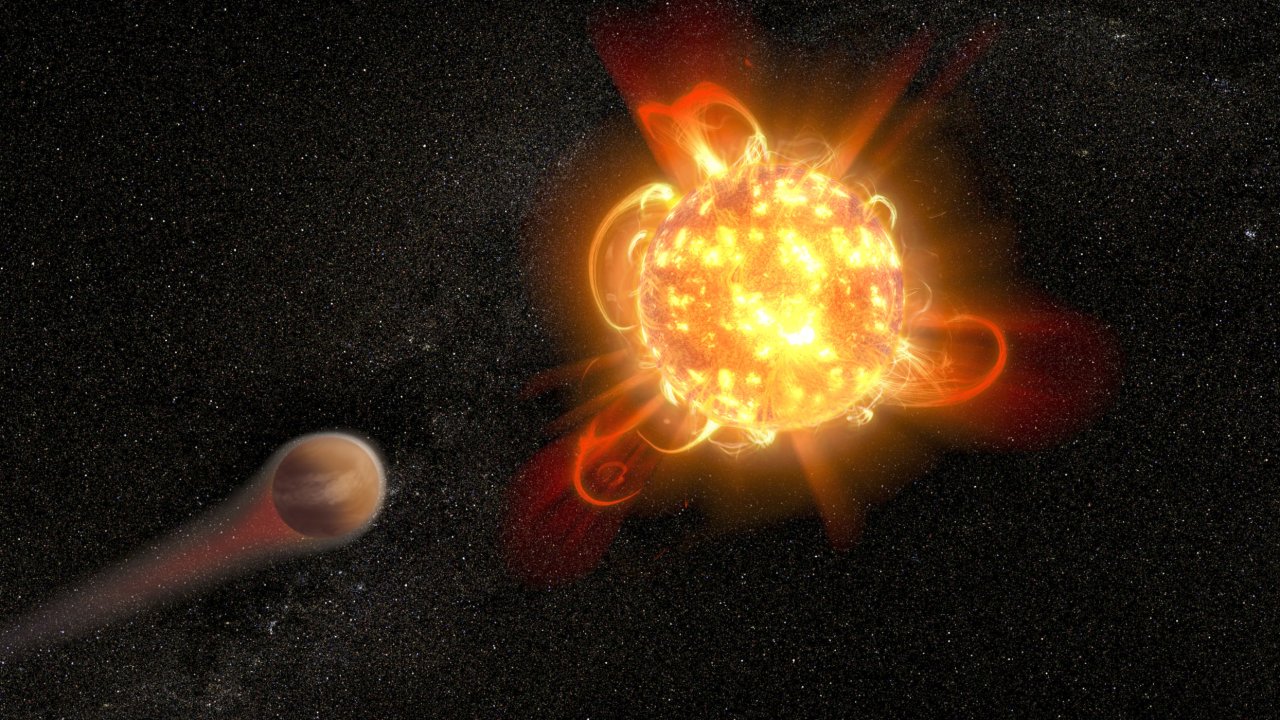
Another red dwarf has been caught firing off a super powerful flare, further bolstering the notion that life might have a hard time taking root around these small, dim stars.
Well, no wonder there are no aliens. Smegging hell.
I love ’70s sci-fi movies. Partly it’s because the early ’80s was the advent of the VHS/VCR and cable TV, and in late elementary school I was introduce to these movies for the first time.
Don’t even get me started about late ’70s / early ’80s sci-fi TV shows. Buck Rogers and the original Battlestar Galactica. Gil Gerard and Lorne Greene. My childhood heroes. Yikes. Continue Reading
Chinese science fiction has been up and coming for a while now. The work of Liu Cixin, for example, earned the author (or translator, not sure which) a Hugo Award. (I reviewed and found the Three-Body Solution to be full of interesting ideas but bogged down with poorly written dialogue, unexpected shifts in voice and style, stereotypes, and two-dimensional characters.)
And, of course, China is about to (re)discover itself as a major player on the world stage. Complete with the “only our civilization can save humanity” trope, a.k.a., just like the US.




 I love ’70s sci-fi movies. Partly it’s because the early ’80s was the advent of the VHS/VCR and cable TV, and in late elementary school I was introduce to these movies for the first time.
 Chinese science fiction has been
  M Thomas Apple Author Page