Which languages do you speak and how did that impact your life?
I studied French from junior high through first year undergraduate.
I can’t speak it. I tried, but my teacher (MA from Tunisia) had to use a book based on Parisien French, even though my hometown is a stone’s throw from Québéc (not Paris!).
After failing to learn how to speak French, I switched to German in second year college. Borrowed money to go to Germany for a month that summer and met long-lost relatives.
Kinda could speak German. Forgot how to do so after leaving college. Nobody to talk to (and no reason to use it).
In my MFA program, I got bored by the “creative writing workshops” (wherein my classmates enjoyed sniping each other’s works). So I took up Irish Gaelic. Borrowed money (again) to visit An Gaeltacht (Conamara) near Galway, Ireland.
Marginal fluency. For a year. Forgotten just as quickly.
Two years later, I moved to Japan. Studied Chinese characters and Japanese grammar on my own primarily, with help occasionally from a Japanese colleague where I taught and a Japanese friend I made who ran a private English cram school.
After over 26 years, by far my strongest “second” (fifth) language.
So. How has language learning affected my life?
How has it not?
I am a language teacher. I am also a failed language learner. This has made me acutely aware of how hard it is for my Japanese students of English to use English, when on a daily basis they really have no need to do so. I respect them to no end.
Learning another language is hard. It’s especially hard when there’s no real reason to do so, when there’s no one to talk to in that language.
When it’s not really a part of who you are, as a person.
I had thought that, given my ancestry, French, German, and Irish would be good to learn. Turned out that wasn’t enough. I needed a real reason.
Someone to talk to.
I am now married to the love of my life, a Japanese woman who, like me, loves learning and teaching language. We have two wonderful daughters who likewise enjoy learning language.
Because we have a reason to learn them. People.
It’s all about people. Language is people. Not translation software, not AI. People.
My middle name is actually Thomas. I chose to use “M Thomas” as a pen name out of respect for my father, who taught me how to write. As a professional communications writer, he was responsible for lots of public documents for the NYS DMV, including traffic safety reports, driver manuals, press releases from the Governor, all sorts of “my boss will feel the need to edit this, so I will deliberately leave behind something for him to do so as he doesn’t screw up the entire thing” document.
I may or may not have adopted this strategy in my own professional work (I certainly adopted the attitude…)
Another reason is because I had a baby brother named Thomas. He passed away before reaching five months old when I was not quite 11. It had a major impact on me as a child (and indeed as the adult and as the father I am).
I have no sons. It bothers me that I may be the last Thomas in our family. For a while, anyway.
How do significant life events or the passage of time influence your perspective on life?
I would say “yes.”
How?
Failure influences my perspective on life.
Successes influence my perspective on life.
Deaths influence my perspective on life.
Births influence my perspective on life.
Travel influences my perspective on life.
I would list the above five as “significant events” in life. But “the passage of time” is a little more vague.
Four years doesn’t seem like a long time to me now, but it sure did when I was 18.
Even six years doesn’t seem all that long now. But to my daughter who graduates from elementary school this March, six years is half her life.
My perspective on this question is that it’s the people in my life that have changed my perspective.
Even my daughter gets this. She wants to visit Australia, Canada, Singapore, and the US again because, as she put it, “a little piece of me is still there.”
I started writing stories when I was in 5th grade. Our teacher gave us a list of vocabulary each week — about 10 to 12 words, I think — and said we had two choices: 1) write down all their definitions along with a sample sentence, or 2) work them into a short story to show that we understood the meaning of the words.
I chose the 2nd option. In fact, I was the only one who did out of a class of about 25.
The thing is, the teacher wanted us to read them at the front of the room.
Man, that was not something I was looking forward to. But somehow I managed.
I wrote nothing but detective stories, all in the first person. At some point, I borrowed my mother’s old manual typewriter (originally my grandfather’s, from the 1950s) and typed them all out. I still have most of them.
But my peak as an elementary school age creative writer came part-way 6th grade, when I attempted to write my first horror story.
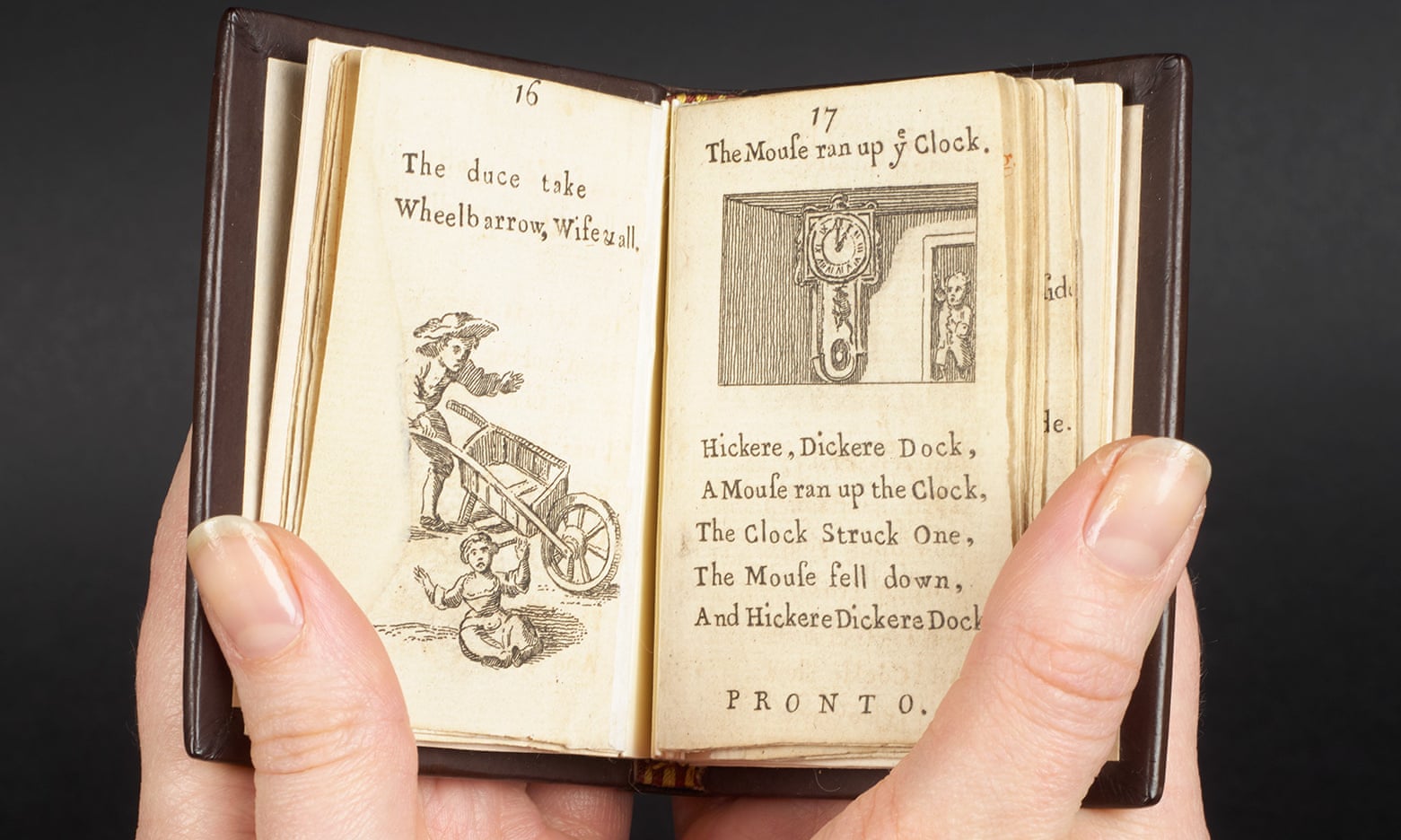
Includes such favorites as “pyke notte thyne errys nothyr thy nostrellys” and “spette not ovyr thy tabylle.”
Oh, and there’s some stuff by Lewis Carroll (Alice’s Adventures Under Ground, i.e., Alice in Wonderland) and Axel Scheffler (The Gruffalo), among many others.