What is one question you hate to be asked? Explain.
“Where are you from?”
I never understood why this question might rankle some people…until I moved to Japan.
I’ve been in Japan since 1999. “Where are you from?” was one of the first questions people asked me at the time, when I was teaching in junior and senior high schools.
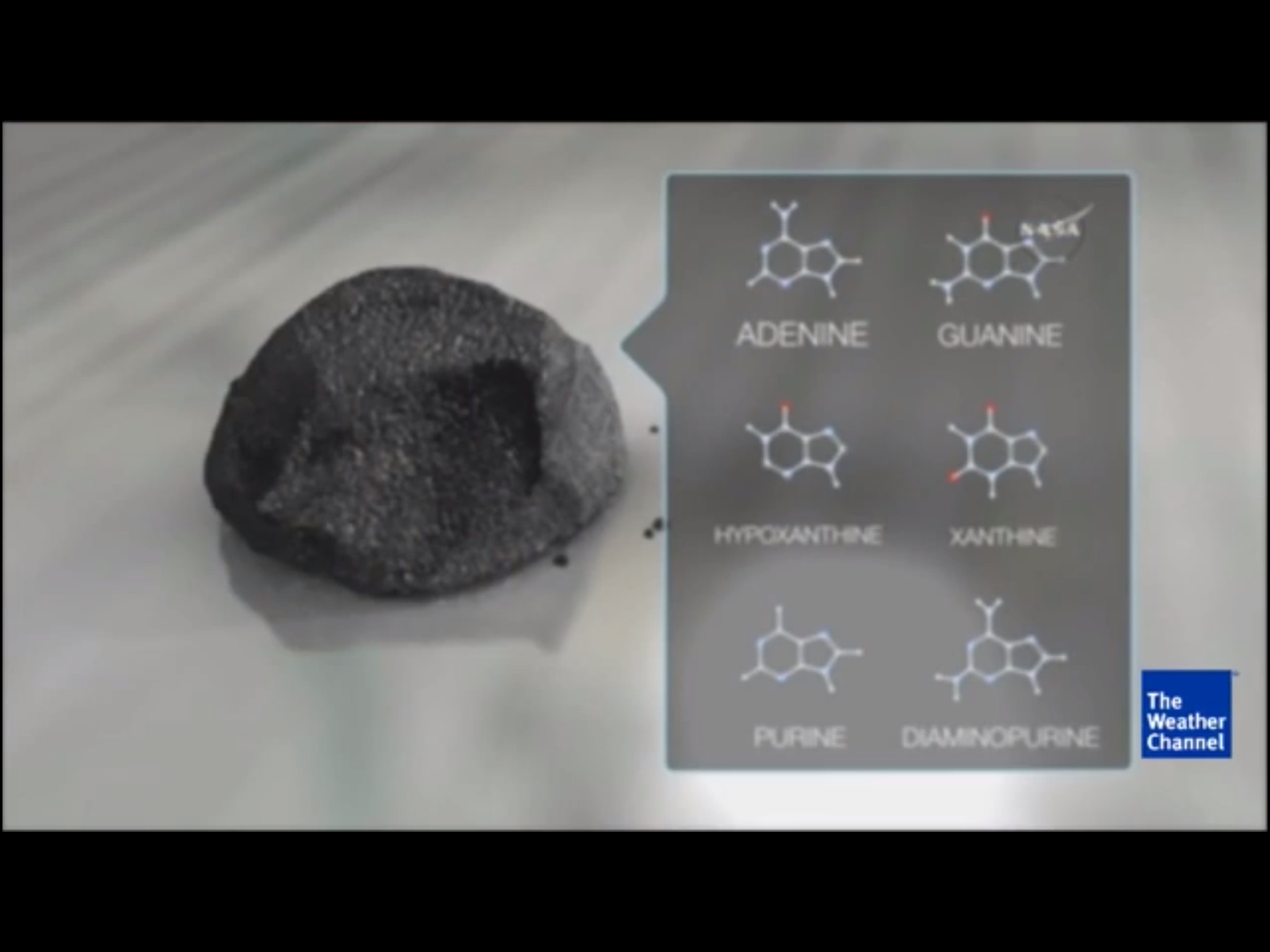
It’s also thought that water on Earth is largely (or entirely) the result of comets and asteroids bombarding it (it remains debatable to what degree Earth already had water, but since when it formed the Earth was first molten lava and then dry as a bone, I think it far more likely that water came here from elsewhere, and science tends to agree).
I’ve already blogged about the origins of Bringer of Light, when I (finally) finished the first draft back in early September. In a sense, I’ve been constantly blogging the science behind the story.
But I haven’t discussed the characters at all. And despite what some old-fashioned writers may think (just finished a particularly badly-written snarky “why your books don’t sell” piece of trash that claimed science fiction shouldn’t have any emotions in it…say what? sorry not sorry), if the characters of a story aren’t interesting, there isn’t much point in reading a story.
So for the next couple of weeks, I’ll write a bit about the characters — the crew of the Artemis, the crew of the Sagittarius, the UN flunkies (sorry, career politicos) on Mars and Luna and so forth. There are lots of characters, and their interaction is complicated. Or is it?
I would get into my scifi influences at this point, but long blogs are slogs. So I’ll come back to that tomorrow!
Coffee time. Also to finish up at least one unrelated project and also the hardcover manuscript (which needs to be a different paper size than the paperback for some reason).
My father got a Commodore 64 (“C64”) in the early ’80s and I learned how to type on it. Not sure exactly when, but at some point in probably 1986 or 1987 I had saved up enough to get one of my own.
Green monitor. No color. The only computer wherein the disc drive would argue with the CPU (bc the disc drive also had a CPU of sorts). 5 1/4″ floppies. Constantly switching discs in and out to load programs.
I created music (a maximum of four different sounds at a time). Learned BASIC and “machine language” and created very simple programs by copying endless pages of code from a magazine my father subscribed to (he also joined Commodore Users Group, or CUG, and got software to teach us how to type, how to write prose, and how to create family newsletters, all of which led me to eventually run my college newspaper in the early ’90s).
I played endless hours of Bard’s Tale, “Summer/Winter/World Olympic Games” (so old that there isn’t even a Wikipedia page for this series), “Sid Meier’s Pirates!,” and Strat-o-Matic baseball games (I had played the 1983 season with my father on paper, then got the 1985 season and input all the data by hand into the C64 program).
Having used my mom’s (and grandfather’s) manual typewriter for junior high school essays, I found it much easier to use the C64 to typed all my high school essays, which were printed out on my dad’s dot-matrix printer with the connected paper sheets. (I had a lot of fun separating the sheets and tearing off the hole feed strips on either side of the papers.)
I later got a C128 in college before borrowing a friend’s Mac Plus to write my senior project (our version of an undergraduate thesis).
And of course wasted hours and hours on the first version of Civilization (any Civ fans out there?).
See, back then, people like me were endlessly mocked as “computer nerds” and “geeks.”
And now you all have a tiny handheld computer that you carry around and play with 24/7.
Welcome, fellow nerds! We took over the world! Hah!
That’s what we are, really; a constant turmoil between past and future, the mixing point of who we once were and who we are afraid we may become. We are constantly becoming — yet we never lose sight of the past, or if we do, we do so deliberately…but our past lies in wait, crouches and hides unbidden, always ready to pounce out from the mind’s darkness to set itself against future hopes and desires. Our previous selves eternally war with our future selves; it is the center of this conflict where we exist, and it is because of this inner turmoil we stay alive.
I was home, arguing at the dinner table. It was as if I were a teenager again. I’ve often dreamed of living in a bedroom with no ceiling over half of it, open to the night sky, with a solid rock wall on one side and sliding doors on another. This seemed to be the same house. Something like the house in Warrensburg, but somehow different. In other dreams, this house has slowly risen upward as if it were a growing tower of stone.
In this dream, I was at the dinner table. Then, suddenly I was on the back porch. It still looked like the “room” that had been set up for me when I was sleeping on the back porch between my freshman and sophomore years. Except in the dream, there was little furniture, no freezer, no old TV from my grandparents, just an old bed and some curtains. I was able to look through the kitchen wall and see the insides of the house, decrepit and broken plaster and wood.
I went to the barn to get my bicycle, and somebody came running up behind me just as I was about to leave the back yard. “Where is my bow and arrows?” I asked. He handed me a bow, but no arrows. I sped off down the side path to the street, and suddenly I was bicycling past the triangle park. Only it turned into a much large city-style park with large dumpsters and vending machines. A dump truck charged toward me, and as I veered away, it lurched back toward the park and disappeared.
Then I felt a pain in my mouth. Lifting a hand to my front teeth, I pulled out a large square and knew that my incisors had been removed.
[Context: my mother had just passed away, and I was remembering that both my parents’ choice in reading materials influenced my own fictional likes and dislikes.]
I guess both Mom and Dad liked Trek from its inception [in 1966]. I remembering watching the original series (in syndicated reruns of course) in the late ’70s/ We saw it in the “TV room” in my grandparents’ house….They had a color Zenith; we only had a tiny black and white on a bookcase. I remember being fascinated by the bright reds and blues (this was the point…color TV was new in the late ’60s and the sets and costumes deliberately used bright primary colors)…
Mom had all three “Star Trek Readers” I through III, by James Blish….Later I would borrow more complicated science fiction / fantasy stories from my Dad — Frank Herbert’s Dune and Robert A. Heinlein’s Stranger in a Strange Land stood out. And of course, Ray Bradbury’s Martian Chronicles, which were televised when we lived in Berne [a small village in New York west of Albany]. Once I discovered [The Chronicles of] Narnia and The Hobbit in 3rd grade, it was all over. I was a nerd for life.
And now look at the influence on pop culture. Movies, books, music, clothes, shoes, bags…the Internet and modern media. Smartphones. Tablets. Skype. Wireless devices. Bluetooth. GPS.
Nerd-dom has conquered the world. And my mom got there first. Way to go, Mom.
There is a difference between being alone and feeling alone; being isolated and feeling isolated; being rejected and feeling rejected. Reality and emotive perception have no relation, except that which the mind projects. Eliminate the projection, and the reality allows itself to become revealed.
Only I can permit this reality to become revealed; only I can perceive, how can another remove this perception from me, if I cannot myself? No one can rely on me, if I do not rely on myself. No one can be helped by me, if I do not help myself.
No one can help me not feel alone, if I cannot do it myself. Being alone is a function of reality and circumstance; feeling alone is a function of myself, not dependent upon external stimuli. This feeling is one I must remove myself. I cannot be two, if I cannot be one.