Sometimes I wish I could put my thoughts directly onto paper. I think all the time, about everything…I see pictures in my head, pictures of my past — exact details of what I saw and experienced. Déjà-vu often occurs to me. It’s strange, that feeling of already having been someplace. Sometimes I can tell what’s going to happen in a matter of minutes. I can’t stand things like that — they send chills up my spine.
It’s easy to see why fractals have been used to explain the complexity of human consciousness. Because they’re infinitely intricate, allowing complexity to emerge from simple repeated patterns, they could be the structures that support the mysterious depths of our minds.
But if this is the case, it could only be happening on the quantum level, with tiny particles moving in fractal patterns within the brain’s neurons. That’s why Penrose and Hameroff’s proposal is called a theory of “quantum consciousness”.
Quantum computers can only operate at extreme low temperatures (-272C, or -460F, which is basically colder than even the average temperature of outer space, so cold that we made up a new temperature scale called Kelvin to measure it — and no, the “Kelvin timeline” of Star Trek was not named after the temperature but after J J Abram’s grandfather).
So anyway, how is it possible that human consciousness can be considered “quantum” if we need (quite obviously) a much higher temperature to survive? (Making us controlled by classical physics and not quantum physics.)
Our brains are composed of cells called neurons, and their combined activity is believed to generate consciousness. Each neuron contains microtubules, which transport substances to different parts of the cell. The Penrose-Hameroff theory of quantum consciousness argues that microtubules are structured in a fractal pattern which would enable quantum processes to occur.
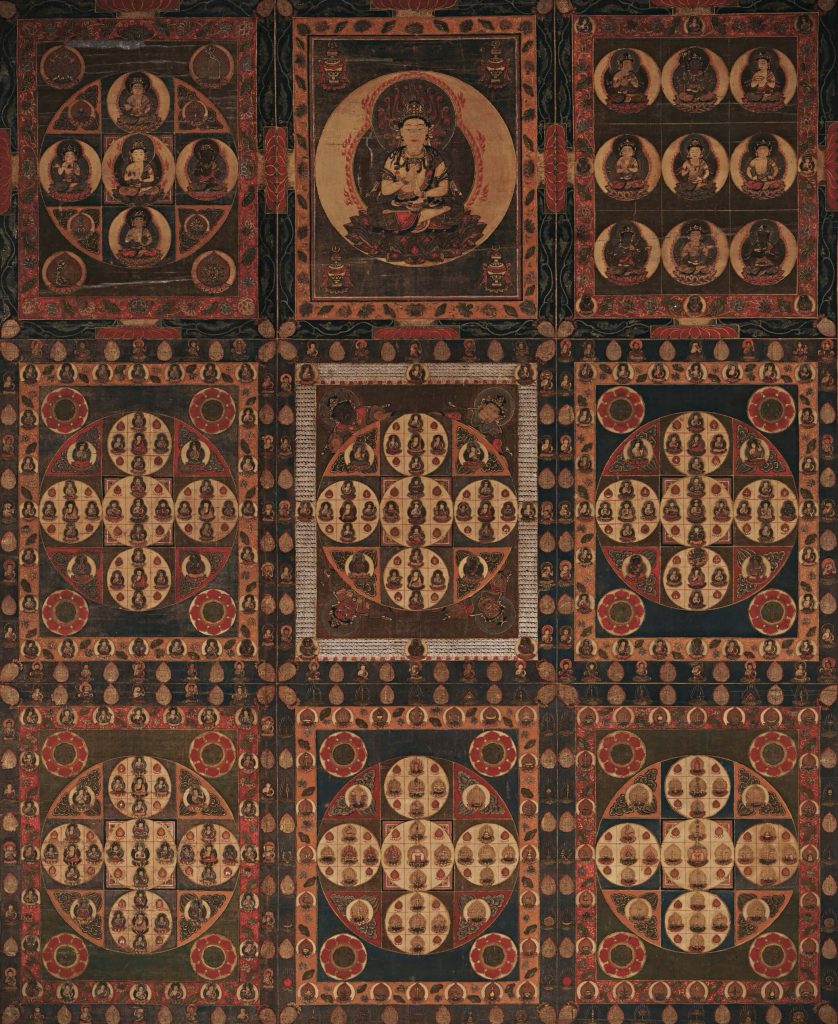
Scientists have measured electron wave functions (their quantum state) by injecting photons into two types of fractal structures, one triangular and one square-shaped (like the Sierpinski carpet pictured above). The next step would be to take quantum measurements from the brain’s microtubules.
Hmm. I think I’ve seen a shape similar to the Sierinski carpet somewhere before…
The short story accused of violating the national security law, “Our Time,” is set in a dystopian 2050. It tells of an authoritarian future in which vast swaths of Hong Kong history have been erased from both the city’s structures and the public consciousness, and all aspects of life are subsumed under the Chinese Communist Party.
I’m not sure this is science fiction. Seems more like reality.
Every political entity wants power. When people resist being controlled, and they use a dialect or another form of the “official” language, those in charge try to eliminate the language of resistance.
When people write about a dystopian future in which they have no right to their own language, customs, ways of thinking and behaving, and political representation — and those in charge respond by banning the fiction — it really only shows the reality. And the reality is this:
Those in charge have small, frail, male egos that need constant stroking. Poor frail eggshell minds.
Language is power, because language is identity. Those in charge are always afraid of losing control over all three. And whenever they respond this way, they always get exactly the opposite of what they want.
For all these technological “advances,” we are no better than the ancients. We are still prisoners to our emotions — or to the biological impulses of electricity and hormones whose results we deem emotive.
I’ve kept a journal (OK, a diary) for many, many years now. It first started in September 1984 as a junior high school 1st year (7th grade) English assignment — each day, we would be given a writing prompt and at the end of the 10-week term (quarterly system back then), the English teacher would look it over and write feedback.
At least, that was the idea. In mid-October my family moved to a county and school system about 60 miles away (it’s more complicated — we couldn’t move in to the new house at first and so my siblings and I were looked after by various relatives, so we didn’t go to school for about nine to ten days). The new school didn’t use journals at all. English class was boring. Grammar and sentence diagramming.
So I kept writing at home, almost on a daily basis in the beginning.
But I’ve been fairly inconsistent over the years. I filled several notebooks, all different sizes and shapes. I stopped writing in one notebook at some point in 1999 when I moved to Japan and started another one. Then some time in 2004 I decided it was a waste of paper not to finish the 1999 one. Then I filled it up and started typing in a Word file. Then I went to Montreal four years ago and started writing in paper notebooks again.
It’s, quite frankly, a great big mess.
But there are some good ideas in these notebooks, and lots and lots of bizarre poems that I swear I do not remember writing. (Also at least half a dozen attempts at “automatic writing.” If you don’t know what that is, look it up.)
So from time to time, I’ll post some bits and pieces here. Just for safe-keeping.
Who knows? I may wind up publishing some of it at some point. Or at least drop some of it into the mouths of future SciFi characters.
“Embedding a similar type of computer in a soldier’s brain could suppress their fear and anxiety, allowing them to carry out combat missions more efficiently.”
Sounds like science fiction, but it’s pretty close to reality. BCI (brain computer interface) is being tested in patients who lack muscle control but imagine if this tech gets weaponized (and what hasn’t been, eventually).
But what if BCI were used to suppress emotions in a healthy brain? Or used to implant thoughts? Or worse?
“…if a BCI tampers with how the world seems to a user, they might not be able to distinguish their own thoughts or emotions from altered versions of themselves…”
(same website as above…note that the PC version of WordPress does not do “quotations” correctly any more…)
PKD fans will instantly recognize this.
Androids don’t just dream of electric sheep. 🐑
(Fans of Ghost in the Shell and more importantly its movie sequel Innocence should also recognize the potential hacking danger…imagine if the government could control our emotions, thoughts, and memories…)
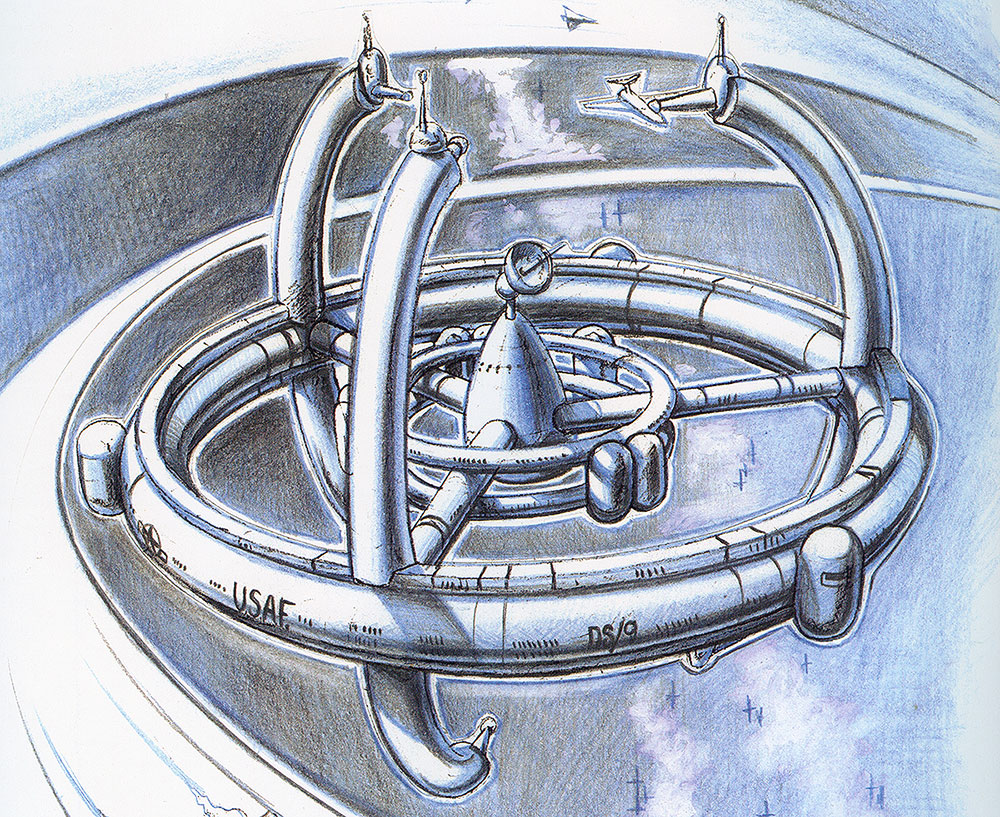
On February 9, 1998, Star Trek Deep Space 9 broadcast one of the most important episodes in the entire history of the franchise.
And what it said about society back in 1953 was just as relevant as for 1998. And perhaps even more important for 2021.
Others have written more eloquently about the plot line, the characterizations, the background, the actors (Avery Brooks directed himself, and his performance should have earned him an Emmy). So I’ll just link to:
“This show will combine Disney’s magic and animation expertise with Kugali’s fire and storytelling authenticity. Iwájú represents a personal childhood dream of mine to tell my story and that of my people.”
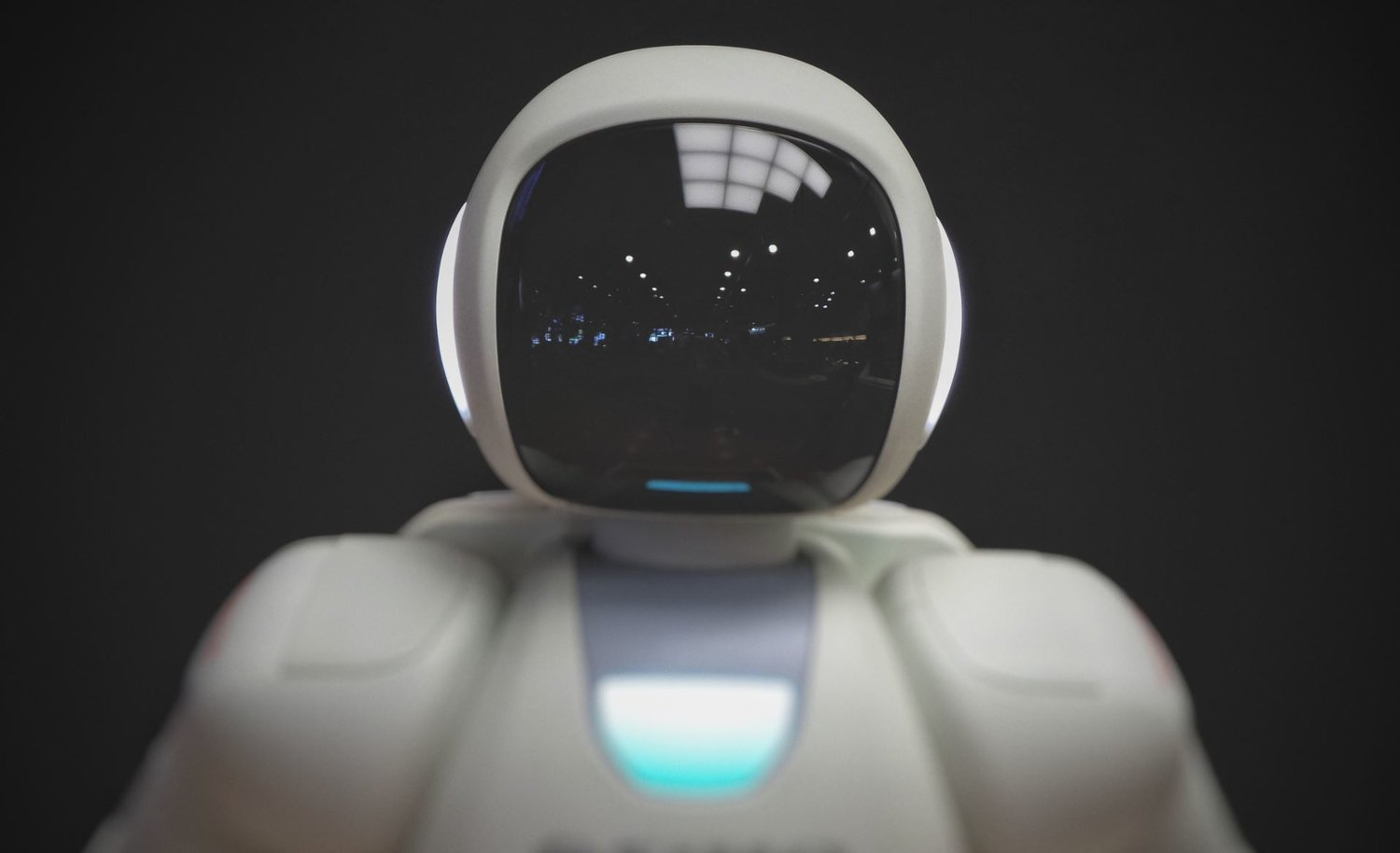
One day, maybe sooner than we think, a consideration of the ethics of the treatment of rational, sentient machines might turn out to be more than an abstract academic exercise.
From last June, but still a worthy topic for debate, particularly as the use of robots increases for retirement homes, nursery school programs, hotel reception lobbies… (also the topic of a short story I wrote in 2000 but still haven’t published outside of a grad student journal…)