M Thomas Apple Author Page

Science fiction, actual science, history, and personal ranting about life, the universe, and everything

Jules Verne – most translated science fantasy writer ever?

February 15, 2020
MThomas

When I was a kid, I devoured books by Jules Verne, in the Classics Illustrated series vocabulary- and grammar-controlled for younger readers.

20,000 Leagues Under the Sea

Voyage to the Center of the Earth

From the Earth to the Moon

Around the World in Eighty Days

Until I was in college, I didn’t even know that he wrote them in French.

Until a few days ago, I didn’t know they were part of a 54-volume set, complete with 4,000 hand-drawn illustrations that are now available online for free.

How’s that for enduring literary influence?

Check out the link below for more details…

http://www.openculture.com/2020/02/jules-vernes-voyages-extraordinaires.html

Super Bowl 2020: All the space-themed commercials

February 2, 2020
MThomas

“Being able to get humans on Mars and actually collecting one of these samples would be such an incredible moment, I would kind of hope it would almost bring us back to the moon days of everyone being glued to the TV.”

Um. Well. OK. TV is dead so we’ll all be watching it streamed on our smartphones, but the point is taken.

And how much did they pay for this? 💰 👽 📺

— Read on http://www.livescience.com/amp/super-bowl-space-commercials.html

Have some Proxima Centauri with ESPRESSO

January 20, 2020
MThomas

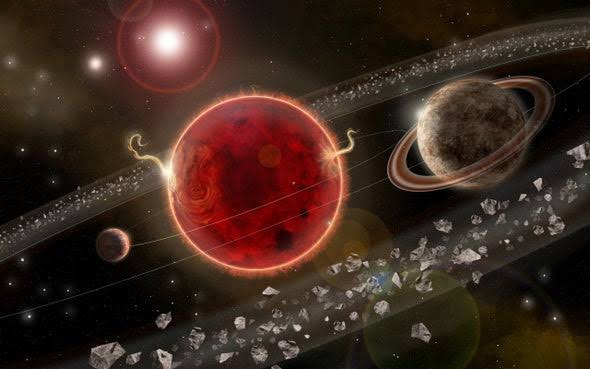
“Proxima is our closest neighbor in an immense universe. How could we not be charmed by it?

Well, the planet may or may not exist (the confirmation data won’t be publicly available for another couple years).

And it is most likely not inhabitable — despite being dubbed a “Super-Earth” (which really only refers to size and not whether it’s “Earth-like” or not).

Still, regardless of these facts, the most important part of this article in Scientific American is the science:

“We tried different tools to prove ourselves wrong, but we failed. However, we have to keep the doors open to all possible doubt and skepticism.

Yes, the astronomers tried to prove their own discovery was a mistake. That’s how it works, folks. Challenge your assumptions, not jump to conclusions. Continue Reading

It’s a Nice Model you’ve got there, Mars. Be a shame if something happened to it…

January 12, 2020
MThomas

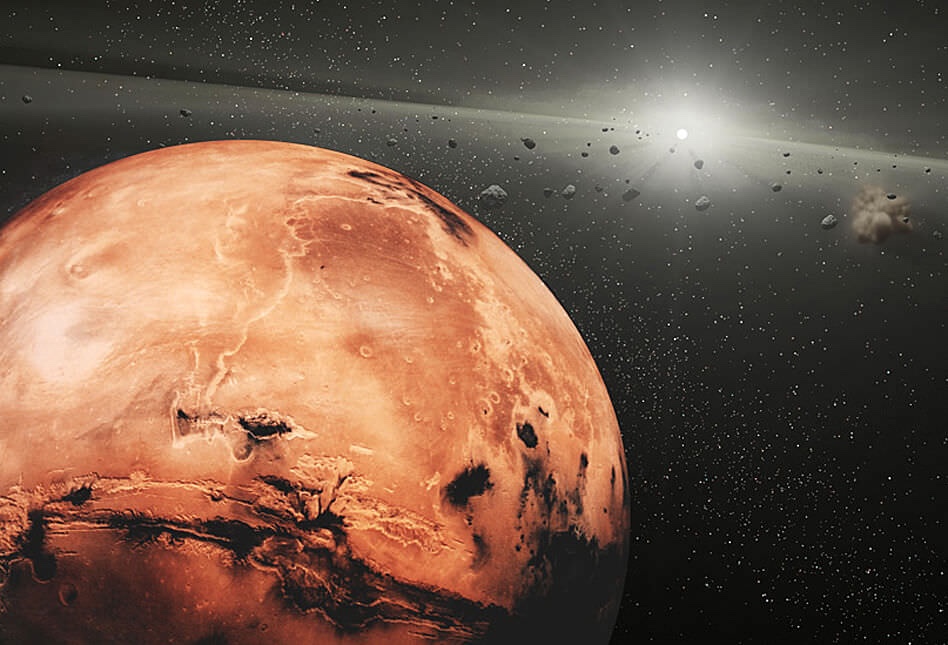
“Without this instability, Mars likely would have had a mass closer to Earth’s and would be a very different, perhaps more Earth-like, planet compared to what it is today.”

Damn you, Jupiter and Saturn! Why couldn’t you have just stayed in your orbits and left Mars alone? (Shakes fist futilely at night sky.)

— Read on www.universal-sci.com/headlines/2018/5/10/the-giant-planets-in-the-solar-system-stunted-the-growth-of-mars

New “habitable” Earth? 🌍

January 10, 2020
MThomas

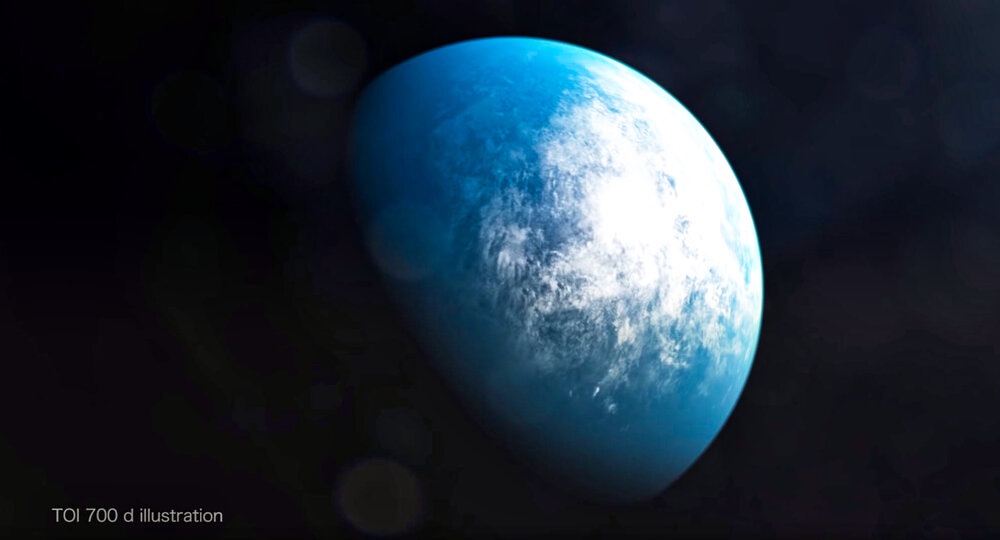
The newly discovered exoplanet, called TOI 700 d, is located about 100 light-years away from us and is roughly 20% larger than Earth.

Okay, not exactly close, but looking good…

A year on TOI 700 d takes 37 days.

Um. Wait. What?

One thing astronomers have discovered though is that TOI 700 d is tidally locked to its star, which means that one half bathes in eternal sunlight, and the other half always exists in darkness.

Oy.

And even better…

One of the burning questions is whether the planet has an atmosphere or not.

Is this really the best way to phrase this? 😂

I vote we pass on this one

https://www.universal-sci.com/headlines/2020/1/8/nasa-discovered-a-potentially-habitable-earth-sized-exoplanet

PS I’ve been trying futilely to get WordPress not to screw up the formatting. To no avail.

What’s more valuable than gold? This rock

December 27, 2019
MThomas

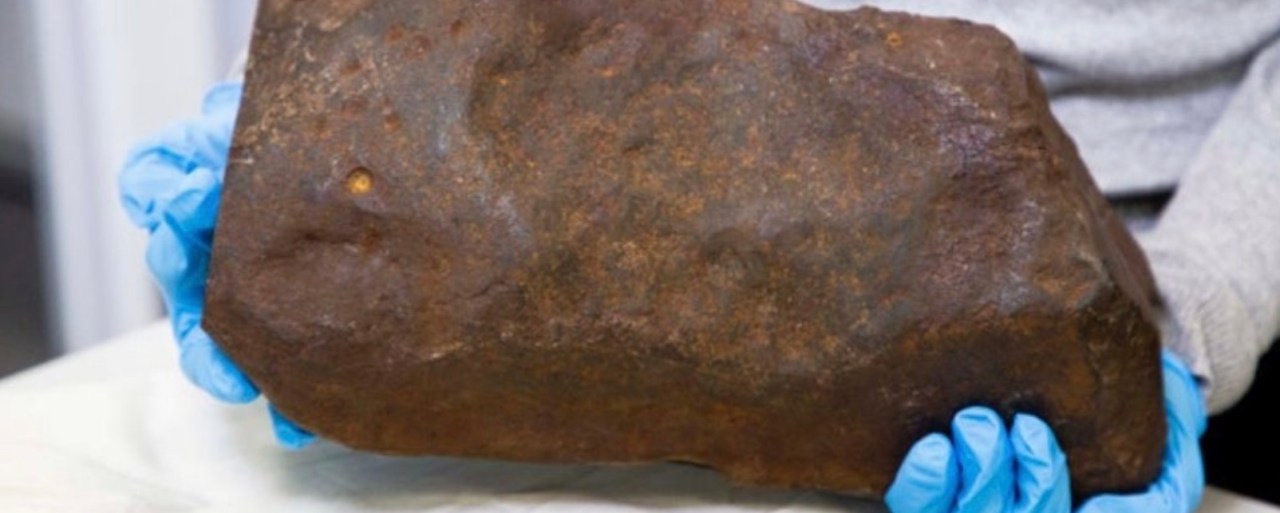
If you find a big rock in your backyard, and you can’t break it open with normal tools, guess what?

The researchers argue that the Maryborough meteorite is much rarer than gold. It’s one of only 17 meteorites ever recorded in the Australian state of Victoria, and it’s the second largest chondritic mass, after a huge 55-kilogram specimen identified in 2003.

This next bit is more interesting to me:

“Other rare meteorites contain organic molecules such as amino acids; the building blocks of life.”

Hmmm… 🤔 Sounds like a storyline…

flip.it/PjaS-D

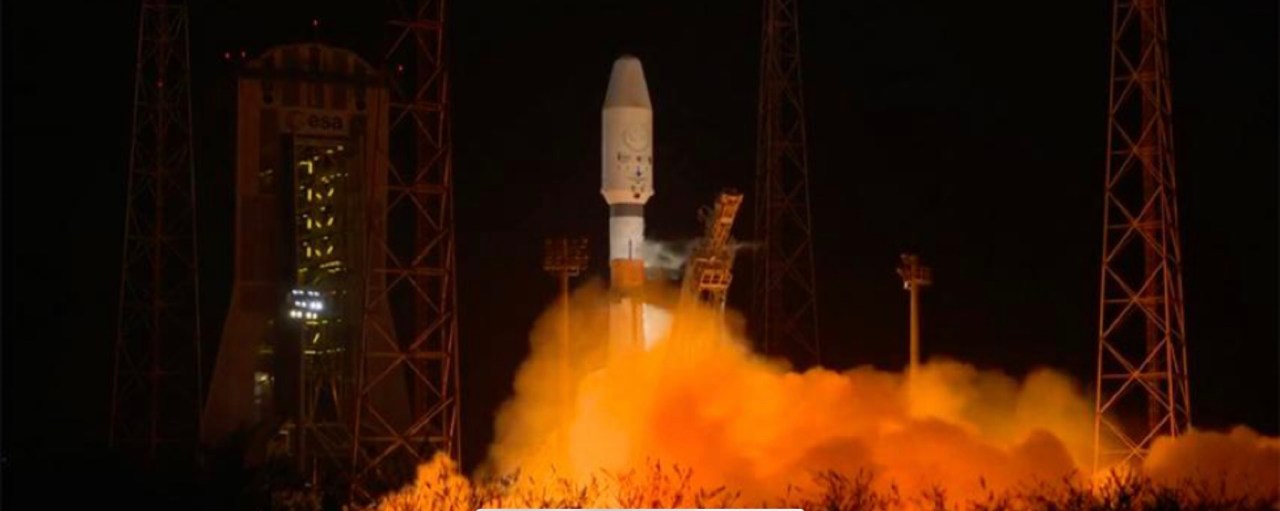
Khufu, I mean, Cheops is a go!

December 20, 2019
MThomas

Ever wonder this about “Super Earths”?

Do they have atmospheres and how thick are they? What kind of clouds? Do they possess oceans on their surface? Do they have rings and moons? Cheops ought to be able to address such questions just from looking for these tiny dips in light during a transit.

ESA finally does something! Wow. Go Europe!

I love how BBC says “The Americans” when referring to NASA, as if a) American is an ethnic group and b) all NASA scientists are American.

But anyway…

Prof Didier Queloz, who won this year’s Physics Nobel for discovering the first planet orbiting a Sun-like star in 1995, was on hand to watch the launch.

You can watch/listen to his interview here.

https://www.bbc.com/news/science-environment-50804258

ESA and NASA? Airbus? Still not ready? 🤦‍♂️

December 6, 2019
MThomas

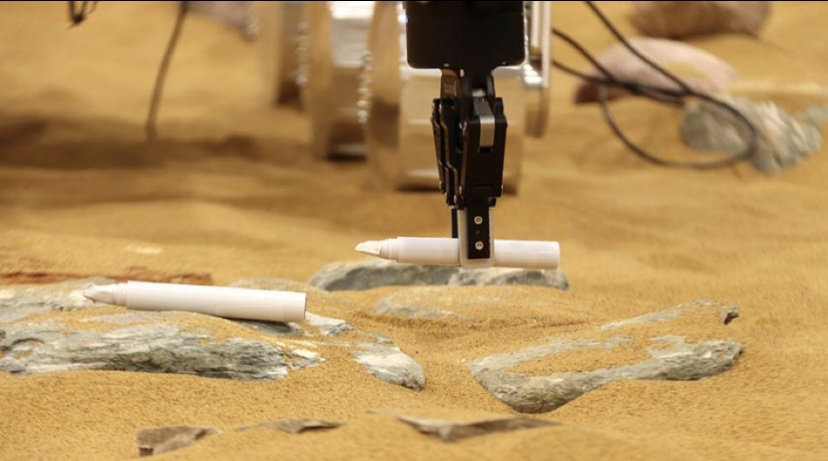
Right now, engineers have got a dummy rover practising the business of retrieving packaged rock samples. And, yes, the stand-ins really are whiteboard markers.

Yay! Whiteboard markers. Um. OK.

But different agencies and companies are finally working together?

Great!

Wait. What’s the catch?

It is, though, going to take more than a decade to achieve.

Sigh.

https://www.bbc.com/news/science-environment-50663278

It’s life, Jim, but not as we know it. Maybe.

November 14, 2019
MThomas

The pattern remains a mystery, but researchers are beginning to narrow the possibilities.

While the changes are most likely…geological in nature, planetary scientists can’t completely rule out an explanation involving microbial life.

Just as the Viking landers claimed? Uh-oh.

Or is it just chemicals (perchlorate, bleach-like substances) in the soil, releasing oxygen and methane depending on the amount of sunlight/heat?

How would this affect humans who set up camps in the low-elevations areas, where they could be closer to water?

Hm…

www.bbc.co.uk/news/science-environment-50419917

The exciting world of regolith oxygen extraction

October 25, 2019
MThomas

Future moon settlers might benefit from oxygen extraction from lunar regolith as it can be used to create breathable air as well as a source for fuel. In addition, the newly found extraction method might also be useful for Mars colonization.

Regolith covers the Moon and Mars (and presumably many other potentially habitable rocky bodies).

Of course, the composition of regolith on the Moon differs from that of Mars.

But if the new method can extract sufficient quantities of both oxygen and hydrogen, there should be ample amounts for both human usage and rocket fuel.

(Yawn.) “Dry” science? Sure. But think of the (fictional) possibilities!

https://www.universal-sci.com/headlines/2019/10/17/scientists-discovered-how-to-extract-oxygen-from-the-moons-soil

Blog at WordPress.com.
The Silmaril Chick

Writing Fanfiction in the worlds of Tolkien and Beyond!

Our Awesome Universe

Learning more about our place in the universe...

TechWordly

Best Tech Gadgets Advise

Weird Science Marvel Comics

Marvel Comics Reviews, Previews and News

Universe discoveries

Writing blogs is miracle I am a writer blogger and my site mission is to give information on maximum information to audiences

Robby Robin's Journey

Reflections of an inquiring retiree ...

Garden Lovers Guide

Bring the Outdoors In, and the Indoors Out

Fox Reviews Rock

Rock & Metal Reviews That Hit Hard

My little corner of the world

Short stories | Reflections | Poetry

Dimmajoblog

Read. Reflect. Grow