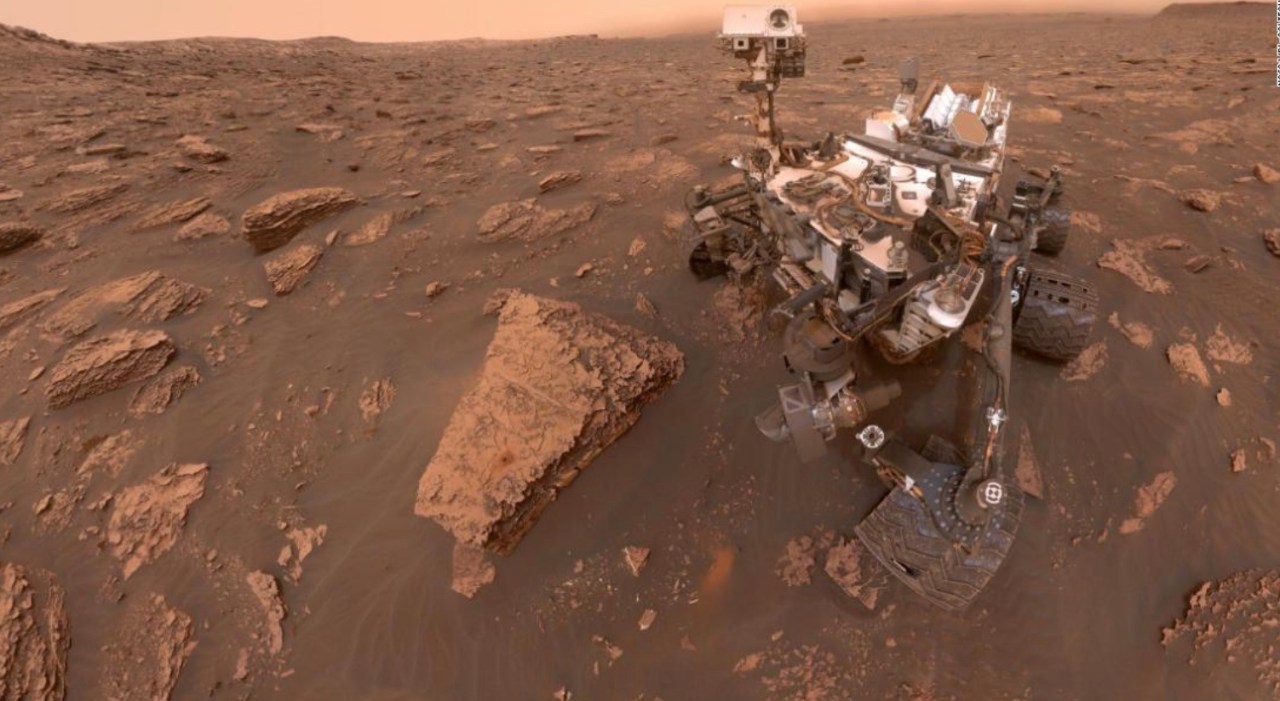
“What is the evidence against the possibility of life on Mars?” Levin wrote. “The astonishing fact is that there is none.”
Uh, no, sorry. That’s an illogical fallacy called “begging the question.”
Often phrased like this: “Absence of evidence is not evidence of absence.”
Or, as a friend once joked, “Just because you haven’t found any aliens doesn’t mean there aren’t any!”
Well, yeah, but that doesn’t prove anything except that we just don’t know.
See, science doesn’t work like that. It demands skepticism, careful theorizing based on positive evidence.
And replication.
If findings can’t be independently confirmed and reproduced by an outside observer, then the evidence isn’t strong enough.
Sorry. No smoking gun. Yet.
(Believe me, if scientists knew that Mars had life, we’d hear about it ad infinitum. Carl Sagan put it best: Scientists are terrible at keeping secrets.)
Our bodies have retained the capacity to repair injured or overworked cartilage in our joints, says newresearchpublished today in Science Advances. Remarkably, the mechanics of this healing process are practically the same as what’s used by amphibians and other animals to regenerate lost limbs…
My award-winning SF novella Adam’s Stepsons featured clones, which as some reviewers noted came a little after the peak of clones (although I wonder if we have yet to hit the “peak,” given scientific progress).
So as I was scouring the net for summer reads, I came across a lot of books about clones and ethical dilemmas (or lack thereof).
The main article I’ve linked here is from Tor.com, which often posts great stuff about SF Continue Reading
As if writers hadn’t already figured this out, Amazon really couldn’t care less about the books of yours they sell.
Notice I didn’t write “the books they sell for you.” Because they’re obviously not interested in you making any money. Not when they can allow random “companies” to download your manuscript, slap on their own label, and market it again as a “third party.”
Amazon takes a hands-off approach to what goes on in its bookstore, never checking the authenticity, much less the quality, of what it sells. It does not oversee the sellers who have flocked to its site in any organized way.
Naturally, the reason is that Amazon can’t be bothered policing illegal copies and illegal sales, since, in their minds, all’s fair in the Wild West of the Net.
Even the technically legal copies that are for sale are often copies acquired from people who received copies for review. Which is why I no longer give out books for review (also, services like Goodreads started charging for the privilege of random strangers to steal your book and sell it to a third party).
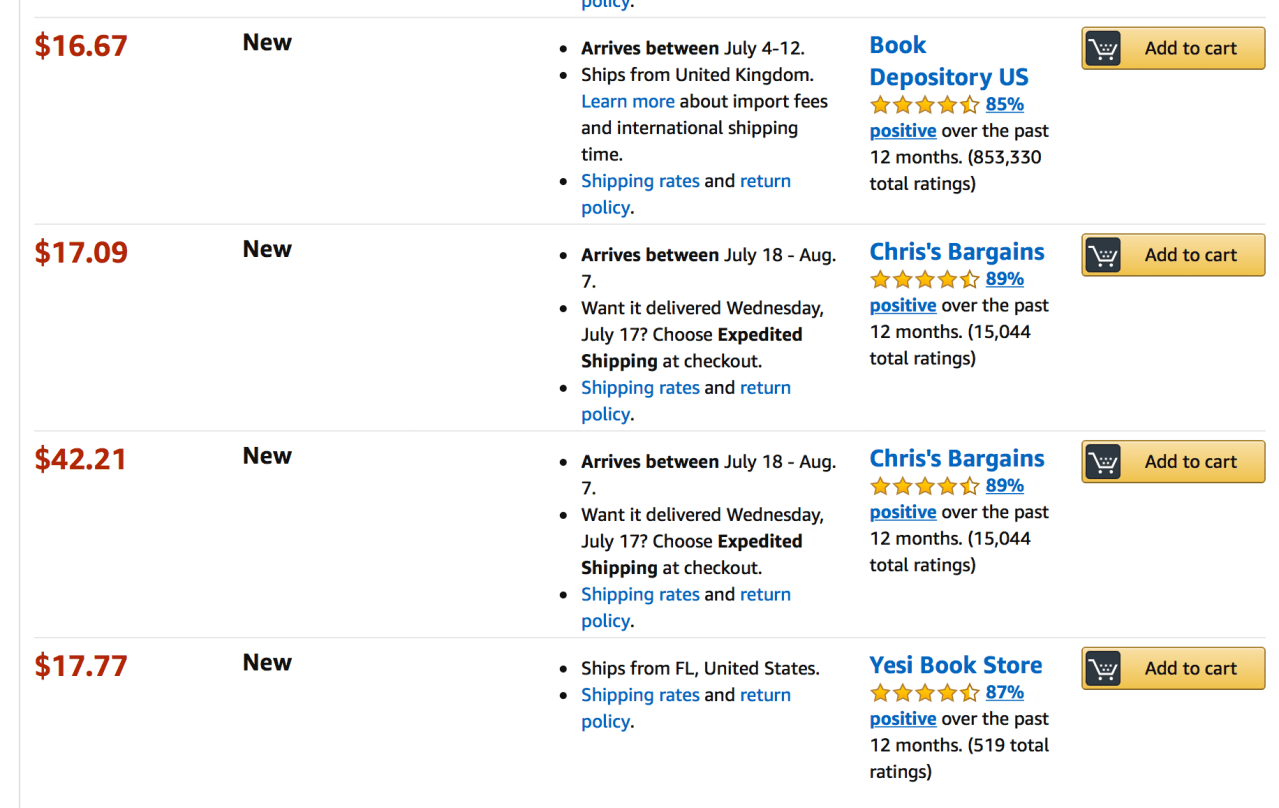
NONE of these “companies” wrote my book, and I did not give permission to ANY of them to resell my book. So why do they get to sell it for up to four times the price I set? Because Amazon doesn’t bother and couldn’t care less.
I used to wonder why my books often appeared in the “available from a third party” menu, with prices varying from twice to even five times the original amount. And why none of the “sales” from these copies showed up in my account. The answer is, of course, Amazon doesn’t really care who gets the royalty as long as they get their cut of the sale.
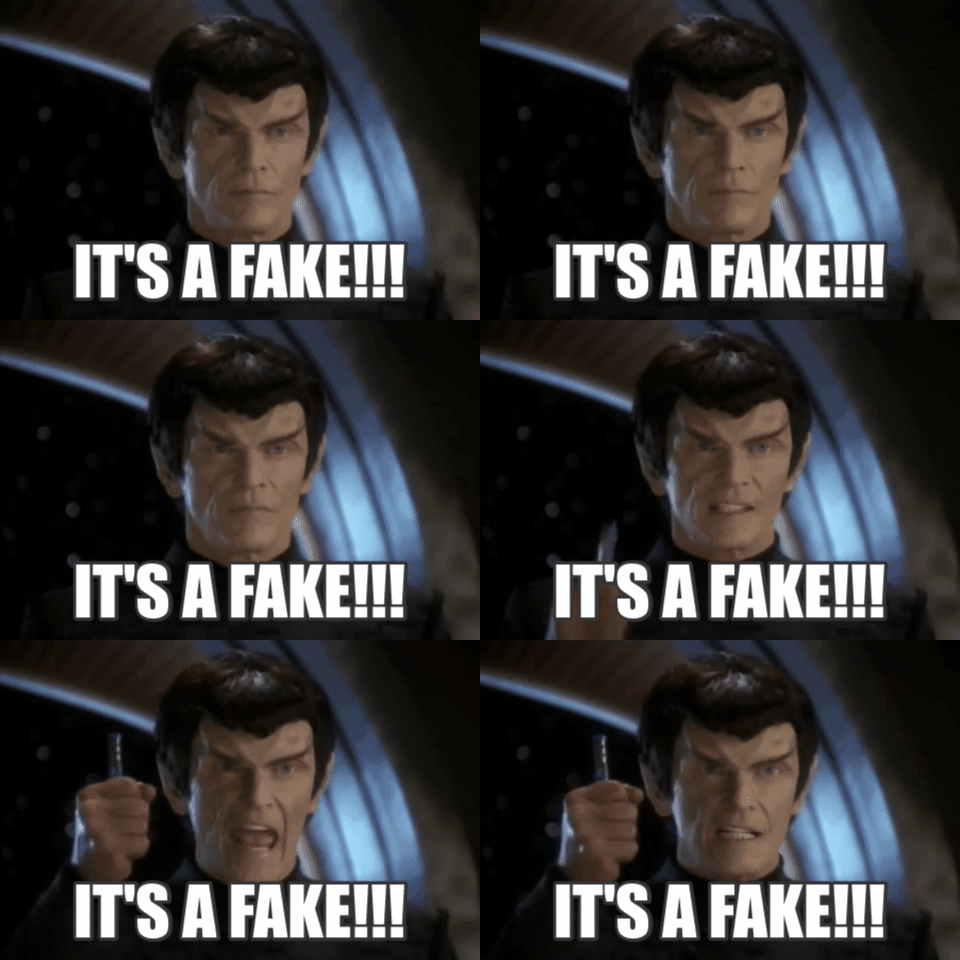
But we’re trapped, aren’t we? We can scream “fake!” and “unfair!” until we’re blue in the face. In the end, Amazon has grown in power to the extent that the entire world relies on it as a global distributor of, well, pretty much everything.
Except, of course, Amazon, itself, can’t be bothered shipping its own products these days. (More on that in a later post.)
Which is why I’ve started to port my books into other platforms such as Smashwords — but they’re all digital. It’s a shame, because I enjoy (and prefer) reading paper copies of books. But I know I will never be able to stop the Amazon Pirates from stealing my work and my friends’ work.
Shame on Amazon. And shame on all of us for going along with the system.
On this day, June 10th, what would have been my mother’s 69th birthday had she not passed away suddenly last October, I am conflicted.
Do I have the right to write about family history yet again?
And yet without the past, it’s difficult to write about the future. They are connected, by both visible and invisible lines, threads of beliefs and behaviors, attitudes and antagonisms, odd coincidences and strangely fortunate happenings. Particularly in my family. Continue Reading
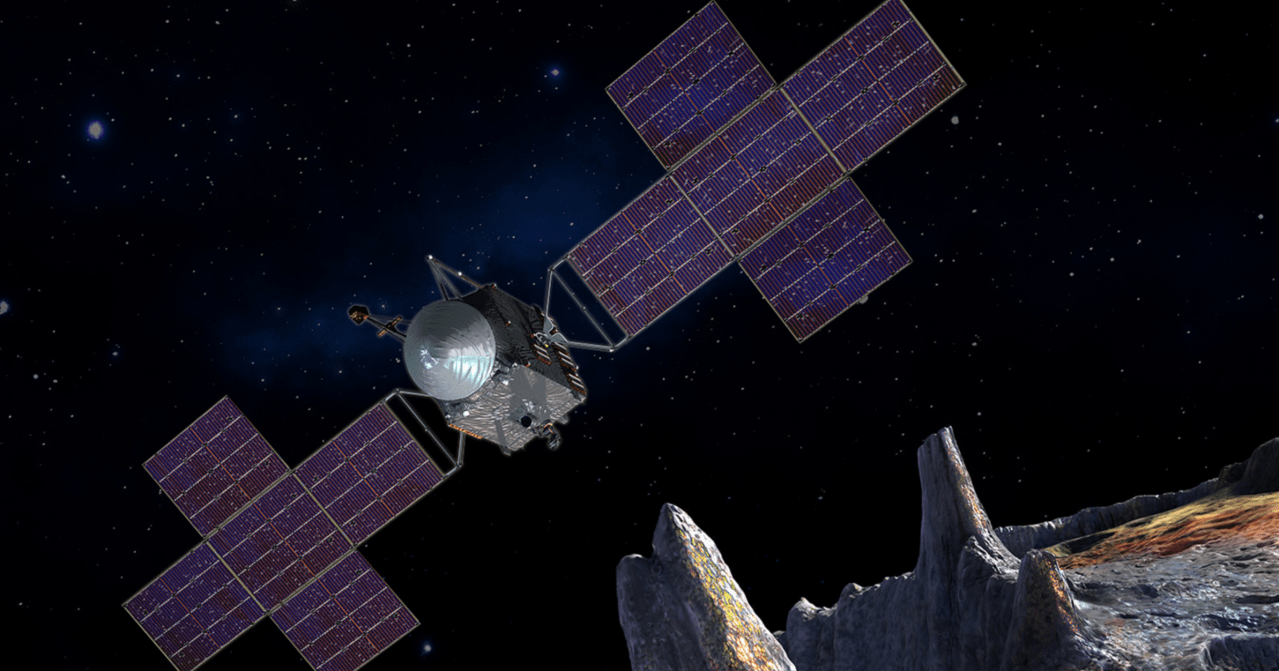
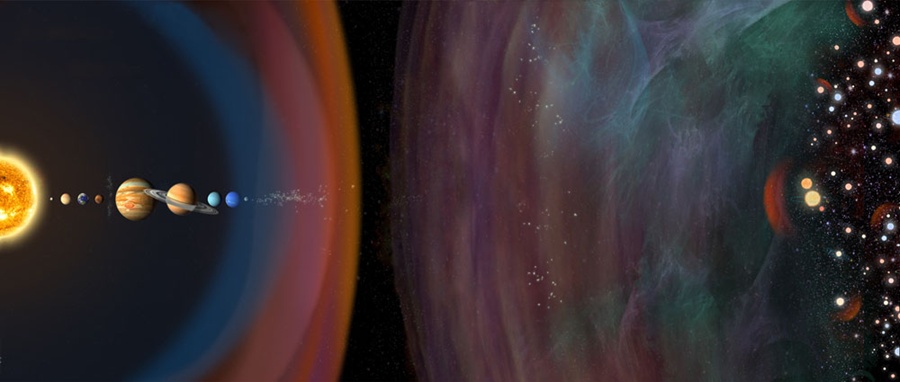
“It is time to venture beyond the known planets, on toward the stars.”
Yes, I agree, but I don’t see how any of the ideas in this article will help us achieve that goal. I think the problem is the reliance on conventional means of propulsion. Clearly some sort of bending of space/time is needed to leave the solar system faster than, say, a decade, let alone reach other star systems.
Dawn already used an ion engine (way too slow). The solar gravitational lens is neat but it won’t take us there physically. The “space-based laser” idea is funky but impractical.
Getting off Earth should help (Moon Base, Mars, somewhere else like Triton). Escaping our own planet’s gravity well takes way too much effort. But after that, it’s time to forget about rockets and start thinking of truly “wacked out” ideas.
For starters, Discover, how about dumping your absolutely awful page design? Yeesh, this page is hard to read.
The research is in early stages, but it invokes ideas like uploading brains to the cloud or hooking people up to a computer to track deep health metrics…









 M Thomas Apple Author Page