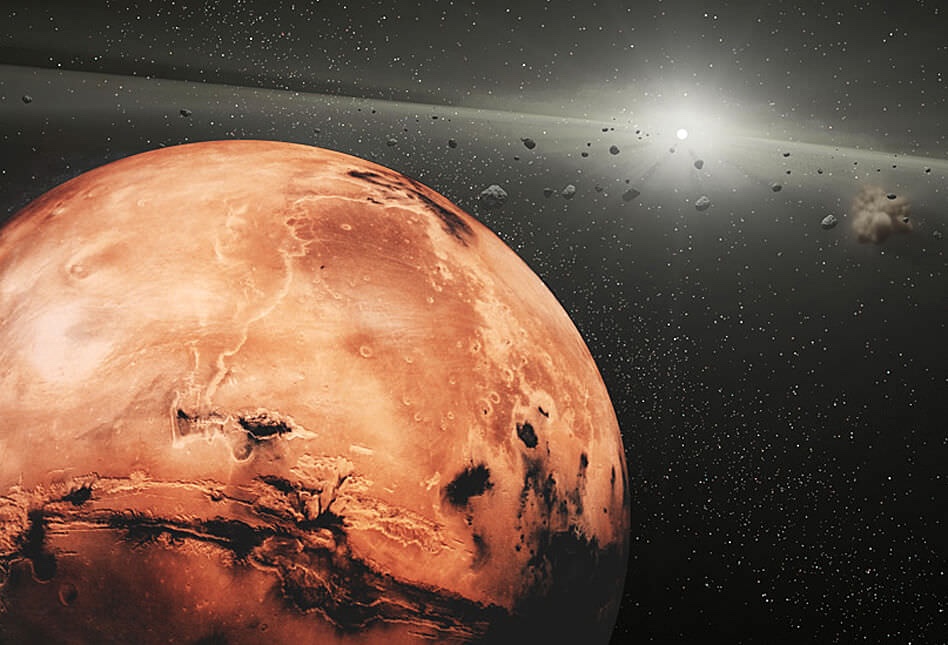
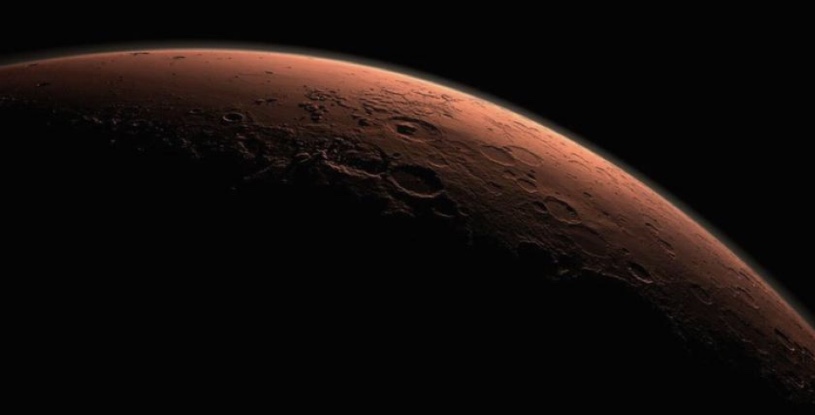
The researchers looked at Phobos, which loses height as it interacts with Martian gravity over time. Eventually, its orbit will be too low and Mars will essentially rip it into pieces that form a ring around the planet. It’s estimated that this will happen within 50 million years.
So say goodbye to fear, but dread may stick around a while longer…
“So, let’s bring the samples back. So if those extraordinary claims are made, they can be verified.”
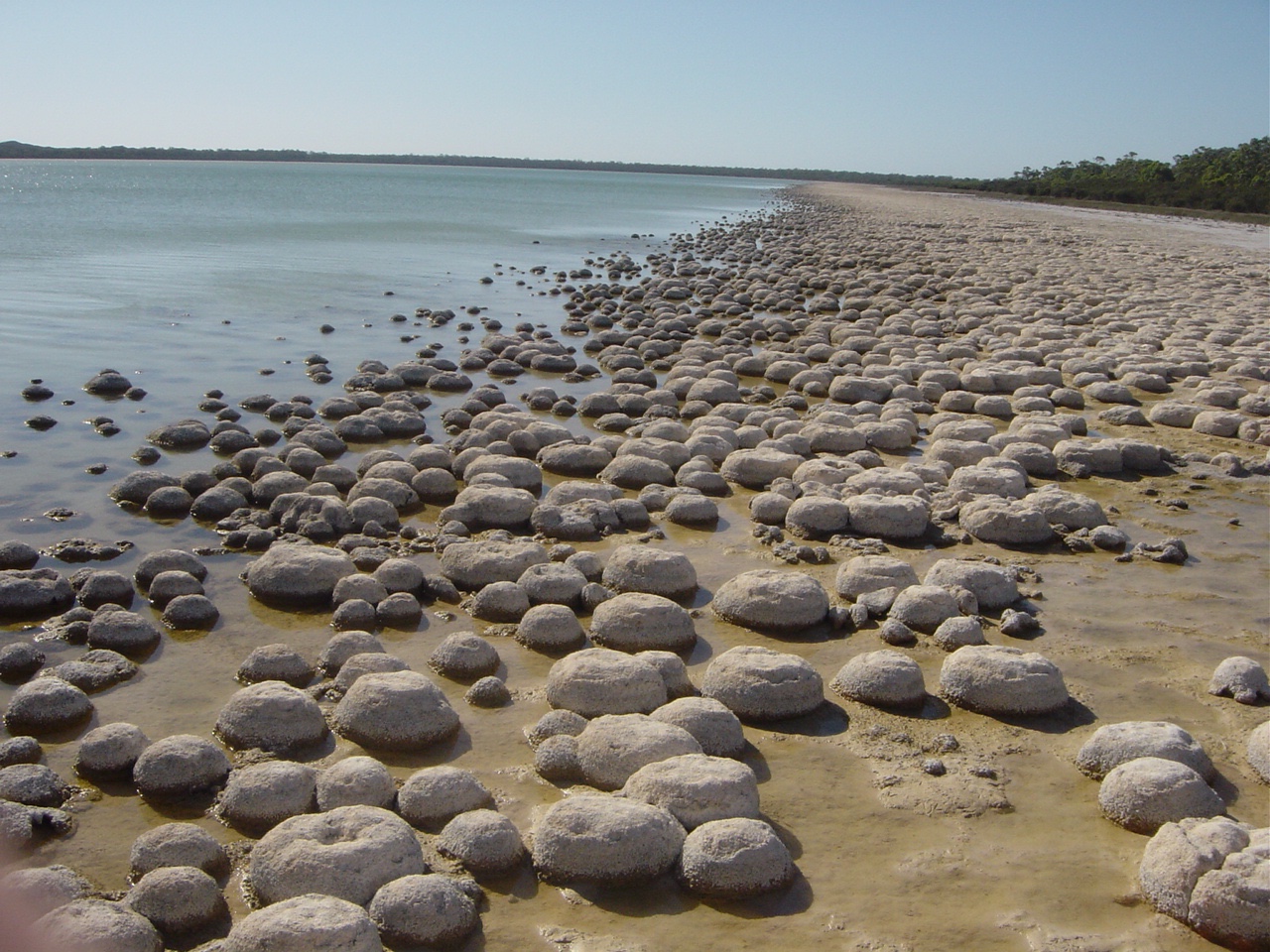
One likely extraterrestrial form of life might resemble a terrestrial form: the stromatolite.
They basically look like big rocks. I visited one site in Western Australia in 2003 with a group of Japanese students who were told by a local guide that the stromatolites were “3.5 billion years old.” (They’re not, but they do look like what life might have looked like at that point.”
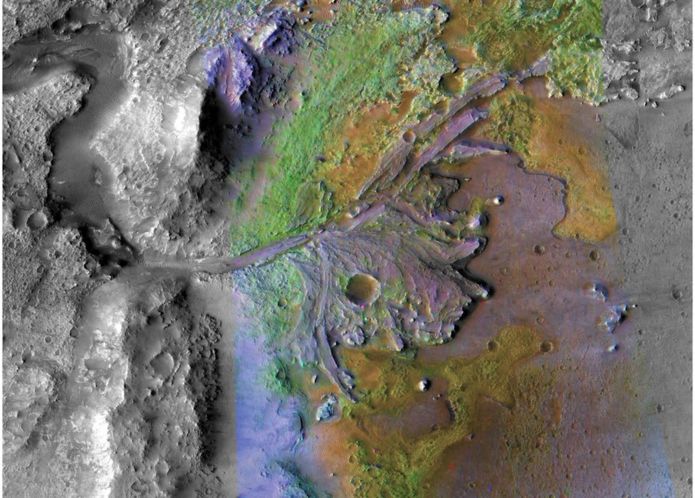
So NASA is sending another rover to see if they can find evidence of a similar life form.
When I was a kid, I devoured books by Jules Verne, in the Classics Illustrated series vocabulary- and grammar-controlled for younger readers.
20,000 Leagues Under the Sea
Voyage to the Center of the Earth
From the Earth to the Moon
Around the World in Eighty Days
Until I was in college, I didn’t even know that he wrote them in French.
Until a few days ago, I didn’t know they were part of a 54-volume set, complete with 4,000 hand-drawn illustrations that are now available online for free.
“Being able to get humans on Mars and actually collecting one of these samples would be such an incredible moment, I would kind of hope it would almost bring us back to the moon days of everyone being glued to the TV.”
Um. Well. OK. TV is dead so we’ll all be watching it streamed on our smartphones, but the point is taken.
“Without this instability, Mars likely would have had a mass closer to Earth’s and would be a very different, perhaps more Earth-like, planet compared to what it is today.”
Damn you, Jupiter and Saturn! Why couldn’t you have just stayed in your orbits and left Mars alone? (Shakes fist futilely at night sky.)
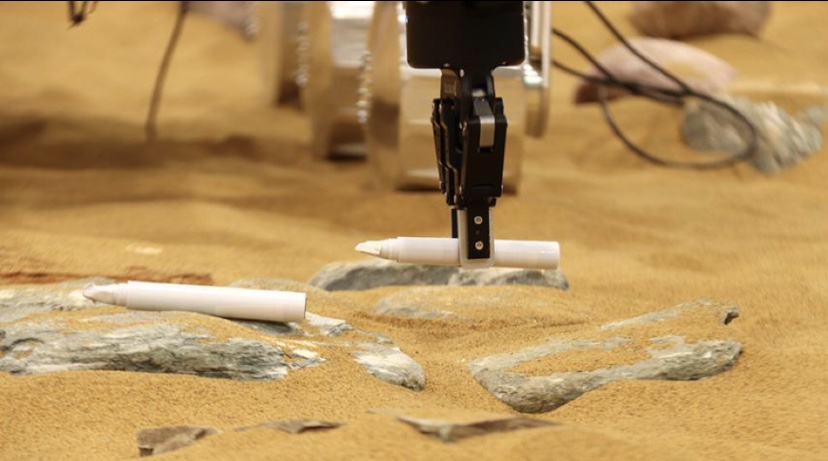
Right now, engineers have got a dummy rover practising the business of retrieving packaged rock samples. And, yes, the stand-ins really are whiteboard markers.
Yay! Whiteboard markers. Um. OK.
But different agencies and companies are finally working together?
Great!
Wait. What’s the catch?
It is, though, going to take more than a decade to achieve.
Future moon settlers might benefit from oxygen extraction from lunar regolith as it can be used to create breathable air as well as a source for fuel. In addition, the newly found extraction method might also be useful for Mars colonization.
Regolith covers the Moon and Mars (and presumably many other potentially habitable rocky bodies).
Of course, the composition of regolith on the Moon differs from that of Mars.
But if the new method can extract sufficient quantities of both oxygen and hydrogen, there should be ample amounts for both human usage and rocket fuel.
(Yawn.) “Dry” science? Sure. But think of the (fictional) possibilities!