Nineteen years ago, my wife and I went to Hiroshima by high-speed ferry boat, on our way back from visiting her parents in Kyushu. Her father’s family comes from Hiroshima (although her father was actually born in Dairen/Dalian (大連), China) and her uncle and his family still live about an hour’s drive north of the city.
(Update from 2020: We visited Hiroshima with the kids for the first time last January, for New year’s 2023.)
I’m a TESOL teacher. Learning to use technology — appropriately — has always been a part of my job.
It’s the “appropriate” part that has difficult to deal with the past few years.
Yeah. Hi, Chat.
Forget about Zoom, LMS, video editing software, and all sorts of online sites that don’t need any knowledge of programming language.
I was making my own web pages in basic HTML and JavaScript back when people still though InternetExplorer was a good browser.
But tech is nothing more than a tool. And tools can be used well and badly.
And often the simple tech of a piece of paper and a pencil are all you need. No bandwagon mentality here.
So if anything I would say that, although I have always used technology to some degree for my job, I have had the luxury of experience (and a lot of mistakes!) to figure out when technology can help my job, and when it just gets in the way.
(FWIW I also teach a one-semester class about language, identity, and technology. And yes, we do analyze our selfies.)
It is wise to have decisions of great moment monitored by generalists. Experts and specialists lead you quickly into chaos. They are a source of useless nit-picking, the ferocious quibble over a comma….The expert looks backward; he looks into the narrow standards of his own speciality. The generalist looks outward; he looks for living principle, knowing full well that such principles change, that they develop.
We compared current scientific theories of what makes humans conscious to compile a list of “indicator properties” that could then be applied to AI systems.
We don’t think systems that possess the indicator properties are definitely conscious, but the more indicators, the more seriously we should take claims of AI consciousness.
Last year, an engineer for Google who was working on what was then called “LaMDA” (later released as “Bard”) claimed that the software had achieved consciousness. He claimed it was like a small child and he could “talk” with it.
He was fired.
Bard, ChatGPT, Baidu, and so forth are advanced chatbots built on what’s called “Large Language Models” (LLM) and can generate text in an instant.
But the programs are not AI, strictly speaking. They have no sentience.
Superconductors are materials that allow electrical current to flow with no resistance, a property that would revolutionize power grids where energy is lost in transmission as well as advance fields such as computing chips, where electrical resistance acts as a speed limit.
The hallmark of science is replicability. I.e., can two independent teams of researchers, using similar means, methods, and materials in completely different settings, replicate the findings of the original team?
So…
Researchers from at least three Chinese universities have in recent days said they produced versions of LK-99 with varying results. One team from the Huazhong University of Science and Technology posted a video purporting to show the material levitating over a magnet, which is important because true superconductors can float over a magnet in any orientation, without spinning like a compass.
But…
…another team, from Qufu Normal University, said they did not observe zero resistance, one of required characteristics of a superconductor. A third, from the Southeast University in the eastern Chinese city of Nanjing, said they measured zero resistance, but only at a temperature of 110 Kelvin (-163 degree Celsius).
And…
The possible bad news for LK-99 is that the superconducting field is full of materials that hold promise at first but fall apart under scrutiny. Researchers even have a handy name for them — unidentified superconducting objects.
A.k.a “USOs.” As the linked article points out, plenty of smart, hardworking researchers have claimed to have found a “superconductor,” but then their claims simply fall apart under scrutiny.
For the program, the 9- to 12-year-old students designed an experiment in which epinephrine samples were placed into tiny cubes and sent to the edge of space via either a high-altitude balloon or a rocket. Once back on Earth, researchers from the John L. Holmes Mass Spectrometry Facility at the University of Ottawa tested the samples and found that only 87% contained pure epinephrine, while the other 13% had been “transformed into extremely poisonous benzoic acid derivatives,” according to a University of Ottawa statement(opens in new tab).
So…uh…why would an astronaut have this thing in space to begin with? NASA should know the full medical history of all its astronauts before even considering sending them into space.
“I’m less frightened by a Sydney that’s playing into my desire to cosplay a sci-fi story than a Bing that has access to reams of my personal data and is coolly trying to manipulate me on behalf of whichever advertiser has paid the parent company the most money.
“Nor is it just advertising worth worrying about. What about when these systems are deployed on behalf of the scams that have always populated the internet? How about on behalf of political campaigns? Foreign governments? “I think we wind up very fast in a world where we just don’t know what to trust anymore,” Gary Marcus, the A.I. researcher and critic, told me. “I think that’s already been a problem for society over the last, let’s say, decade. And I think it’s just going to get worse and worse.”
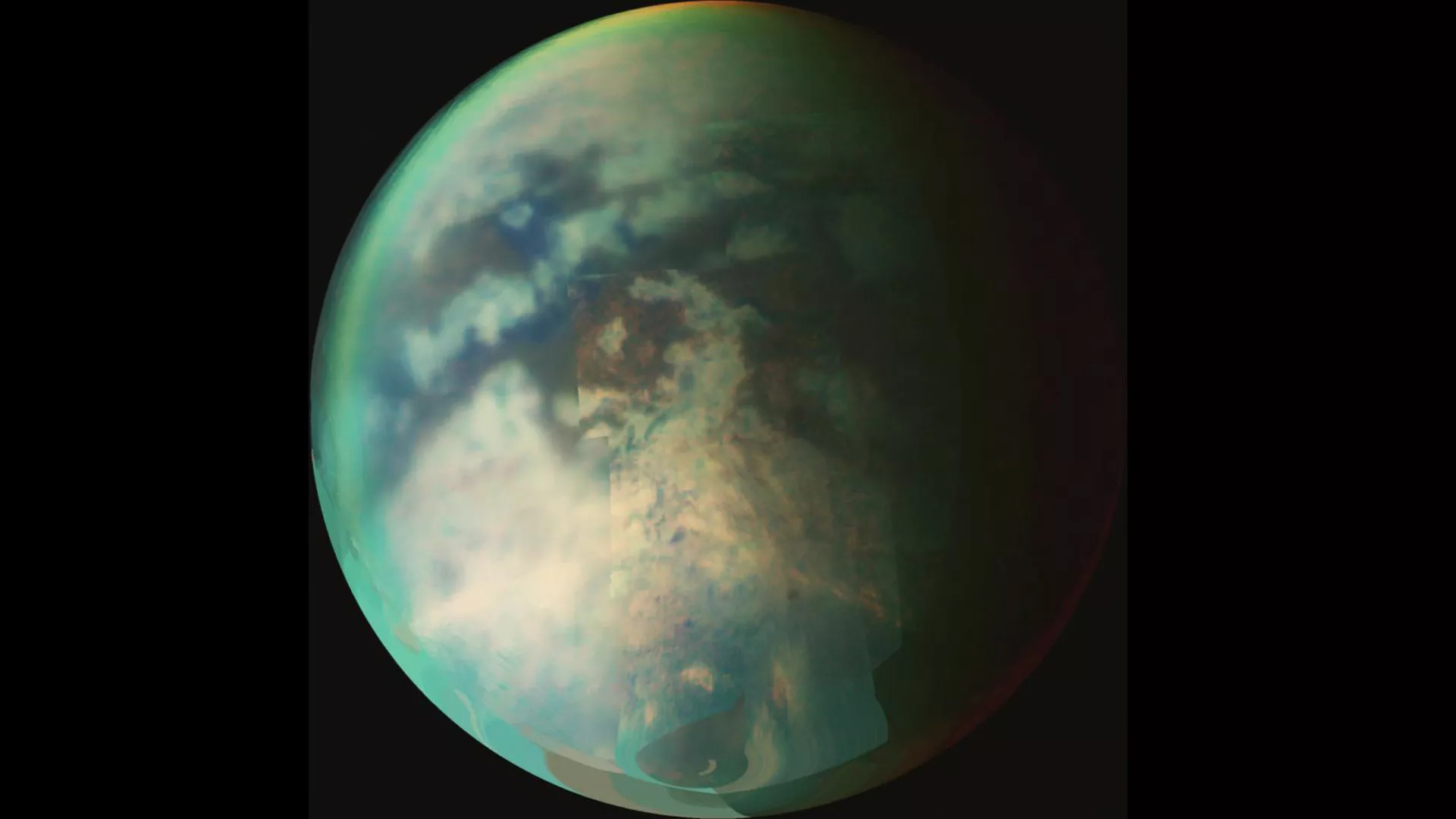
It is this subsurface ocean, or rather its interaction with the ice shell that covers it, that a team of researchers led by the Catholic University of Louvain (UCLouvain) in Belgium hope to better understand. More specifically, they wish to understand how the ocean’s depth and the pressure exerted by the icy shell on the underground water body influence the formation of tidal motions and currents inside of it.
When I first heard of “Attack on Titan,” I was disappointed to learn that it didn’t take place actually on Titan. (The title in English is a mistranslation. It should be “Attack of the Titans” or “The Titans Attack” or even “Attacking Titans,” depending.) In any case, it’s a disgusting manga/anime with nothing to do with the icy moon of Saturn. Except for the name. And even that’s a misuse (they should have used “giant” as the storyline is very loosely based on Ymir and the frost giants of Scandinavian myth).




 M Thomas Apple Author Page