We’ve seen this before. Tragic romance framed by sci-fi fantasies. But now it may be possible to block the emotions the amydala associated with painful memories. Continue Reading
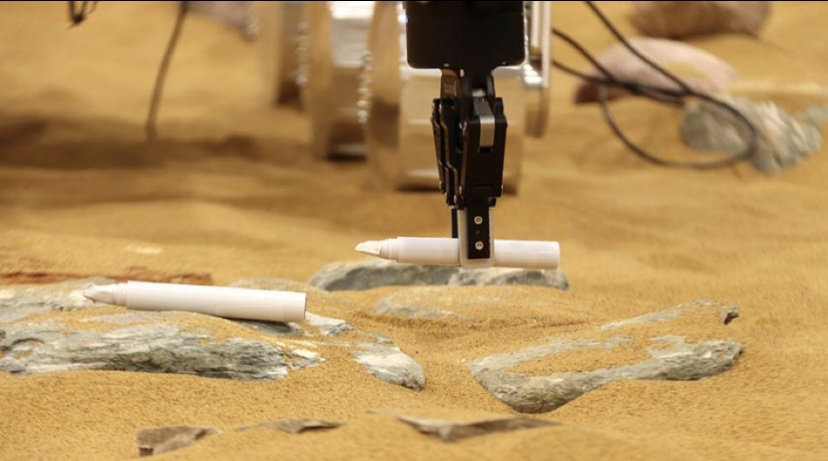
Right now, engineers have got a dummy rover practising the business of retrieving packaged rock samples. And, yes, the stand-ins really are whiteboard markers.
Yay! Whiteboard markers. Um. OK.
But different agencies and companies are finally working together?
Great!
Wait. What’s the catch?
It is, though, going to take more than a decade to achieve.
Future moon settlers might benefit from oxygen extraction from lunar regolith as it can be used to create breathable air as well as a source for fuel. In addition, the newly found extraction method might also be useful for Mars colonization.
Regolith covers the Moon and Mars (and presumably many other potentially habitable rocky bodies).
Of course, the composition of regolith on the Moon differs from that of Mars.
But if the new method can extract sufficient quantities of both oxygen and hydrogen, there should be ample amounts for both human usage and rocket fuel.
(Yawn.) “Dry” science? Sure. But think of the (fictional) possibilities!
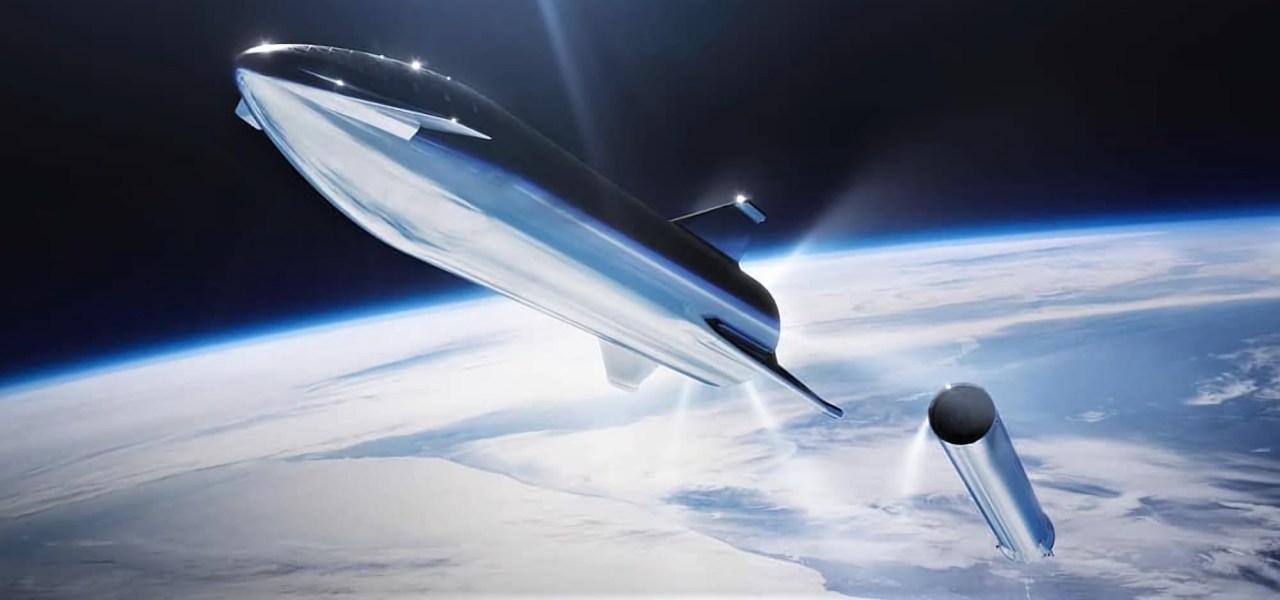
Youtubersmallstarshas proposed a concept that he calls theGravity Link Starship(GLS), a variation of SpaceX’sStarshipthat will be able to provide its own artificial gravity.
Hm, I guess we’re at the point where YouTubers have better ideas than NASA…
But who pays for this? is the several billion dollar question. Not just the construction of the “hub and truss” system, but the expense of getting it into space in the first place.
Seems like science fiction at this point. But still worth a read/look:
Our bodies have retained the capacity to repair injured or overworked cartilage in our joints, says newresearchpublished today in Science Advances. Remarkably, the mechanics of this healing process are practically the same as what’s used by amphibians and other animals to regenerate lost limbs…
“Fundamentally, we may be able to change how we create and use the materials with lifelike characteristics. Typically materials and objects we create in general are basically static… one day, we may be able to ‘grow’ objects like houses and maintain their forms and functions autonomously.”
You mean like Iron Man from a decade ago (as seen in Infinity War)?
Honestly, scientists these days…can’t even keep up with comic books from the ’80s…
(That said, I’m not entirely thrilled with the idea of living in a living house that can maintain its own form and feed itself…on what?! you might ask…)







 M Thomas Apple Author Page