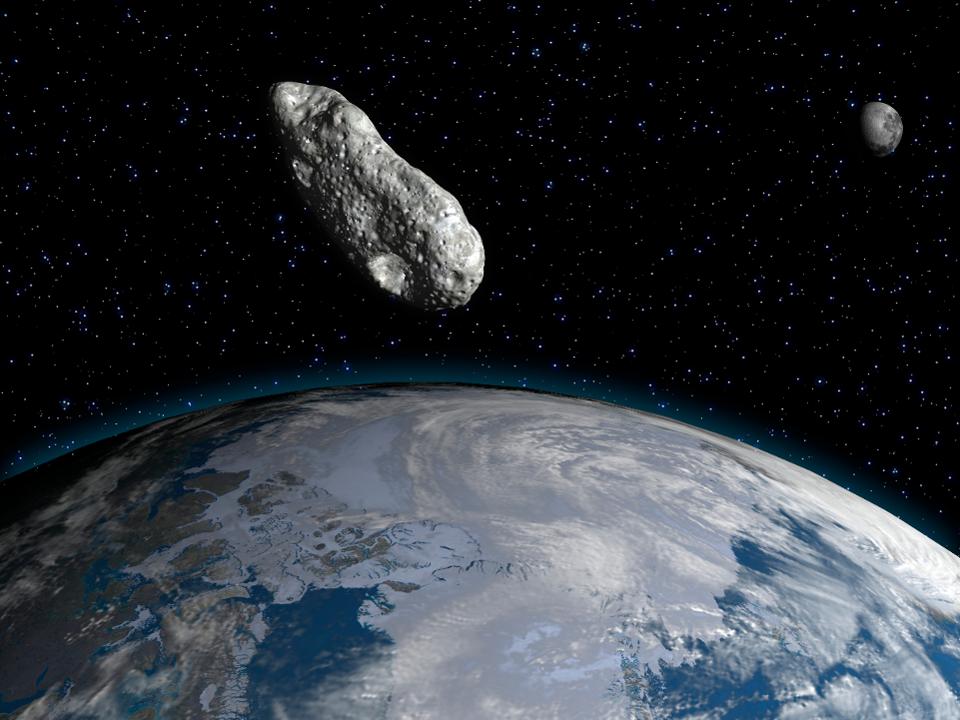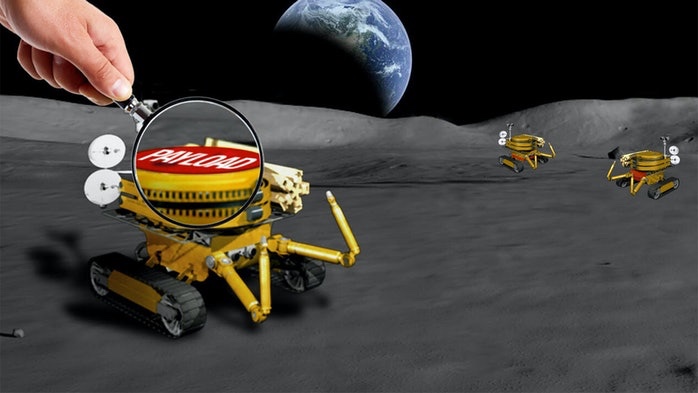
He added that the mini-moon appears to have been orbiting our planet since it was first captured by Earth’s gravity three years ago. Early observations also suggest it is small enough to fit in just about any garage or shed, with an estimated diameter between 2 and 3.5 meters (about 6 – 11 feet).
The photo obviously doesn’t match the actual size of this “mini-moon” but you get the idea.
There was another one a few years ago, by the way. It stayed a few months and then got booted out of orbit.
‘As far as audio recordings, we previously had only 48 minutes of off-air audio of the BBC coverage from another source. Now thanks to you we have over eight hours!’
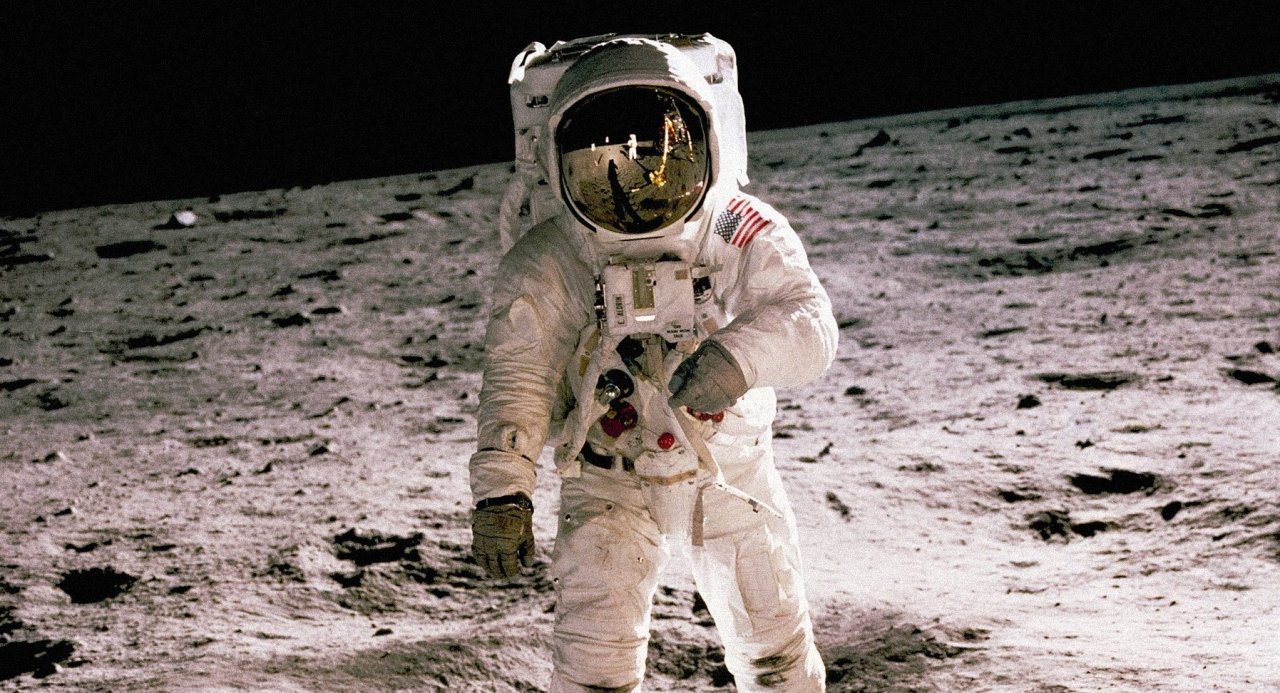
It’s been 50 years since The Eagle landed. There are plenty of existing video and audio recordings from US media sources (like this one on YouTube, clocking in at over 3 hours).
It’s been considerably less time since news recordings of Apollo 11 from *outside* the US were discovered. Just over half a year. Audio only. Bummer. But at least you get a different perspective (always a good thing when it comes to news).
When I was a kid, I devoured books by Jules Verne, in the Classics Illustrated series vocabulary- and grammar-controlled for younger readers.
20,000 Leagues Under the Sea
Voyage to the Center of the Earth
From the Earth to the Moon
Around the World in Eighty Days
Until I was in college, I didn’t even know that he wrote them in French.
Until a few days ago, I didn’t know they were part of a 54-volume set, complete with 4,000 hand-drawn illustrations that are now available online for free.
“Being able to get humans on Mars and actually collecting one of these samples would be such an incredible moment, I would kind of hope it would almost bring us back to the moon days of everyone being glued to the TV.”
Um. Well. OK. TV is dead so we’ll all be watching it streamed on our smartphones, but the point is taken.
“Proxima is our closest neighbor in an immense universe. How could we not be charmed by it?”
Well, the planet may or may not exist (the confirmation data won’t be publicly available for another couple years).
And it is most likely not inhabitable — despite being dubbed a “Super-Earth” (which really only refers to size and not whether it’s “Earth-like” or not).
“We tried different tools to prove ourselves wrong, but we failed. However, we have to keep the doors open to all possible doubt and skepticism.”
Yes, the astronomers tried to prove their own discovery was a mistake. That’s how it works, folks. Challenge your assumptions, not jump to conclusions. Continue Reading
The newly discovered exoplanet, called TOI 700 d, is located about 100 light-years away from us and is roughly 20% larger than Earth.
Okay, not exactly close, but looking good…
A year on TOI 700 d takes 37 days.
Um. Wait. What?
One thing astronomers have discovered though is that TOI 700 d is tidally locked to its star, which means that one half bathes in eternal sunlight, and the other half always exists in darkness.
Oy.
And even better…
One of the burning questions is whether the planet has an atmosphere or not.
Do they have atmospheres and how thick are they? What kind of clouds? Do they possess oceans on their surface? Do they have rings and moons? Cheops ought to be able to address such questions just from looking for these tiny dips in light during a transit.
ESA finally does something! Wow. Go Europe!
I love how BBC says “The Americans” when referring to NASA, as if a) American is an ethnic group and b) all NASA scientists are American.
But anyway…
Prof Didier Queloz, who won this year’s Physics Nobel for discovering the first planet orbiting a Sun-like star in 1995, was on hand to watch the launch.
Right now, engineers have got a dummy rover practising the business of retrieving packaged rock samples. And, yes, the stand-ins really are whiteboard markers.
Yay! Whiteboard markers. Um. OK.
But different agencies and companies are finally working together?
Great!
Wait. What’s the catch?
It is, though, going to take more than a decade to achieve.