“A foolish consistency is the hobgoblin of little minds, adored by little statesmen and philosophers and divines. With consistency a great soul has simply nothing to do.” (Ralph Waldo Emerson, “Self-Reliance”)
[Note to self – it’s probably not a coincidence that so many of my better diary entries were written in August. I obviously have more time to think and write at that time of year!]
What strange turns my life has taken. Never would I have in a million years expected to be here, now, in this apartment, typing on an extended keyboard into a Japanese computer, in a Japanese city, listening to the same Cure tape I was listening to back in 1996. Has it actually been 8 years?
Ten years ago I was playing role playing games and drinking in Robbins lounge, getting ready to pack everything I owned into a moving van to move to Ann Arbor. A city I didn’t know, with no money for deposit or rent, or a job. Without a clue. Totally hopeless. Instead of exploring the city, I stayed in my bedroom and played games or typed. What was I thinking? I can’t even get in touch with the few people I met there. Even the ones I knew at ND are either gone back where they came from or no longer answer my emails.
I can still picture them all in my mind. I can still see the rooms I lived in, all the way back home. Even the freshman dorm room which no longer exists, since they tore the building down. How can that be?
It must be this which makes us human; the ability to take the visual and turn it into mental. The capacity to make emotional connections between the world outside and the world inside. The belief that there are two worlds. This makes us human, and at the same time it makes us separate. It is a false belief, that we are not of the outside. Yet there is no returning. Once we start, we can never stop. Even changing languages doesn’t help. We merely start over again from a new perspective, still outside the outside.
A story must be more than merely a story. It must be an examination, of the human heart, of the mind, of the spirit. Of experience and existence. A simple recapitulation of one’s personal past or the delusional suffering of a dysfunctional suburban American family have no merit. Overcoming the reality we believe we live in, debunking fiction and elevating the truth, that is worthwhile.
Way back in 2015, my good friend Rami Z Cohen came to me with an idea for a story. He had written two or three scenes about a group of asteroid hunters who stumbled upon something bizarre. The idea of mining asteroids was news at the time (and still is, although probably too expensive right now and not a worthwhile investment until we actually get some people in space who need metals without relying on NASA/ESA/JAXA/ISRO/etc).
So Rami and I began to email ideas back and forth for a few weeks, then we started to flesh out his characters and plot. I wrote a synopsis and outline and we hashed out the background.
I’ve been testing ChatGPT over the last couple of days. (If you don’t know what this chatbot is, here’s a good NYT article about ChatGPT and others currently in development.)
The avowed purpose of ChatGPT is to create an AI that can create believable dialogues. It does this by scouring the web for data it uses to respond to simple prompts.
By “simple,” I mean sometimes “horribly complicated,” of course. And sometimes a little ridiculous.
Somehow, I doubt that people in the US said “livin’ the dream” in the ’50s…
As has been pointed out, chatbots only generate texts based on what they have been fed, i.e., “garbage in / garbage out.” So if you push the programs hard enough, they will generate racist, sexist, homophobic etc awful stuff — because unfortunately that kind of sick and twisted garbage is still out there, somewhere online in a troll’s paradise.
So far, I have asked the program to:
Write a haiku about winter without using the word “winter”
Write a limerick about an Irish baseball player
Write a dialogue between God and Nietzsche (I just had to…)
Imagine what Jean-Paul Sartre and Immanuel Kant would say to each other (see above) but using US ’50 slang
Have Thomas Aquinas and John Locke argue about the existence of God (that one was fun)
Write a 300 word cause-effect essay about climate change
Write a 300 word compare and contrast essay about the US and Japan
Write a 1000 word short science fiction story based on Mars
Write a 1500 word short science fiction about robots in the style of Philip K Dick
I’ve never really experienced the so-called “writer’s block.” Not that I’m bragging…but I often just don’t find I have enough time to write.
By which I mean, writing seriously. It’s easy, however, to find time here and there just to jot down some random thoughts.
(Aside note: if you type really quickly on the WordPress smartphone app, it autocorrect “random” to “radon,” which would put you in an entirely different frame of mind.)
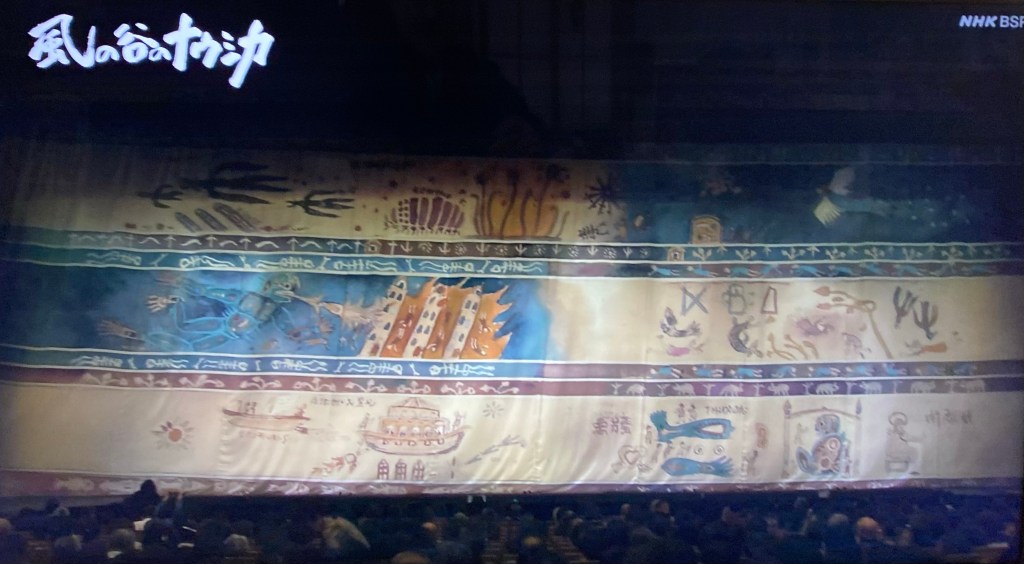
What better way to start 2021 then by watching a 6-hour kabuki interpretation of the classic post-apocalyptic fantasy-scifi Nausicäa of the Valley of Wind (風の谷のナウシカ)?
Courtesy of BS-NHK (which split the broadcast into two 3-hour parts).
If you think you know the story based on the Studio Ghibli anime, guess again. Go read the manga. One of the greatest SF stories of all time. Even 6 hours doesn’t even come close to capturing its complex intensity.
“But decoding and storing memories raise a new set of ethical, moral and legal questions. For instance, who would own these memories after a person has died? Could the police obtain warrants to search through memories? Given that memory itself isn’t completely reliable, could memories be used in lawsuits? How could we ensure that unscrupulous professionals don’t sell or share them?”
Hm, I think I can see another direction this might eventually take…




 M Thomas Apple Author Page