What is one question you hate to be asked? Explain.
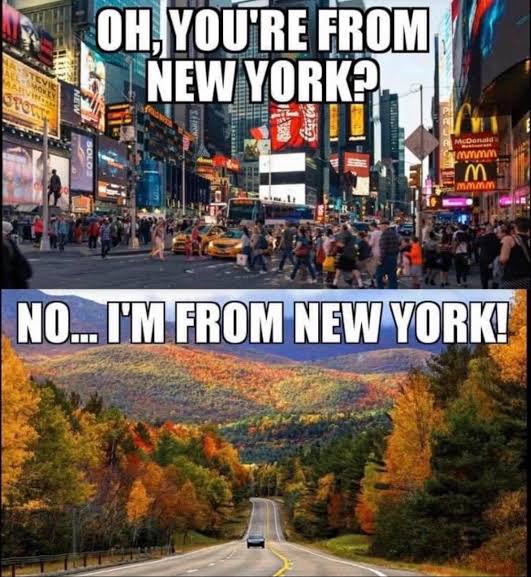
“Where are you from?”
I never understood why this question might rankle some people…until I moved to Japan.
I’ve been in Japan since 1999. “Where are you from?” was one of the first questions people asked me at the time, when I was teaching in junior and senior high schools.
I was home, arguing at the dinner table. It was as if I were a teenager again. I’ve often dreamed of living in a bedroom with no ceiling over half of it, open to the night sky, with a solid rock wall on one side and sliding doors on another. This seemed to be the same house. Something like the house in Warrensburg, but somehow different. In other dreams, this house has slowly risen upward as if it were a growing tower of stone.
In this dream, I was at the dinner table. Then, suddenly I was on the back porch. It still looked like the “room” that had been set up for me when I was sleeping on the back porch between my freshman and sophomore years. Except in the dream, there was little furniture, no freezer, no old TV from my grandparents, just an old bed and some curtains. I was able to look through the kitchen wall and see the insides of the house, decrepit and broken plaster and wood.
I went to the barn to get my bicycle, and somebody came running up behind me just as I was about to leave the back yard. “Where is my bow and arrows?” I asked. He handed me a bow, but no arrows. I sped off down the side path to the street, and suddenly I was bicycling past the triangle park. Only it turned into a much large city-style park with large dumpsters and vending machines. A dump truck charged toward me, and as I veered away, it lurched back toward the park and disappeared.
Then I felt a pain in my mouth. Lifting a hand to my front teeth, I pulled out a large square and knew that my incisors had been removed.
[Note to self – it’s probably not a coincidence that so many of my better diary entries were written in August. I obviously have more time to think and write at that time of year!]
What strange turns my life has taken. Never would I have in a million years expected to be here, now, in this apartment, typing on an extended keyboard into a Japanese computer, in a Japanese city, listening to the same Cure tape I was listening to back in 1996. Has it actually been 8 years?
Ten years ago I was playing role playing games and drinking in Robbins lounge, getting ready to pack everything I owned into a moving van to move to Ann Arbor. A city I didn’t know, with no money for deposit or rent, or a job. Without a clue. Totally hopeless. Instead of exploring the city, I stayed in my bedroom and played games or typed. What was I thinking? I can’t even get in touch with the few people I met there. Even the ones I knew at ND are either gone back where they came from or no longer answer my emails.
I can still picture them all in my mind. I can still see the rooms I lived in, all the way back home. Even the freshman dorm room which no longer exists, since they tore the building down. How can that be?
It must be this which makes us human; the ability to take the visual and turn it into mental. The capacity to make emotional connections between the world outside and the world inside. The belief that there are two worlds. This makes us human, and at the same time it makes us separate. It is a false belief, that we are not of the outside. Yet there is no returning. Once we start, we can never stop. Even changing languages doesn’t help. We merely start over again from a new perspective, still outside the outside.
I’ve kept a journal (OK, a diary) for many, many years now. It first started in September 1984 as a junior high school 1st year (7th grade) English assignment — each day, we would be given a writing prompt and at the end of the 10-week term (quarterly system back then), the English teacher would look it over and write feedback.
At least, that was the idea. In mid-October my family moved to a county and school system about 60 miles away (it’s more complicated — we couldn’t move in to the new house at first and so my siblings and I were looked after by various relatives, so we didn’t go to school for about nine to ten days). The new school didn’t use journals at all. English class was boring. Grammar and sentence diagramming.
So I kept writing at home, almost on a daily basis in the beginning.
But I’ve been fairly inconsistent over the years. I filled several notebooks, all different sizes and shapes. I stopped writing in one notebook at some point in 1999 when I moved to Japan and started another one. Then some time in 2004 I decided it was a waste of paper not to finish the 1999 one. Then I filled it up and started typing in a Word file. Then I went to Montreal four years ago and started writing in paper notebooks again.
It’s, quite frankly, a great big mess.
But there are some good ideas in these notebooks, and lots and lots of bizarre poems that I swear I do not remember writing. (Also at least half a dozen attempts at “automatic writing.” If you don’t know what that is, look it up.)
So from time to time, I’ll post some bits and pieces here. Just for safe-keeping.
Who knows? I may wind up publishing some of it at some point. Or at least drop some of it into the mouths of future SciFi characters.
Manhattanhenge, a portmanteau of “Manhattan” and “Stonehenge,” is a twice-a-year solar event when the sunset lines up directly with the city’s grid, casting golden rays down city streets. Several of the stones in Stonehenge, the prehistoric monument in Wiltshire, England, experience perfect alignment with the sun during the summer and winter solstices, which is why the event takes its name from the rock formation.
I started writing stories when I was in 5th grade. Our teacher gave us a list of vocabulary each week — about 10 to 12 words, I think — and said we had two choices: 1) write down all their definitions along with a sample sentence, or 2) work them into a short story to show that we understood the meaning of the words.
I chose the 2nd option. In fact, I was the only one who did out of a class of about 25.
The thing is, the teacher wanted us to read them at the front of the room.
Man, that was not something I was looking forward to. But somehow I managed.
I wrote nothing but detective stories, all in the first person. At some point, I borrowed my mother’s old manual typewriter (originally my grandfather’s, from the 1950s) and typed them all out. I still have most of them.
But my peak as an elementary school age creative writer came part-way 6th grade, when I attempted to write my first horror story.
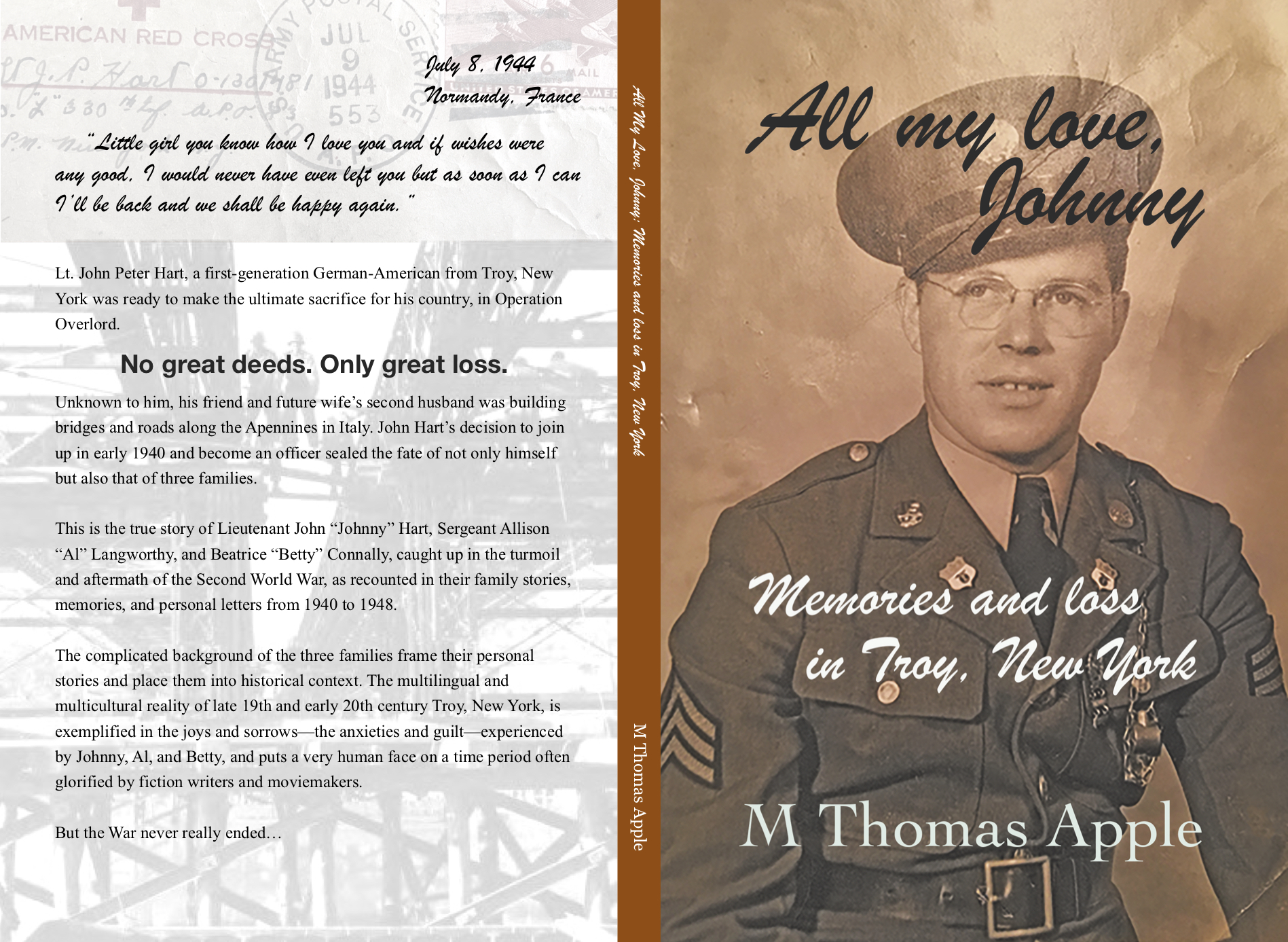
“Over sixteen million Americans served during World War II and this story offers in rich detail the story of two men in uniform and a woman they both cared about. A story of love and tragedy that is more representative of the experiences of many that served than the ones often told of generals and politicians. A story that needs to be told and remembered.”
— Dr. Rick Derrah, Professor of Social Studies, Kindai University, Osaka; former US Army E-4 Specialist
“Not only is this a touching and interesting family story, it is a great snap shot of the war and its effects, as well as Trojans and Troy history connection.”
— Don Rittner, historian, former Albany City Archaeologist and founder of the Pine Bush Historic Preservation Project
The Smashwords “Authors Give Back” free ebooks for COVI-19 lockdown campaign has been extended to May 31st!
Since baseball (and all other sports and events) have been postponed until further notice, I decided to revisit my literary baseball novel, Approaching Twi-Night (published 2015). It’s now available in the following ebook formats for FREE: .ePub (Apple Books etc), .mobi (Kindle), .pdb (Nook etc.), PDF, text, and online reader.
NOTE: This is a story written for those who know who Mark Harris, Bernard Malamud, Ring Lardner, W. P. Kinsella, and Philip Roth were. It’s not a Disney movie. It’s not aimed at kids (don’t read it aloud with children under age 14 or 15, and don’t say I didn’t warn you!).
On this day, June 10th, what would have been my mother’s 69th birthday had she not passed away suddenly last October, I am conflicted.
Do I have the right to write about family history yet again?
And yet without the past, it’s difficult to write about the future. They are connected, by both visible and invisible lines, threads of beliefs and behaviors, attitudes and antagonisms, odd coincidences and strangely fortunate happenings. Particularly in my family. Continue Reading



 The Smashwords “Authors Give Back” free ebooks for COVI-19 lockdown campaign has been extended to May 31st!


